
Robotics in treatment is one of the most significant changes in the healthcare in present day. Whether it be helping patients redevelop motor capabilities following injury to allowing surgeons to complete some of the most precise and minimally invasive surgeries of any type, robotic technologies are changing what the medical field can achieve. This article discusses how the subject of robotics has evolved, how it has been applied in rehabilitation and surgical therapies, and what the future holds of this technology revolution in terms of the technological, clinical and human implications of robotics.
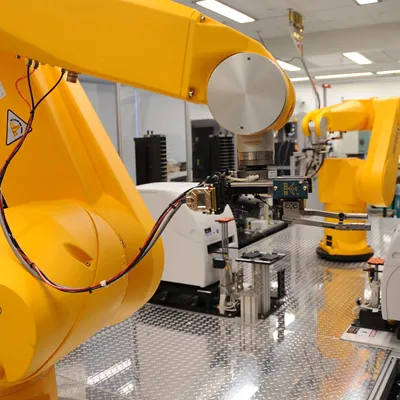
The study of therapeutics has never been a stagnant area that remains the same even with some developments and the needs of patients. Entered into the mix of engineering, artificial intelligence, and clinical experience, the introduction of robotics marks a critical transition, which has left the test facilities behind and moved to the realm of clinical care delivery straight forward.
Robotics, originally applied to the industrial automation, has gone through a miraculous change in objective and accuracy. The therapeutics has today served two domain, which dominates its field, rehabilitation, and surgery. Robotic rehabilitation is used as a method of recovery due to neurological injury, musculoskeletal disease, and stroke using repetitive, adaptive and data-driven therapy. In its turn, surgical robotics provides surgeons with a better dexterity, visualization and control, and, as a result, they may perform operations they could never dream about with respect to accuracy and patient outcome levels.
Over the last 20 years, there has been an exponential growth in the rates of adoption of robotic-assisted surgery (RAS). The use of such robots as the da Vinci Surgical System, ROSA, and Mako has become equaled with the high level of surgical care. In contrast to conventional procedures, robotic-assisted operation does not substitute the surgeon, however, it gives a boost in his/her abilities using robotic arms, high-resolution 3D vision, and motion scaling.
The application of an example of robotics in neurosurgery is unmatched stability and the maneuverability to exceed anatomical structures at the millimeter level of precision.
In orthopedics, surgical robots in orthopedic surgery assist in ensuring accurate alignment during joint replacement surgery to minimize the wear of the implants, hence enhance longevity outcomes of the implants. So whether cardiac and thoracic surgeries robotic exactness can be appreciated when it comes to surgical suturing of enervated vessels and restricting harm to nearby tissues.
This growth is mainly fuelled by the reality that robotics has eliminated shortcomings of the human hand. Robotic assistance reduces fatigue, tremor and restricted motion, and integrated imaging and navigation systems help to guide in real time based on anatomical level. These benefits mean minimized incisions, reduced hospitalization, a quicker process, and a decrease in prevalence of complications.
In the background of surgical robotics, however, rehabilitation robotics is making noise by revolutionizing care after injury and after surgery. Robotic rehabilitative devices are set to give repetitive, task-specific, intensive-treatment that activates the neural plasticity-the capacity of the brain to re-arrange itself and compensate lost capabilities.
Robotic gait trainers and exoskeletons can automate the walking movement and enable patients with a stroke to train movements when they do not have full voluntary control. Upper-limb rehabilitation robot helps in regaining a fine motor functionality by providing a resistant and interfering usage of the arm, wrist, and finger.
In addition to mechanical support, current generation rehabilitation robots have been coupled with sensors and AI algorithms personalizing the therapy by developing tailored therapy plans. Monitoring patient progress interactions in real time, these systems have the ability to adjust the intensity of the exercise and movement patterns to maximize the results. Robotics will give better performance parameters to the therapist allowing them go to data driven clinical decisions instead of basing the clinical decision merely on observational assessment.
Such technologies affect more than the environment of hospitals. Home-learned and ambulatory rehabilitation robots are being invented, which permit the patient to proceed with therapy outside of the process at home since they will be under remote supervision. Such continuity is essential in avoiding regress and foster longer-term functional autonomy.
Robotics in therapeutics is one of the fastest growing areas because of a number of converging technologies:
1. Artificial Intelligence and Machine Learning - AI facilitates real time adjustment of the responses of robots according to the movement of the patient or operative conditions. Regarding AI use in rehabilitation, models can be used to predict the post-therapy progress of a patient and adjust the therapy accordingly, and during surgery, AI can aid in locating the places of the incision, predicting complications, and operating the instruments.
2. Advanced Sensor Integration - The robots can work safely around human tissues with the help of force sensors, motion-capture systems, and tactile feedback mechanisms. This sensor intelligence allows a degree of accuracy that can make the most capable hands to reel in some of the tasks.
3. Haptics and Telerobotics - Haptic feedback is used in surgery to enable the surgeon to have a sense of tissue resistance even behind robotic interface. Telerobotics takes this one step further and extends it geographically so that skilled surgeons can assist patients in non-urban or underserved areas.
4. Miniaturization and Flexible Robotics - Growing forms of soft robotics and micro-robotics are in the process of finding their way through anatomical structures too delicate to touch, or capable of delivering therapies to internal organs where access is not readily available.
The use of robotics in therapeutics has a twofold advantage in regard to an upsurge in the clinical accuracy and a better patient experience.
Robotic systems in surgery allow a more accurate cut and stitching, a decrease in intra-surgical blood loss, less tissue destruction, and fewer chances of infection. Clients complain about shorter postoperative pain as well as faster mobilization, and resuming their daily routines than conventional surgical methods.
Robotics in rehabilitation facilitates perfection in training sessions in regard to quality and intensity which is critical in neuroplastic recovery. Numerically quantifiable process ensures that patients would become confident, and gamification of robotic therapy (including interactive interfaces and visual feedback) would enhance motivation and the treatment regime adherence.
Further, robotics can alleviate the physical exam burden on therapists by performing repetitive or heavy assisted movements, thereby freeing up human clinicians to concentrate on strategy, emotional support, complex decision-making and other human-directed mental applications.
Robotics in therapeutics does not come without issues despite its capacity of transformations. They are expensive to acquire and maintain, and restrictions are placed mostly in low- and middle-income healthcare systems.
Surgeons and therapists need extensive training and the learning curve can have an impact on short-term efficiency.
Issues of fair access are also there. The most developed robotic systems regularly are concentrated in large cities in the tertiary hospitals, and the rural population lacks them. In addition, there is an ongoing long-term comparative research to establish the cost-effectiveness in various fields of therapy although clinical results are encouraging.
There are issues of data security and moral standards as well, which come into play particularly in their systems incorporated with AI. Vulnerabilities in patient data to cyber threats, as well as the ability to keep autonomy functionalities without compromising, are necessary means of ensuring trust.
The myths that robotics will substitute human clinicians is one of the persistent ones. In practice, the most effective option in therapeutic robotics is when used as an augmentation of human knowledge, and not as a replacement. Robotic systems are designed by surgeons, therapists, and engineers and implemented and actively developed.
In surgery, judgment, adaptability and decision-making skills of the surgeon can never be matched. The robot only performs focused activities and the surgeon strategizes. During rehabilitation the therapists can read patient reactions, modify the aim of suitability and they can put in the insight and inspiration that can never be mimicked by a machine.
Robotics in therapeutics is inherently revolutionary in the power of this human-machine interaction; human ability is augmented without human-ness being stripped away in the process.
Based on this, the next generation of therapeutic robotics appears that will more fully integrate with the digital health ecosystem. Remote monitoring, predictive analytics and diagnosis through help of cloud-connected devices will become available. Brain-computer interface and robotics: hybrid systems may play big roles in rehabilitation, where brain outputs can be directly translated to motion in a severely paralyzed individual.
In surgical operations, the use of autonomous robot techniques is in the future, but manual control is necessary when the robots are carrying out a particular task. Soft, pliable robots will be able to move around organs and administer precise treatments or fix tissues in a manner that will have as little impact as possible.
In particular, democratization of robotic therapeutics will be important. It is possible that modular systems with lesser prices will enable advanced rehabilitation and surgical services to be deprived to lesser hospitals that could be available to the community in any given region of the globe and this will reduce disparities in accessing healthcare opportunities.
Therapeutic robots is not only an improvement in technology but the main change in the approach to according and receiving therapeutic services. The rehabilitation and surgical realms are changing as robotics have the ability to enhance dexterity in humans, enhance the precision of their performance, and foster personalized care. Even though the issues of cost, accessibility, and training are still present, the trend is obvious that robotics will retain its position in the future of the therapeutic care as one of the main pillars.
As technology becomes even more widespread and incorporated into the provision of services in the upcoming years, patients could develop the perceptions of robotic-based interventions no longer to be experimental and luxurious resources, but as routine and anticipated parts of high-quality care. The revolution has already taken place, and it is just starting to make changes on the health of humans.

Debi Jones, part of the Editorial Team at American Hospital & Healthcare Management, draws on her deep experience in healthcare communication to produce clear and impactful content. Her dedication to simplifying intricate healthcare topics helps the team fulfill its goal of offering relevant and influential information to the international healthcare sector.