
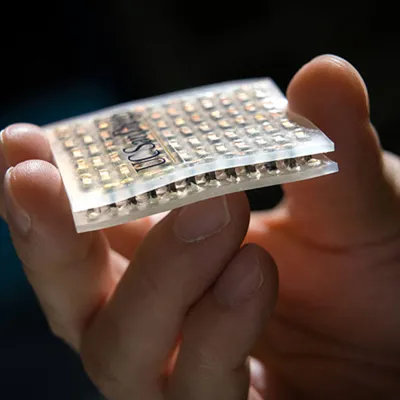
This is as the world health care systems continue to be under extreme pressure to be made affordable, efficient, sustainable and patient-friendly. Wearable technology is emerging as one of the key change agents in this respect. Startups form one of the most influential factors in this development due to their ability to form agile, mission-oriented companies without the burden of bureaucracy and historic systems. Although well-established medical device companies still dominate the industry, in most cases the startups introduce disruptive ideas to the market making science fiction a new reality used in the day-to-day clinical practice.
Healthcare wearable technology encompasses a wide range - covering fitness tracking wearables to ongoing glucose monitoring hardware to atrial fibrillation-detecting smart watches, and predictive AI-powered biosensors that signal an impending seizure. It is not only startups which are attempting to make inroads in these markets but are also dominating. Unmatched speed, focus on unmet needs and rapid iteration enable them to be able to innovate faster than other players who are often unable to keep up.
Challenging Traditional Healthcare through Agility
Healthcare industry is typically associated with regulatory burden, sluggish pace of innovation and risk averse culture. Nevertheless, startups are in the special position to overcome these obstacles as they involve lean development processes and keep their noses to the ground in terms of individual issues. They usually collaborate closely with clinicians, patients and academic institutions to co-develop their solutions and guarantee clinical relevance day one.
This incremental and spiral design has enabled the startups to develop wearable gadgets with a lot of precision to address some critical areas.
It could be a patch to monitor hydration in real time on athletes, or a smart bra which identifies early breast cancer symptoms, but added to that is the fact that these innovations are likely to be due to a startup digging deep to explore niche issues that might be ignored by larger corporations.
Personalization at the Core of Innovation
Personalized care has become one of the hallmarks of innovation in wearables by startups. Instead of using episodic data obtained in clinical situations, startups are designing wearables to measure physiological parameters on a continuous basis in real-time. The data stream is much richer via these devices which can be utilized to customize treatment plans, healthy complications, and give patients more control over their health.
To illustrate the point, start-up companies that are operating in the sphere of mental health have developed wearable gadgets that track the temperature of the skin, heart-rate variability, and electrodermal activity in order to determine the signs of anxiety or depression. Such information allows near-time interventions or prompting caregivers that can fill a gaping hole in mental health care, where early intervention and care are not provided.
Such individualization is not in the domain of chronic disease management or mental health only. In women health, wearables are being developed by startups that monitor changes in their menstrual cycle, ovulation and hormonal fluctuations with unmatched accuracy. The combination of AI algorithms and mobile health platforms in these devices provides a more detailed layer of comprehension when it comes to reproductive health so that women can make better decisions and pursue medical care in the most effective times.
Leveraging AI and Data Science
Artificial intelligence and machine learning are among the greatest facilitators of entering the startup market in the field of healthcare wearable products. Startups are using these technologies as a means of leveraging raw sensor data to create meaningful action. These algorithms can assist in detection of subtle patterns at a level beyond the capabilities of trained clinicians; this allows much earlier diagnosis, improved risk stratification and improved treatment plans.
Consider, cardiovascular health, an area in which wearables have demonstrated outstanding potential. The startups are coming up with new wearables with ECG capabilities that apart from identifying arrhythmias, also enable predicting the risk of a patient developing a cardiac event in future using predictive analytics. Training their models with large amounts of data, startups can offer real-time risk scores, contact emergency contacts or engage in automated alerts to medical professionals.
Data, though, is associated with a set of new challenges as well - particularly in the field of healthcare security and privacy protection being inextricably linked. In this regard, startups are now adopting decentralized data storage, end-to-end encryption, blockchain-enabled verification-based technologies to secure and maintain compliance of the patient data with regulatory standards such as HIPAA and GDPR.
Disrupting Clinical Trials and Research
The conduct of clinical trials is another benefit that startups are gaining grounds with wearables. Clinical trials usually expensive, time-constricted and geographically defined. Wearables are transforming this paradigm and made it possible to conduct remote monitoring and decentralized trials. New startups are working on devices that can monitor patient adherence, physiological changes and side-effects in real-time- providing sponsors a constant data flow without requiring the sponsor to visit the patient in person regularly.
In addition to unburdening patients logistically, the move will also bring additional diversity to this trial, bringing those living in far-flung or underserved areas. They are doing this through partnerships with pharmaceutical companies and contract research organizations (CROs) to ensure that new drugs and therapies are more quickly and efficiently validated to have efficacy and be safe. This new technology is particularly critical in the cases of rare diseases and in the cases of oncology where the numbers of any patient are minimal and every data point is critical.
Further, wearable-generated data will give a long-term view of the patient outcomes, and as such, will enable researchers to pick-up hitherto unmeasurable metrics of a quality of life, functional performance, and effectiveness in the real world qualities that are now out of reach by conventional endpoints such as survival and alleviation of sign/symptom burden.
Accessibility and Affordability
One of the main critiques of the up-and-coming health technology is that it is mostly accessible to the users with high income and tech-savvy individuals. Companies that are trying to stay top of this stigma include startups that are developing scalable, cost-efficient solutions to be implemented in low-resource environments. Be it by means of solar-powered wearable patches, gadgets that connect over SMS as opposed to the internet, or by collaborating with existing infrastructure in the field of public health, startups are attempting to create a way to affordably open access to more advanced healthcare solutions.
Startups in nations of Africa, Asia and Latin America are already beginning to use wearable technologies to monitor maternal health, track viral diseases, and infants. These startups are integrating the wearable technology through direct collaborations with the NGOs, government agencies, and international health organizations into the larger health plans to mitigate mortality and deliver positive health results even in the most vulnerable groups.
Building Ecosystems, Not Just Devices
The common point between many successful startups in this domain is the fact that they cover health care in its entirety. And they don t merely make gadgets, they make ecosystems. This usually involves mobile apps, cloud based dashboards, API connections with hospital systems or even personalized coaching services that run on human-in-the-loop AI.
An example of that can be a diabetes management wearable that is connected with a nutrition app, offers insulin injection reminders, connects with electronic health records and gives the user access to an endocrinologist who can be seen virtually within the same system. This ecosystem-based method raises compliance, increase user interaction, and support a 360-degree view of the patient health.
These integrations open the opportunity of value-based care models too. Ability to go to a proactive approach of care due to the constant monitoring and timely interventions available results in a healthy way out of hospital readmission and beyond with the patients, that is, the satisfaction of its clients an indispensable component of the modern system of reimbursement.
Navigating Regulatory and Reimbursement Pathways
Though the first aspect, which is innovation, is a definite advantage enjoyed by start-ups, the processes of clearing regulatory obstacles and finding reimbursement channels are a complex task. Regulatory agencies such as the FDA, are trying to keep up with the fast changing picture of wearables.
The successful startups in such environment have started by addressing the regulators at an early stage, have invested in clinical validation, and have built multi-disciplinary teams who are familiar not only with technology but also with healthcare compliance.
Certain start-ups are also entering into strategic alliances with educational institutions to run clinical studies, which certify their gadgets. Some are joining accelerators and consortiums where they can seek advice on regulatory strategy, clinical design and go-to-market pathway. Such partnerships will make sure that creative solutions result in actual practice and do not jeopardize safety and efficacy.
On the reimbursement end, startups are pushing to have new codes defined under CPT, direct-to-consumer and partnering with employers and insurance companies to incorporate wearables into wellness plans. Startups are convincingly arguing that wearable integration into the mainstream of care should be achieved by showing cost savings and better outcomes.
The Road Ahead
With healthcare migration towards decentralization and data, the use of wearable technology will grow in scale exponentially. Very critical to such a future will still be startups. Efforts at sensor miniaturization, battery life and edge computing may indeed produce the next-generation of wearables which are more discreet, powerful and adaptive than what has been used before.
Soon, it is possible to see devices with a single purpose giving way to multifunctional wearable devices that can track many biomarkers simultaneously. Such wearables combined with AI and real-time analytics may turn into the facets of an extended health infrastructure possibly consisting of spheres: hospital, home, community.
The emerging trend of digital twins in healthcare, e.g., presents new horizons of integration with wearables. It is already seeing startups experimenting with using wearable data to feed virtual patient models so that diagnosis and treatment can be simulated. It is conceivable that this combination of wearables, AI and systems biology will result in a future of hyper-personalized medicine.
Conclusion:
Innovation is not only happening in the medical field wearable technology through startups but the startups are even redefining a brighter future of medicine.
They are also addressing issues that have marred the traditional healthcare systems through their innovativeness, technical knowhow, and customer-focused design. Placing sensors on our wrists, skin and garments, these visionaries are giving patients a say in when and how they are treated, they are advancing clinical decision-making, as well as increasing access to treatment worldwide.
With digital health investment increasing and regulatory regimes becoming friendlier to advancement, there is no doubt the healthcare wearable market will be among the richest landscapes in which startups can create disruption. Startups, clinicians, patients, and policymakers will be the key to the unlocking the untapped benefits of wearable technology not as a device, but a game changer in the realm of healthcare around the world.