
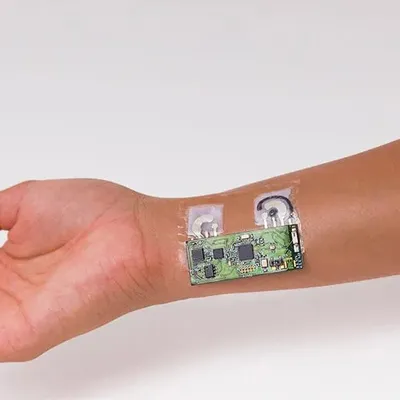
The use of wearable technology in the contemporary health care system has changed the paradigm of how clinicians can track, diagnose some conditions, and treat patient health. Smartwatches, which are able to identify arrhythmia, as well as constant glucose biosensors and many others have helped the personalized medicine grow its boundaries. In spite of this prospect, battery life, data accuracy, and data security still pose three, continuing and critical challenges on the way towards broad adoption of this paradigm. All these issues are core violators in the areas of trust, reliability, and clinical usefulness, which are critical in matters dealing with patient safety and clinically directed healthcare provision.
Battery Life: The Achilles ‘heel of Continuous Monitoring
Battery life is another of the most important driving factors in engineering an engineering solution in the field of medical wearables. Such devices are also supposed to be worn constantly, communicating real-time signals of physiological data, without the need to recharge often. In some cases like detection of a heart health condition through remote patient monitoring, or monitoring sugar level through glucose tracking in diabetics, continuous functionality is a question of life and death. Nevertheless, sensors, processors, communication modules (including Bluetooth, Wi-Fi, or cellular) and displays require a lot of energy. Existing battery technology and particularly lithium-ion cells are both size- and capacity-limited.
Most of the wearables get small because it needs to be comfortable or discrete, which inevitably means low Watt batteries. However, by reducing the size of the battery, it diminishes the operating time of the device resulting in engineers to find themselves in a paradoxical situation. Moreover, one cannot simply replace batteries or charge a device every time, especially older users and people with mobility or undergoing long-term diagnoses, which may extend up to a few days.
Among the possible solutions is to switch to energy efficient components, low power wireless protocols and low power wireless hardware to make it possible, as well as energy scavenging, such as thermoelectric and kinetic charging. However as exciting as it sounds, this type of innovation is still nascent and just starting, and is not yet in a position to present scalable regulatory-acceptable solutions to the medical-grade wearable sector.
Another aspect that is not taken into consideration is battery degradation with time. When the batteries lose performance, apart from cutting down on their working time, they also threaten to compromise the sensor performance based on the unstable power supply applied. This is intolerable in the clinical setting. Strict performance standards are required by regulatory authorities like the FDA or the EMA and variable power delivery is a direct enemy of compliance.
Furthermore, battery life is of even greater importance in the case of implantable wearables i.e. cardiac monitors or neurostimulators. The performance of batteries is directly connected with the risks and the costs of replacement procedures in case surgeries have to be used to replace these devices.
Accuracy: The Thin Line between Insight and Misdiagnosis
The most vital element of a healthcare device is medical grade accuracy. It is even more essential in wearables because such systems are characterized by non-invasiveness and variance in operating conditions. A hospital-grade ECG machine operates in an environment that uses a controlled setting. However, in contrast, a wearable ECG patch needs to provide consistent readings both during exercise, during sleep and during a stressful situation, all of which cause readings to be inaccurate due to motion, sweat, and body temperature variability.
Signal measurement of physiological signals by optical, mechanical or electrochemical sensors is prone to noise and artifacts by their nature. To take one example, photoplethysmography (PPG) which is used in smartwatches to track the heart rate or oxygen saturation may be subject to influences by such factors as skin tone, tattoos, illuminant lighting, and movement. Real-time analytics have some challenges when it comes to interpretation of such noisy data even after advancements have been made on algorithms and signal processing.
Accuracy of the data also becomes critical when the data provided by wearables is consumed by clinical decisions, medication adjustments, or calls. Such wrong results might cause unwarranted feeling of anxiety, improper care, or even unnoticed diagnosis. In another example, a false negative in an arrhythmia detection system may cause the user to do nothing about a potentially life-threatening situation, and in the case of a false positive, unnecessary emergency room visits or change of treatment.
There is also the need to be corrected and customized to ensure precision. The physiology of a human being can be very different- something that is normal to one patient might show a pathology to another one. Alas, even commercially available wearables are in many ways generic, which leaves the thresholds to work in generic zones instead of baselines per individual patient with little clinical application. New models and devices will have to implement AI-generated adaptive models that learn through repeated exposures of a user and change parameters to increase accuracy without clinical need.
Confirmation of device-accuracy is a regulatory requirement. However, the difference between clinical validation and actual performance remains an issue. The participants in clinical trials tend to be more compliant, settings tend to be more regulated, and usage more standardized. However, real-world applications add other unpredictable and uncompensable factors that are becoming a frequent way of illustrating weaknesses in design and algorithm validity.
The other unobvious point of accuracy is interoperability with Electronic Health Records (EHRs) and observance in workflows of clinicians. Data has to be put in context in order to make it meaningful. Raw sensor reads that are timestamped, combined with metadata and clinically contextual value have limited usefulness and have a potential to mislead diagnostic inference. Accuracy therefore should not be treated as a sensor problem but as a system problem that extends to processing, transmission and visualization of data to clinical integration.
Data Security: Trust and Compliance in a Connected Ecosystem
The last and possibly the most controversial issue in the use of medical wearables is that of data security. These externals are the terminals of a huge digital health landscape, and continuously accumulate gather, send and, occasionally, store sensitive health information.
Having access to the heart rate, glucose levels, GPS data, and behavioral data, these devices due to the amount of data they deal with emerge as a prime target toward the issue of cybersecurity.
The data regarding healthcare are also significant ones on the black market since it is long-lasting and confidential. The consequences of a breach may extend to identity theft, fraud to the insurance company, distraction of the reputation and above all a loss of fidelity in the digital health infrastructure. In the case of medical wearables, this risk is increased by the distributed, frequently weakly secured character of such devices. As compared to the hospital systems which are secured with layered security architecture, the wearable devices are used by individual users who are oblivious of best practices on the data privacy and device security.
Data encryption can be used both in transit and at rest and represents necessary minimum but usually does not follow the consistency of all devices. In the rush to make their products commercially available, smaller startups and tight-belt manufacturers might focus primarily on the functionality aspect and not on what constitutes a firm cybersecurity measure. Additionally, mobile apps or cloud services that are companion to wearable devices frequently possess new attack surfaces, as well.
The issues of the compliance with global data protection laws, i.e. HIPAA (USA), GDPR (Europe), and India DPDP Act are becoming more complex yet with the aspect of cross-border data transfer. The connection of the wearables with remote cloud storage that is not placed in the jurisdiction of the user might be unintentionally breaking the laws on personal privacy and fall under legal and financial liability of companies.
User consent and transparency are not a black/white issue, either. Secondary data - such as location-tracking or usage data - are widely collected by many wearables; such information arguably has no immediate medical use, but may generate revenue through developing products, or as a source of advertising. It is crucial to make sure that the users are informed and their data is engaged ethically and in accordance with the law. Tokenization, anonymization, and blockchain-based immutable audit trails are also under investigation, but have not entered mainstream usage because they are technically limited and cost-prohibitive to scale.
In the integrated hospital settings, bring-your-own-device (BYOD) culture adds more confusion to the waters. In cases when patients or even healthcare professionals rely on their personal wearables in remote monitoring or wellness programs, IT teams have a daunting work to make sure that the network connection and data hygiene is not compromised.
The most significant dichotomy, perhaps, is to find the balance between the security and the usability. Security measures that are too strict may lead to cumbersome electronics that will make a user not use them regularly, and when that happens, it will interfere with the maintainability of data and ultimately clinical utility. Poor security on the other hand opens up breaches. It is important, thus, to create systems, not only in technological perspective, that are seamless, secure, and ultimately user-friendly as a requirement to earn the trust of the people.
Navigating the Future: A Multidisciplinary Mandate
The multi-disciplinary approach dispersed towards solving these issues incorporates both the engineering ingenuity, clinical expertise, regulatory requirements and user centered design. Not only is inter-disciplinary collaboration between device manufacturers, clinicians, data scientists and cybersecurity experts a desirable - it is essential.
Breakthroughs related to battery technology, e.g., solid-state batteries or new kinds of energy-harvesting materia, could apply, and though need to be tested in terms of medical safety and reliability. If properly explained and validated, AI, and machine learning provide an opportunity to increase accuracy by being tailored to individuals and constantly calibrated. New cybersecurity structures need to be established to predict risks that would emerge in a more disparate and interconnected medical system.
Moreover, regulators will be very important in trying to direct innovation without inhibiting innovation. With medical wearables being on a blurry boundary between consumer devices and controlled medical instruments, it is important to develop consistent classifications and credentials as well as post-market surveillance.
At the same time, the education of the users should not be overlooked. An end user who fails to charge a technologically strong device, wears it in the right way, or agree to the sharing of data might make the device inefficient. Inclusive, accessible, and minimalistic design will make sure that technology will serve people and not the vice versa.
Conclusion
The potential of medical wearables is transformative, yet they are limited by the flaw in any of the systems deciding their design and implementation procedures. Radio constraints to battery life may interrupt care, data inaccuracies may damage diagnostics, and low data security may undermine trust. This is not a single initiative to overcome these challenges but a continuous process that takes agility, accountability and most importantly the patient well-being as a major priority.
With the shift of healthcare into the continuum of care, the utility of wearables will increase in location and degree. Creating fault-tolerant systems that are dependable in performance, which protect privacy and can bring the clinical insights that can be acted upon is not only a creed of technology, but ethical.