Over the past decades access to healthcare has improved worldwide. As a result, life expectancy has increased and with it the prevalence of vascular disease. Endovascular techniques have become the mainstay for vascular disease management over the past three decades. Traditional, open surgery continues to play a role in management of complex vascular disease and in developing countries. The forefront and future of vascular surgery lies in the field of hybrid procedures, where conventional open vascular operations meet cutting edge endovascular techniques, reducing operative time, time of hospitalization and improving patient outcomes.
A Brief History of Vascular Surgery
The development of vascular surgery as a distinct specialty began in the early 20th century, with pioneering work by surgeons like Alexis Carrel, who was awarded the Nobel Prize in Medicine in recognition of his work on vascular suture and the transplantation of blood vessels and organs in 1912. The mid-20th century saw the introduction of the first successful arterial grafts, marking a turning point in the treatment of vascular diseases. Michael E. DeBakey was another pioneering figure in modern medicine, inventing countless surgical devices and spearheading the repair of aortic aneurysms and the introduction of Dacron grafts for blood vessel replacement earning him prestigious awards such as the Presidential Medal of Freedom and the National Medal of Science.
The first "hybrid" vascular surgery, utilizing both open surgical and endovascular techniques simultaneously in a single setting, was reportedly performed in 1973, when an iliac artery angioplasty was combined with a femoral-femoral bypass procedure for limb salvage.
The first endovascular repair of an abdominal aortic aneurysm in 1990 by Dr. Juan Parodi marked a significant milestone, establishing endovascular therapy as a standard of care in certain conditions.
What is the hybrid operating room?

A Hybrid Operating Room (OR) is an advanced procedural space that combines a traditional operating room with an image-guided interventional suite. This fusion enables clinicians to perform highly complex, advanced surgical procedures seamlessly. CT scans may be performed in some operating suites and advanced image guiding allows for precise procedures with minimal contrast and radiation. This fusion enables clinicians to perform highly complex, advanced surgical procedures seamlessly. Patients typically experience shorter recovery times due to fewer surgeries, while hospitals benefit from improved staff efficiency and cost-effectiveness.
What vascular pathologies benefit the most from a hybrid approach?
Hybrid procedures allow more complex anatomy to be treated by less invasive procedures in medically higher risk patients.
Multimodal, multilevel vascular reconstructions or lesions which are difficult to approach or reach for anatomic lesions stand to be well suited for a hybrid approach.
It comes as no surprise that the first applications to gain wide acceptance in the surgical theaters of the 1990s involved aorto-iliac disease, as open surgical reconstruction involves major surgery such as laparotomy or flank incision and often require aortic cross clamping resulting in high operative morbidity and mortality, which often precludes the use in the fragile, elderly population and those with high operative risk.
Particularly interventions that require a large dissection or insertion of synthetic grafts benefit from a hybrid approach. Bypass surgery, where the proximal intervention’s patency is dependent on the distal runoff or iliac PTA and common femoral endarterectomy with or without bypass, should be performed either simultaneously or soon thereafter to prevent thrombosis of the proximally treated artery or the bypass graft. Many centers have implemented the practice of completion angiography for all peripheral bypass surgeries to verify the patency of the inflow, outflow and the graft to prevent early occlusions of the graft. Upon identification of a technical defect immediate treatment can be performed by the operating physician at the index procedure, such as revision of an anastomosis, excision of a retained valve or ballooning or stenting of a residual stenosis, dissection or tandem lesion.
Peripheral procedures
Common femoral endarterectomy, combined with open iliac artery transluminal angioplasty and stent as well as Iinfrainguinal bypasses distal to either an iliac or superficial femoral artery (SFA) lesion are ideal candidates for a combined approach.
Particularly peripheral arterial disease has seen a rise in hybrid procedures. Peripheral bypass surgery has become a last option nowadays. In most scenarios vascular surgeons and interventionalists chose an endovascular-first approach with peripheral arterial lesions. Several studies such as the BASIL trial have supported this approach, albeit with some reservations for long occlusions. Physicians are pushing the envelope to treat long lesions now using novel atherectomy devices, which physically remove atheromas and calcium using diamond blades with promising results.
Thrombectomy devices have replaced open thrombectomy in many acute conditions. Instead of open surgery and mechanical thrombectomy via a fogarty balloon of the dissected vessel, thrombectomy devices are inserted endovascularly via intruder sheaths. Fragmentation and aspiration of the clot material occurs mechanically or pharmaco- mechanically restoring blood flow to the affected limb/organ without incisions.
Drug coated balloons have recently made their way from the interventional cardiologists into the armamentarium of vascular surgeons and have improved long term results in several large randomized controlled studies. Many institutions have implemented DCBs for a majority of their peripheral cases and to treat restenosis in other parts of the vascular tree due to their favorable effect on vascular remodeling.
Mesenteric disease
The Retrograde Open Mesenteric Stenting (ROMS) procedure is a hybrid technique used to treat mesenteric ischemia by combining open surgical and endovascular methods. It involves making an abdominal incision, placing a stent in the superior mesenteric artery against the blood flow direction, and using imaging to guide the process. This approach enables effective revascularization and potential bowel resection.
Carotid Disease
Transcarotid Artery Revascularization (TCAR) is a minimally invasive procedure to treat carotid artery blockages and reduce stroke risk. It involves a small neck incision, stent placement, and temporary blood flow reversal to prevent plaque from reaching the brain. TCAR is less invasive than traditional surgery.
Endovascular aneurysm repair (EVAR) and Thoracic endovascular aortic repair (TEVAR)
Hybrid surgical approaches, combining elements of endovascular aneurysm repair (EVAR) and thoracic endovascular aortic repair (TEVAR), offer several advantages over traditional open surgery. These techniques are less invasive, reducing the need for large incisions and potentially decreasing the risk of complications associated with open surgery. Patients may benefit from shorter hospital stays and quicker recovery times, which can be particularly advantageous for those with complex medical conditions or advanced age. Additionally, hybrid surgeries can extend treatment options to patients who were previously considered unsuitable for conventional procedures due to anatomical constraints or other risk factors. Combining placement of a stent graft with open surgery decreases the morbidity and increases survival of these large procedures. When extensive dissections or aneurysms are treated via hybrid approach circulatory arrest may be avoided and operating time significantly reduced. With custom and physician- modified fenestrated and branched devices anatomies can be treated and repaired that were previously off-limits to both open and endovascular intervention. While these methods may involve higher rates of reintervention compared to open repair, they do not significantly affect long-term survival, making them a viable option for many patients facing aortic aneurysms or dissections.
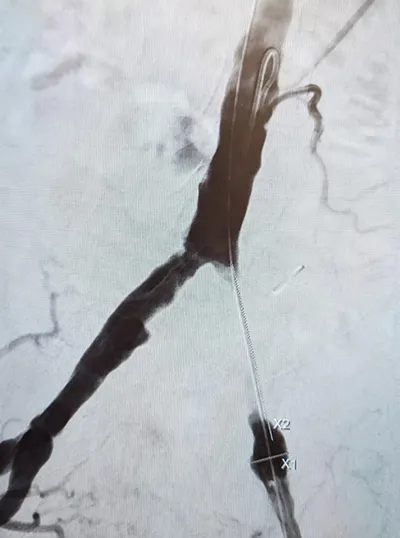
Aorto-Iliac-Occlusive Disease
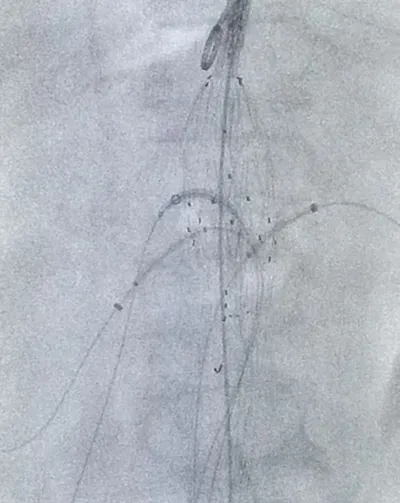
Aorto-iliac occlusion has been traditionally treated by life-style modification and aorto-bifemoral bypass surgery when indicated. Since patency of this repair exceeds 90% over 10 years it was hailed as the holy grail of open vascular repair, specifically since a synthetic graft is used for this surgery. Skeptics questioned whether endovascular treatment stood a chance against this gold standard treatment. Low and behold, the CERAB procedure, known as Covered Endovascular Reconstruction of the Aortic Bifurcation, entered the field and has replaced the traditional bypass surgery in many cases. This minimally invasive procedure involves the use of covered stents to reconstruct the aortic bifurcation without the significant morbidities associated with laparotomy, graft infection, graft-enteric fistula and incisional hernias or bowel obstruction.
Trauma
Trauma may be one of the areas where the fusion of open and endovascular surgery has saved the most lives. Studies have shown that the use of a hybrid OR can reduce the mortality rate in severely injured patients from 50% to 16%, which is a substantial improvement in life-saving potential. When a trauma patient is immediately transferred to the hybrid OR, diagnostic imaging in the same space as surgery can lead to quicker decision-making and more targeted treatments, further enhancing the chances of survival for trauma patients. An intra-aortic balloon can be placed and the trauma surgeons can work side by side with the vascular surgeons, saving valuable time, resources and red-blood cells. Inaccessible injuries, such as the subclavian artery or the great vessels can be accessed via catheterization and immediate repair via covered stents or bleeding control via embolization or balloon occlusion can be achieved.
Arterio-Venous Access
One of the last bastions of open vascular surgery lies in arteriovenous access. Long belittled as easy to access vessels with an overall low rate of complication and reimbursement cutting edge medical devices only recently made their impact. With the advent of AV access maintenance in the ever growing aging and diabetic population, angioplasty and stenting became one of the most frequent vascular procedures in the United States. A plethora of devices are nowadays available for maintenance of arteriovenous fistulas and grafts, but the revolution may lie in the endo-AVF creation. Two devices have caused a stir in the vascular community in recent years enabling creation of an AVF via endovascular means using radiofrequency to fuse fore-arm arteries and vein. Results are promising, but only time will tell whether the procedure will offer the same results and become economically feasible for most centers.
Hybrid procedures were initially implemented in the management of peripheral artery disease but are now being used in all parts of vascular surgery including cerebrovascular disease, aneurysm repair, mesenteric arterial disease and arterio-venous access procedures.
In light of rising health-care costs and limitations for providers and patients to undergo serial admissions for multiple interventions such as diagnostic angiography, bypass surgery and lastly endovascular intervention, many institutions have moved to from staged vascular interventions to a single hybrid procedure.
Advantages of a hybrid-repair-approach:
1. Decrease the invasiveness of open surgery, reducing physiological stress
2. Smaller incisions leading to lower compilation rate and re-admissions, specifically in the elderly diabetic population
3.Fewer procedures with lower requirement for anesthesia
4. Instant repair for multi-level disease
5. Prevention of continued symptoms, ischemic time and infection between procedures
6. Shortens ICU and hospital stays, contributing to lower 30-day perioperative mortality
7. Best option for high-risk patients who cannot tolerate an open operation.
8. Studies show an overall technical success rate of 99% for hybrid repair with lasting patency comparable to open surgery
Benefits for the Health care system
The analysis of Ebaugh et al from 2008 elucidates how hospital systems and insurers can benefit from single hospitalization hybrid vascular procedures:
Excluding patients with confounders, hospital charges and length of stay (LOS) were compared (Table 3). These results suggest that when performing elective hybrid procedures in patients without gangrene, ischemic rest pain, CHF or renal failure, performing both, the endovascular and open portions on the same day significantly reduces total hospital charges and LOS, by 78% and 133%, respectively.
Conclusion:
Where does the future lead us?
The future of hybrid vascular surgery is poised for significant advancements, integrating state-of-the-art imaging systems with traditional surgical methods to enhance patient outcomes. The trend towards minimally invasive procedures, supported by real-time imaging and flexible imaging capabilities, is reshaping the landscape of vascular care. As hybrid operating theaters evolve, physicians will be able to treat patients with increasingly difficult anatomies and pathologies. Unmet needs for devices will lead to the development and integration of a variety of surgical and endovascular devices. Initial costs for new technologies and device development will be offset by shorter hospital stays and lower morbidity and mortality.
References:
(1) Porter JM, Eidemiller LR, Dotter CT, et al. Combined arterial dilatation and femorofemoral bypass for limb salvage. Surg Gynecol Obstet. 1973;137:409–412.
(2) Ebaugh JL, Gagnon D, Owens CD, et al. Comparison of costs of staged versus simultaneous lower extremity arterial hybrid procedures. Am J Surg. 2008;196:634–640 Training of vascular residents
(3) Balaz P, Rokosny S, Bafrnec J, Björck M. The Role of Hybrid Procedures in the Management of Peripheral Vascular Disease. Scandinavian Journal of Surgery. 2012;101(4):232-237. doi:10.1177/145749691210100402
(4) Piazza M, Ricotta JJ 2nd, Bower TC, Kalra M, Duncan AA, Cha S, Gloviczki P. Iliac artery stenting combined with open femoral endarterectomy is as effective as open surgical reconstruction for severe iliac and common femoral occlusive disease. J Vasc Surg. 2011 Aug;54(2):402-11. doi: 10.1016/j.jvs.2011.01.027. Epub 2011 Apr 30. PMID: 21531527.
(5) Alpaslan A, Wintermark M, Pintér L, Macdonald S, Ruedy R, Kolvenbach R. Transcarotid Artery Revascularization With Flow Reversal. J Endovasc Ther. 2017 Apr;24(2):265-270. doi: 10.1177/1526602817693607. Epub 2017 Feb 17. PMID: 28335706.
(6) de Vries SO, Hunink MG. Results of aortic bifurcation grafts for aortoiliac occlusive disease: a meta-analysis. J Vasc Surg. 1997 Oct;26(4):558-69. doi: 10.1016/s0741-5214(97)70053-3. PMID: 9357455.
(7) Bala M, Kashuk J, Moore EE, Kluger Y, Biffl W, Gomes CA, Ben-Ishay O, Rubinstein C, Balogh ZJ, Civil I, Coccolini F, Leppaniemi A, Peitzman A, Ansaloni L, Sugrue M, Sartelli M, Di Saverio S, Fraga GP, Catena F. Acute mesenteric ischemia: guidelines of the World Society of Emergency Surgery. World J Emerg Surg. 2017 Aug 7;12:38. doi: 10.1186/s13017-017-0150-5. PMID: 28794797; PMCID: PMC5545843.
(8) Armin Tabiei, MS, Jesse Chait, DO, Sebastian Cifuentes, MD, Ansab Haider, MBBS, and Fahad Shuja, MBBS, CASE REPORT | MESENTERIC VASCULAR DISEASE| VOLUME 9, ISSUE 2, 101145, JUNE 2023 March 10, 2023DOI doi.org/10.1016/j.jvscit.2023.101145
(9) Dake M.D., Ansel G.M., Jaff M.R., Ohki T., Saxon R.R., Smouse H.B., Machan L.S., Snyder S.A., O'Leary E.E., Ragheb A.O., Zeller T. Durable Clinical Effectiveness with Paclitaxel-Eluting Stents in the Femoropopliteal Artery: 5-Year Results of the Zilver PTX Randomized Trial (2016) Circulation, 133 (15), pp. 1472 - 1483 DOI: 10.1161/CIRCULATIONAHA.115.016900
(10) Dosluoglu H.H., Lall P., Cherr G.S., Harris L.M., Dryjski M.L. Role of simple and complex hybrid revascularization procedures for symptomatic lower extremity occlusive disease (2010), 51 (6), pp. 1425-1435.e1 DOI: 10.1016/j.jvs.2010.01.092
(11) Nishibe T., Kondo Y., Dardik A., Muto A., Koizumi J., Nishibe M. Hybrid surgical and endovascular therapy in multifocal peripheral TASC D lesions: Up to three-year follow-up (2009)
(12) Dosluoglu H.H., Lall P., Cherr G.S., Harris L.M., Dryjski M.L. Role of simple and complex hybrid revascularization procedures for symptomatic lower extremity occlusive disease (2010) DOI: 10.1016/j.jvs.2010.01.092