

When most people think of ultrasound, they picture a noninvasive diagnostic tool—perhaps a sonogram during pregnancy or an imaging test used to examine organs and soft tissues. But in recent years, a new and transformative form of ultrasound has entered the medical landscape: focused ultrasound. No longer limited to diagnostics, ultrasound is now being used to treat disease in ways that are precise, effective, and completely noninvasive.
What is Focused Ultrasound?
Focused ultrasound is a rapidly advancing therapeutic technology that uses sound waves—targeted and intensified—to treat tissues deep within the body. What sets it apart is that it can do this without the need for incisions, needles, general anesthesia, or radiation. For patients, this means fewer risks, shorter recovery times, and less time spent in the hospital. For healthcare systems, it holds the promise of more efficient use of resources, reduced costs, and improved outcomes.
The US FDA has approved focused ultrasound for nine indications to date, including essential tremor, Parkinson’s disease, prostate and liver tumors, and uterine fibroids. Around the world, the technology has been approved for more than 30 indications and is in various stages of research and development for more than 180 diseases and conditions. With each passing year, its clinical potential continues to expand.
At its core, focused ultrasound works by concentrating multiple beams of sound energy on a precise point inside the body, similar to how a magnifying glass can focus sunlight on a single spot. The individual sound waves pass harmlessly through tissue until they intersect at the target area. There, the combined energy can create thermal, mechanical, or biological effects that treat the disease in question. Imaging, often MRI or ultrasound, allows clinicians to guide and monitor the treatment with exceptional precision.
The biological effects of focused ultrasound are diverse—currently, more than 30 mechanisms of action have been identified. Some, like tissue ablation or blood clot disruption, create permanent changes; others, such as opening the blood-brain barrier (BBB) or altering nerve activity, are temporary and reversible. Because of this broad range of mechanisms, focused ultrasound can be tailored for a wide variety of clinical applications, from oncology and neurology to women’s health and pain management.
Oncology and Immunotherapy
One particularly exciting application of focused ultrasound is in oncology, where it can both destroy tumor tissue directly and also stimulate the body’s own immune system to attack tumors. When these tumors are treated with focused ultrasound, the damaged cells release proteins and signals that alert the immune system to the presence of cancer, potentially generating a localized or even a systemic immune response capable of targeting metastatic disease.
This immune-activating effect has led researchers to explore focused ultrasound as a powerful complement to immunotherapy, especially for tumors that have so far proven to be resistant to this class of therapies, such as breast, pancreas, brain, and prostate cancer. Preclinical laboratory studies suggest that focused ultrasound may enhance the effectiveness of immunotherapy by improving drug delivery and making tumors more recognizable to the immune system. There are early-stage clinical trials, including one at the University of Virginia combining focused ultrasound with pembrolizumab for metastatic breast cancer, that are currently underway to assess these immune modulatory effects in patients afflicted with cancer.
Neurodegenerative Conditions
Focused ultrasound is also breaking new ground in the treatment of neurological diseases. One of the greatest challenges in treating brain diseases is the blood brain barrier (BBB), a protective lining on the inside of brain blood vessels, that prevents most drugs from reaching brain tissue. While essential for brain health, the BBB has limited the effectiveness of treatments for conditions like Alzheimer’s Disease, ALS, and Parkinson’s Disease.
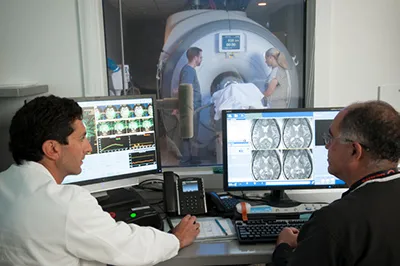
Focused ultrasound may offer a solution. By injecting microbubbles into the bloodstream and directing ultrasound waves at specific brain regions, clinicians can temporarily and noninvasively open the BBB. This process allows large therapeutic moleculesto pass through and reach their targets. The barrier typically reseals within 48 hours, minimizing any risks and side effects.
This technique has already been used in patients with Alzheimer’s disease to facilitate the delivery of aducanumab, an FDA-approved drug that targets amyloid plaques—a hallmark of the disease. Early studies showed that combining focused ultrasound with the drug resulted in significantly greater plaque reduction in treated areas, with 30% faster clearance and a 50% greater total reduction compared to untreated regions. Another recent study demonstrated both a reduction in amyloid and improvement in one neuropsychiatric test, suggesting early signs of clinical benefit.
Focused ultrasound is also being investigated as a tool for noninvasive neuromodulation, with the potential to precisely alter brain activity in neurodegenerative conditions like Parkinson’s disease and ALS. Researchers are now exploring whether focused ultrasound can modulate dysfunctional neural circuits to improve nerve conduction and also open the BBB to enhance drug delivery — innovative approaches that may open new therapeutic pathways for two diseases that have long lacked effective treatment options.
Psychiatric Conditions
Additionally, focused ultrasound has emerged as a promising therapeutic option for many psychiatric disorders, including depression, obsessive-compulsive disorder (OCD), and opioid addiction. Using focused ultrasound as a thermal ablation device, researchers at Sunnybrook Health Sciences Centre in Toronto published long-term positive results from early clinical trials using MR-guided focused ultrasound to treat OCD and major depressive disorder, with especially strong results in patients with OCD after one year of follow-up. In another study from Korea, 10-year follow-up data confirmed that focused ultrasound is a safe and effective treatment for OCD, with participants reporting significant symptom reduction and improved daily functioning.
Focused ultrasound can also be used to perform neuromodulation and alter the activity of neurons for a variety of psychiatric conditions, including depression, anxiety, schizophrenia, OCD, PTSD, and various addictions such as alcohol, tobacco, and opioid usage.
The Future of Focused Ultrasound
As with any breakthrough medical technology, integration into mainstream clinical practice takes time. Regulatory approvals, reimbursement structures, and physician training are all important pieces of the puzzle, as well as communication and collaboration between researchers and institutions. But momentum is building.
Today, the field includes more than 70 device manufacturers along with a wide network of microbubble developers, imaging equipment makers, and distributors that are driving global adoption. In the last year alone, nearly 151,000 patients were treated using more than 2,300 focused ultrasound systems worldwide, bringing the total to over one million patients treated to date.
For those across the healthcare ecosystem—whether in hospital leadership, policy, advocacy, or health IT—focused ultrasound represents a powerful convergence of safety, innovation, and patient-centered care. It addresses many of the system’s greatest challenges: high surgical costs, long recovery times, and the risks of invasive procedures. By offering a truly noninvasive, image-guided alternative, focused ultrasound is redefining what it means to undergo surgical procedures.
For patients, the benefits are clear: faster recovery, fewer complications, including reduced risk of infection, bleeding, and tissue damage, and less fear.
Looking ahead, the potential of focused ultrasound is immense. It is not just a new tool—it is a transformational platform that is reshaping how we treat disease. As a noninvasive, highly targeted, and versatile approach, it offers a safer, faster, and more precise therapeutic tool.
But every day without focused ultrasound means unnecessary suffering, preventable disability, and lives lost to conditions we already have the technology to treat. The next step is not invention it’s awareness, access, and adoption.
The impact is undeniable: focused ultrasound is improving quality of life, extending survival, and in many cases, saving lives. For healthcare professionals committed to advancing care, this is not just the future of medicine it is the future we must build together.