
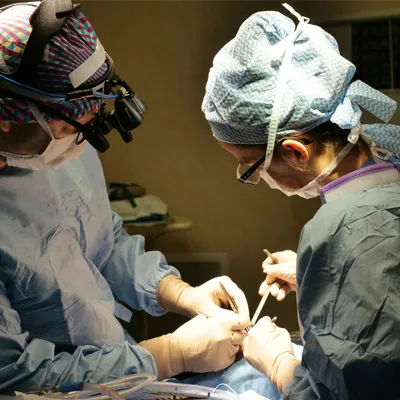
Neurosurgery is the science, the precision, and the innovation often in one particular area and one of the most complex and transformational fields of surgery in the contemporary healthcare world. Neurosurgery, unlike the other branches of medicine involves a complex knowledge of the brain, spinal cord, and peripherals; organs and structures that have a control over all the functions of human life. Neurosurgery has evolved considerably over the decades since it is no longer only a life-saving specialty. It has become a new frontier where technology, research and clinical expertise come together to not only extend lives, but in ways that once would have been seen as impossible, put the quality of life back in them as well.
With the healthcare environment facing a whirlwind of change, neurosurgery has become a specialty characterized by the adoption of innovation. Neurosurgery has become an epitome of how medicine can change at the current stage of its evolution due to the incessant fusion of science and technology through the application of minimally invasive practices and sophisticated neuroimaging, robotics, artificial intelligence, and even reparative therapies. The specialty does not only deal with illnesses of the nervous system; it changes the capabilities and outcomes of human survival, healing, and health.
The Expanding Scope of Neurosurgery
In the past, neuro surgery was regarded as a high-risk field of specialization that could only be applied in cases of trauma to the brain or life threatening tumors. Although it still refers to such conditions, its scope of activities has become enormous. Neurosurgeons in the present age can manage a wide variety of neurological diseases such as epilepsy, movement disorders like Parkinsonian syndrome, spine disorders, vascular deformities as well as birth defects. This has been a growth that is both indicative of the increased accuracy of diagnostic power and the ‘security in the operating room’ that innovation has instilled in the specialty.
The specialty is no longer confined to dramatic interventions but also to more oriented treatment in a way that more neurological functions will be preserved. Such new technologies as deep brain stimulation raise hope in cases of movement disorders, and minimally invasive endoscopic procedures make it possible to access complex brain and spine structures with a minimally traumatic impact as compared to standard surgeries. The way neurosurgery has expanded its boundaries, it has also made the lifesaving surgery life enhancing.
Precision through Advanced Neuroimaging
Among the most significant changes in neurosurgery, one should mention the advancement of neuroimaging. Other techniques that have transformed neurosurgeons in how to plan and execute their operations are magnetic resonance imaging (MRI), functional magnetic resonance imaging (fMRI) and diffusion tensor imaging (DTI). According to these technologies, the neural pathways and vascular structure and also boundaries of tumors can be visualized with unequalled clarity.
Neuroimaging has moved neurosurgery out of a realm of approximate localization to that of micrometer precision. Examples include: fMRI allows brain areas of speech articulation, movement, and thought to be mapped so that surgeons need not cut off vital functional areas when removing a tumor. On the same note, DTI offers a specific view of white matter pathways, which makes it possible to maintain communication pathways in the brain.
Patient outcomes are directly related to this precision. The chances of experiencing post-operative issues such as a reduction in the ability to move or to think have also been highly curtailed. Patients heal faster and the overall success rates of neurosurgical procedures have been increasing as well. Essentially, cutting-edge imaging has raised the bar of neurosurgery today, and has developed the belief that innovation will lead to practical patient outcomes.
Minimally Invasive Neurosurgery: Redefining Recovery
Most conventional neurosurgical operations would conclude in a large incision, long in-patient stays, and long recuperation times. This paradigm has been changed with the introduction of minimally invasive neurosurgery. Operating through minimal openings and with relatively less injury to surrounding tissues, surgeons are now able to reach deep-seated lesions or undergo a procedure to fix an abnormality of the spine using endoscopes, microscopes, and image-guided systems, which provide practitioners with an opportunity to intervene.
For instance, the endoscopic endonasal surgery against pituitary tumors has abolished the large craniotomies. By the same token, the least invasive spine surgeries make it possible to correct deformities and stabilize vertebrae without inflicting undue damage to muscles and ligaments. This has an effect of lower blood loss, less overall in-hospital stays, faster healing and reduced post-surgery pain.
There are also medical implications that surround the application of minimally invasive neurosurgery. Less cost is associated with shorter hospital stays and quicker recovery, release resources and better patient turnover. With the shift to value-based healthcare, those benefits are some of the reasons why innovation is critical to clinical and economic sustainability.
Robotics and Navigation Systems: The Future of Surgical Precision
Robotics and computer assisted navigation have transformed the notion of precision in neurosurgery. The robotic systems are not meant to take the role of the surgeons but to increase their refinement, steadiness, and preciseness. Such systems may perform micromovements that surpass the natural ability of the hands of humans, and allow careful actions in areas where a millimeter could mean the difference between accomplishment and permanent harm.
Using a so-called navigation system (sometimes described as GPS to the brain and spine), surgeons are guided in real time as imaging information is correlated to landmarks based on the anatomy. They will also reduce uncertainty during the procedure and lower potential error, even during complicated tasks like stereotic biopsy or even spinal instrumentation.
The trend of augmented surgical capability is emphasized with the merging of robotics and navigation. It is a change in the trend of complete dependence on human expertise to a synergy between surgeon and machine. Since robotic platforms are still evolving, their adaptation to artificial intelligence is also anticipated to bring it to another high in neurosurgical practice, which will increase the safety of procedures, their speed, and consistency.
Artificial Intelligence and Big Data in Neurosurgery
Integration of artificial intelligence (AI) into the sector of neurosurgery poses a new transformational episode in the contemporary field of healthcare. Structuring clinical, imaging, and genetic data worked out to be considerable. This is because the volume of these data could be deciphered using AI-driven algorithms to pick up disparities that might otherwise go unnoticed by the human eye.
The insights are used in the diagnosis, prediction of surgery, and individualisation of treatment.
As an example, neurosurgeons can adjust to treatment depending on the anticipation of aggressiveness of brain tumors based on imaging characteristics using AI models. AI-enabled software can aid in real-time decision-making intraoperatively where surgeons are alerted of possible risks. Machine learning algorithms are used after surgery to assist with patient monitoring, designating patients at risk of complications prior to clinical presentation.
Big data can be significant in the promotion of neurosurgical research as well. With the data on thousands of procedures performed by surgeons across the globe, the researchers are able to optimize surgical procedures, generate best practices and drive innovation at a quicker pace. Both AI and data analytics are part of this integration that shows how this process in neurosurgery is not only causing positive impacts due to the evolution of technology but is also transforming the healthcare sector towards the era of predictive and personalized medicine.
Regenerative Medicine and Neurosurgical Frontiers
Incorporation of regenerative medicine as practice in neurosurgery is another breakthrough discovery. Stem cell, gene editing, and engineering tissue incorporate immense potential to more trademarked conditions that have been deemed as incurable including injury to the spinal cord, neurodegenerative diseases, and disabilities post-stroke.
Regenerative strategies are currently in the experimental phase, but nonetheless have demonstrated promising signs of regenerative success as it pertains to recovering lost neurological capacity. Take the case of stem cell implants development, which are used to replace the damaged tissue of the spinal cord and restore it to functional levels again therefore regaining mobility to the paralyzed patients. Neurosurgeons are beginning to work more regularly with biotechnologists to help introduce these therapies into the neurosurgical operative plans and the future where the specialty might be less focused on resecting pathologies of the nervous system, but instead on actively repairing and regenerating nervous system pathologies.
This frontier widens the ethical, clinical, and philosophical aspects of neurosurgery. It puts into question conventional borders of medicine making neurosurgeons the first movers in the field of surgical as well as human potential.
The Human Element: Training and Expertise in an Era of Innovation
In neurosurgery the high-tech age has not reduced significantly the level of dependence on the skills, experience, and determination of the neurosurgeons. This is one of the most rigorous specialties within medicine to train on, and years of training through simulation and years of direct patient experience are required.
Neurosurgery training with simulation-based training, virtual reality and 3D modeling has become part of the synthesis of neurosurgical training. This is possible through the platforms as trainees will be able to perform complex procedures under their feelings of confidence and competence despite them not being able to hurt patients in such instances. But beyond technical capabilities, however, neurosurgeons must also understand the human dimensions of practice, and these are care-compassion, communication, and making good moral choices.
Now-a-days neurosurgery is rich in innovation and humanity. Though technology can help in direction, forecast, and boost, the consequences of the patients are dependent on the empathy, instinct, and judgment of the surgeon. Thus, the case of neurosurgery demonstrates the point that health care innovation should not fly out of the sphere of human values.
Challenges and Ethical Considerations
Such speed of neurosurgery innovation development offers challenges in addition to opportunities. Innovation is also a challenge; because the expensive advanced imaging, robotics, AI systems are currently just far. This introduces discrepancies in access, especially in low-income settings (where there is already insufficient neurosurgical care). These injustices must be addressed to make sure that innovation does not increase the healthcare divide.
The transfer of new technologies has also certain ethical considerations. Artificial intelligence in decision-making has brought the issue of accountability into question and a regenerative therapies-related the aspiration of human enhancement in society. Moreover, neurosurgical innovation is also an extremely complex field of creativity that requires regulating in such a way that the safety of the patients and the advancement of research are considered.
These challenges require the importance of cooperation among the following stakeholders: clinicians, policymakers, and industry leaders, and patients. Collective effort is the only option that can make neurosurgery utilize neurosurgery innovation in an accountable manner, in which the advancements are equally and ethically beneficial to humanity.
The Road Ahead: Neurosurgery as a Model of Innovation
In view of the future, neurosurgery will also play such role of modeling other specialties in the field of surgery. The use of technology, data, and human brains shows the way in which healthcare can transform into the realm of precision, individualization of selection, and opportunity. Treating disease is not the only specialty, and it involves the development of the society in terms of seeing, recovery, and having the convictions of human perspectives.
New frontiers, e.g. neuroprosthetics, brain-computer interfaces and neuromodulation therapies, will further expand the abilities of neurosurgeons. The implications of such innovations are too serious to ignore- not just to patients who have neurological conditions, but to human beings in general and their relationship with technology. With further advancement and a stretch to science and medical boundaries, neurosurgery has proven itself a living example of the efficacy of innovation in leading to a transformation in healthcare.
Conclusion
In the modern health system, neurosurgery is much more than a surgical specialty, it is an area in which innovative ideas touch the human soul, accuracy coincides with the ability to show compassion, and whatever is impossible becomes possible. Neurosurgery is redefining boundaries of healthcare with assists of advanced imaging, minimally invasive procedures, robotics, AI, and regenerative medicine. However, it is important to note in this technological renaissance that the spirit of neurosurgery does not change: the dedication to improving the lives of their patients, making them less pain-free and able to live the lives they want to choose to live, with as much quality as is possible.
With healthcare being in a transition period, neurosurgery is the vanguard of how a surgical subspecialty can change through innovation, all the while keeping in context of human values. It helps us to remember that advancements in medicine are not only calculated in technological changes but in lives saved, futures regained, and hope that is renewed through unbelievable collaboration of science and caring.