
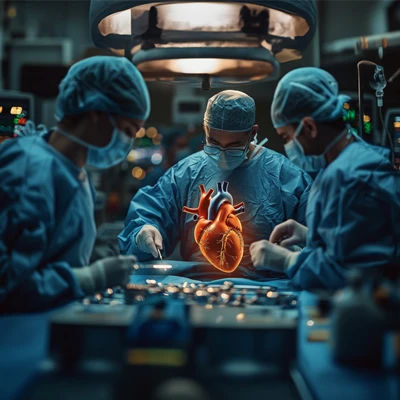
Cardiovascular surgery stands at the intersection of advanced technology, high clinical risk, and increasing system-level scrutiny. As procedures become more complex and patient safety expectations rise, healthcare systems face a growing challenge: how to train and sustain a highly skilled cardiovascular surgical workforce while maintaining optimal outcomes. Simulation-based training has emerged as a strategic solution to this challenge, offering a scalable and evidence-based approach to building cardiovascular surgery capacity in modern hospitals.
Traditionally, surgical education has relied on an apprenticeship model, where trainees progressively acquire skills in the operating room under senior supervision. While this model has produced generations of competent surgeons, it is increasingly constrained by reduced operative exposure, duty-hour regulations, and heightened accountability for outcomes. In cardiovascular surgery, where technical precision and rapid decision-making are critical, these constraints are particularly pronounced. Simulation-based training addresses these limitations by shifting a significant portion of skill acquisition away from the operating room and into controlled, reproducible learning environments.
Simulation as a Strategic Training Tool
Simulation-based surgical training encompasses physical task trainers, tissue-based models, virtual reality platforms, and digital simulation environments designed to replicate real operative scenarios. These tools allow surgeons to practice technical maneuvers, procedural workflows, and crisis management strategies without patient risk. Importantly, simulation supports deliberate practice—repetitive, goal-oriented training with structured feedback—which is a cornerstone of expertise development in high-performance fields.
Evidence from cardiovascular surgery education consistently demonstrates that simulation improves technical accuracy, procedural efficiency, and trainee confidence. Systematic reviews show large learning effect sizes, particularly among junior surgeons, with improvements in dexterity, speed, and consistency across a range of cardiac procedures. These benefits are achieved using both low- and high-fidelity simulators, reinforcing that effective training is driven more by curriculum design and feedback than by technology alone.
For hospital leaders, the implication is clear: simulation is not merely an educational enhancement but a workforce development strategy that supports quality, safety, and long-term service sustainability.
Addressing Gaps in Traditional Operative Training
Modern cardiovascular surgery offers limited tolerance for inefficiency or error. Complex valve repairs, minimally invasive approaches, and endovascular techniques demand a level of preparation that is difficult to achieve exclusively through live operative exposure. Simulation allows trainees to master component tasks—such as coronary anastomosis, valve reconstruction, and vascular access— before integrating them into full procedures.
Longitudinal simulation programs that provide trainees with continuous access to simulators, structured mentorship, and objective assessment have demonstrated measurable improvements in performance metrics, including reduced procedure times and higher technical evaluation scores. From an institutional perspective, this translates into more prepared surgeons entering the operating room, reducing variability and enhancing overall procedural reliability.
Personal Clinical Perspective: From Training to Practice
From my own experience as a cardiovascular surgeon, simulation-based training has played a pivotal role in skill acquisition and professional growth. Participation in diverse simulation programs allowed me to develop advanced competencies in mitral and aortic valve repair, minimally invasive cardiac surgery, and endovascular techniques—skills that later translated directly into clinical practice.
Simulation environments provided the opportunity to refine fine motor skills, optimize procedural sequencing, and address technical errors without the pressure inherent to live surgery. This accelerated learning curve proved particularly valuable when adopting newer or less frequently performed procedures. The confidence gained through simulation was not theoretical; it directly influenced operative decision making, efficiency, and patient outcomes.
For surgeons practicing in health systems with variable case volumes or limited subspecialty exposure, simulation serves as both a training and maintenance tool, ensuring readiness for complex interventions when clinical opportunities arise.
Beyond Technical Skills: Team Performance and Safety
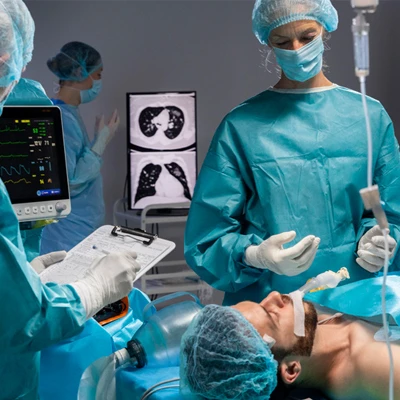
Cardiovascular surgery is inherently team-based, involving surgeons, anesthesiologists, perfusionists, nurses, and technologists working in high-stakes environments. Simulation enables multidisciplinary teams to rehearse communication, leadership, and crisis response in scenarios such as sudden hemodynamic collapse or intraoperative complications.
Studies show that simulation-based team training enhances situational awareness and coordination, which are critical determinants of patient safety. For hospital administrators, these benefits extend beyond the operating room, contributing to a culture of preparedness, shared accountability, and continuous improvement.
Technology, Scalability, and Future Readiness
Advances in simulation technology—including virtual reality, metric-based assessment, and remote simulation platforms—are expanding access and scalability. Modern simulators can provide objective performance data, benchmark skills against expert standards, and support proficiency-based progression rather than time-based training.
Distance simulation and telesimulation are particularly relevant for healthcare systems operating across multiple sites or in resource-limited settings. These platforms allow institutions to standardize training, reduce geographic disparities, and optimize faculty time, aligning educational investment with broader organizational goals.
The Case for Institutional Adoption
Despite strong evidence supporting simulation-based training, its implementation remains uneven. Cost concerns, infrastructure requirements, and competing priorities are common barriers. However, when viewed through a system-level lens, simulation represents a cost-effective investment in quality and safety. The downstream benefits—reduced complications, improved efficiency, and a more confident surgical workforce—far outweigh the initial expenditure.
In my professional opinion, all hospitals with cardiovascular surgery training programs should integrate structured simulation curricula as a core requirement. The technical complexity and risk profile of cardiac surgery make exclusive reliance on traditional training models increasingly untenable. Simulation enhances—not replaces—operative experience, ensuring that surgeons enter the operating room better prepared and more consistent in performance.
Conclusion
Building cardiovascular surgery capacity in today’s healthcare environment requires innovation, foresight, and commitment to evidence-based education. Simulation-based training offers a proven pathway to develop technical excellence, strengthen team performance, and safeguard patient outcomes.
For healthcare leaders, simulation should be viewed not as an optional educational tool but as a strategic investment in workforce capability and system resilience. Based on both the growing body of evidence and my own clinical experience, the widespread adoption of simulation in cardiovascular surgery training is essential to meet the demands of modern cardiac care and to ensure its safe and sustainable future.