
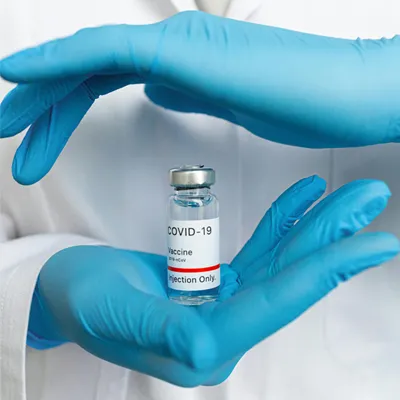
Pharmacovigilance is a traditional stronghold of the public health field protecting people against the unforeseen side effects of therapeutic advances. Pharmacovigilance aims to have patients receive the best of both worlds: the usefulness of medications without risk of adverse drug reaction (ADR) or medical error. The field has been in the process of major change in the age of digital. The conventional pharmacovigilance mechanisms- which relied on manual case reports, observational data, and clinical trial data- are gaining intersections with futuristic analytics, real-world flow of data, AI, and universal digital backbone. Not only is this evolution increasing efficiency but it is redefining concepts of how drug safety is conceptualized, monitored, and acted upon globally.
The Historical Foundation of Pharmacovigilance
Pharmacovigilance became methodologically identified in the 1960s, after the aftermath of thalidomide induced another form of calamitous-affect. Regulatory agencies like WHO and governments acted by putting in place systems through which ADRs could be systematically collected and evaluated. Spontaneous reporting systems were established as the foundation of drug safety surveillance under which regulating agencies and companies could then detect possible signs of risk that was otherwise not apparent during drug approval controlled trials.
This system was priceless in the years that followed but it was naturally flawed as it underreported, was fragmented into the regional scale and relied on retrospective view. Globalization has quickened past and a boom in pharmaceutical markets has made it essential to have a much more active, real time and globally integrated system. That has changed now and the pharmacovigilance gap has met the emerging digital health products to produce new possibilities in this field.
Digital Disruption and the New Landscape
The introduction of a digital transformation of the system of drugs and medications, is transforming the pharmacovigilance environment. The combination of electronic health records (EHRs), patient registries, wearable devices, mobile health applications, and social media platforms has introduced a wide expanse of real-world data. In contrast to the confined, regulated space of a clinical trial, the digital sources provide real-world information on drug performance in a wide variety of patients in the real world.
Big data analytics is what is allowing pharmacovigilance personnel to filter through such an enormous amount of information. No longer are safety experts having to wait on sporadic voluntary reports: they can now mine millions of data points to identify early warning signs. As an example, machine-learning systems may be used to search the EHR databases to detect patterns indicative of emergent ADRs, whereas NLP systems may be used to scrutinize the patient stories in the social media or health forums to report safety issues. This preventative, data-driven evaluative approach is helping them to intervene earlier and make more informed risk decisions.
Artificial Intelligence and Automation
Artificial intelligence has become one of the dominant trends in drug safety modernization. More straightforward tasks, including the coding of adverse events, the extraction of useful information out of the medical literature, and even a rough draft of a safety report can be carried out using automation tools. This lowers the overhead to human pharmacovigilance teams and allows them to concentrate their energies elsewhere and in particular higher-value responsibilities like signal identification, causality investigation and regulatory decision making.
More sophisticated AI algorithms are being developed to detect subtle combinations between drug exposure and adverse events they might not be detected by people. Using an example, predictive algorithms could look at factors related to the demographics of the patients, genetic information, and prior treatment history to identify which patients are likely to experience an adverse reaction. Such degree of personalization can potentially turn the topic of pharmacovigilance into a preventative one, as well as to enable predicting risks and preventing them before they can cause serious damage to a vast number of people.
However, technical constraints exist with AI integration as well. The matters of transparency, interpretability and regulatory acceptability have not been addressed.
Regulators need to be assured of the trustworthiness and objectivity of AI-powered alerts and pharmaceutical firms must weigh innovation and compliance to a changing set of rules. To ensure AI is used in an appropriate manner in the context of pharmacovigilance, the standardization of AI is an issue that needs rapidly to be addressed on a global scale.
The Role of Real-World Evidence
Real-life or real-world evidence (RWE) is an increasingly important resource to pharmacovigilance in the online world. Information is being made available about the longterm safety activity using data in the EHR, insurance claims, patient registries, and post-marketing studies. Regulatory bodies like the U.S Food and Drug Administration (FDA) and the European Medicines Agency (EMA) are coming to appreciate the importance of RWE in post-approval monitoring and updating their labels.
The difference between RWE and conventional data sources is volume and variety. It has a mirror of experiences of patients of diverse geographies, age groups, comorbidities and socio-economic backgrounds - which are underrepresented in clinical trials. High-quality safety data is becoming more visible because of the role of digital platforms in countries with a fragmented healthcare infrastructure, providing a platform that enables actions that address safety problems. The inclusivity by the pharmacovigilance processes on a global basis is beneficial to the process of discovering rare yet serious ADR that may not be exposed until many millions of patients are exposed to a drug.
Social Media and Patient Engagement
The digital era has changed that scenario where patients have become active stakeholders in pharmacovigilance. Through social media platforms, health forums, and patient advocacy groups, a window into the patient experience can be observed in real-time, off-label usage, reported medication errors, and reported side effects that would not otherwise be reported through formal processes.
Although medical sources concern and sources of this type are usually criticized because of insufficient medical precision or context, they provide invaluable clues. An example would be the increased chatter online concerning the side effect of a particular drug; this may be related to a safety issue worth investigating. Text-mining and sentiment-analysis applications are using advances in artificial intelligence to extract meaning in this cacophonous environment of health data.
More to the point, trust is being achieved through digital engagement. Patients who feel that their voice has not been ignored will perform a better likelihood of reporting negative incidents first hand. This model of participation enhances the linking between the industry and regulators and the people making the effort much more open and responsive towards a drug safety culture.
Global Collaboration and Regulatory Harmonization
Pharmacovigilance in the digital age cannot be a self-contained body. Drug safety is a global problem by its nature: a drug approved in one country may be used in several others within months, and safety signals may be identified in any of them. International collaboration is growing in order to deal with this.
The Programme of International Drug Monitoring (PIDM) which is facilitated by the Uppsala Monitoring Centre in Sweden remains the most comprehensive pharmacovigilance gathering system in the world. However, digital technologies are taking its influence to greater heights, since safety information is cascaded between member states at a faster rate. Likewise, harmonisation efforts like the International Council for Harmonisation of Technical Requirements for Pharmaceuticals of Human Use (ICH) are establishing standards in e-reporting, so that information gathered in different countries becomes comparable and interoperable.
The electronic era has also influenced the authorities in regulation to use more flexible, technology-driven model. Paper-based safety records are being phased out to be replaced by electronic forms, cloud-based databases and reporting on-demand systems. This has an effect of not only increasing the responsiveness but also builds up transparency and accountability in international drug safety governance.
Ethical and Data Privacy Considerations
The electronic era has also influenced the authorities in regulation to use more flexible, technology-driven model. Paper-based safety records are being phased out to be replaced by electronic forms, cloud-based databases and reporting on-demand systems. This has an effect of not only increasing the responsiveness but also builds up transparency and accountability in international drug safety governance.
These requirements can often be a Shark in the waters where pharmacovigilance professionals have to walk the knife edge and keep patient safety and individual rights in balance. The issue is to strike the right balance between different countries laws over privacy to enable the sharing of data across borders without any misuse.
Trusting the patients and the populace is as well of essence, and the same cannot be achieved without the aid of good ethical management of digital information, transparency and accountability.
The Future: Toward Predictive and Preventive Pharmacovigilance
The future of pharmacovigilance points to predictive and preventive models that are active as opposed to the reactive models. In the foreseeable future, inclusion of genomic, proteomic and metabolomic data into the pharmacovigilance systems will be used to anticipate the patient-specific reaction to drugs. With AI-powered analytics, this has the potential to introduce precision pharmacovigilance in which risks can be detected at both the population and individual patient level.
Use of digital twins - virtual representations of patients that emulate physiological behaviour to treatments - is already being investigated as a method of drug safety assessment. It is possible to statistically predict possible adverse events by putting simulations on thousands of different patient profiles. In comparable manner, blockchain technologies are also being tested to secure pharmacovigilance dataset and the benefits of a blockchain-based solution are providing traceability, transparency and tamper-resistant protection in international reporting.
Meanwhile, the introduction of pharmacovigilance into the wider net of digital health systems such as telemedicine, mobile health monitoring, and personalized care applications will make safety surveillance more uninterrupted and integrated into the everyday healthcare provision. Such a holistic strategy is likely to revolutionize pharmacovigilance as a back-end regulatory activity and make it a new and proactive component of personalized medicine.
Conclusion
Pharmacovigilance in the era of the digital age is an opportunity as well as a great responsibility unprecedented before. With the capabilities of big data, AI, real world evidence, and international cooperation, the profession is becoming more of a nimble, collaborative and forethought practice. However, it will be influential to overcome the obstacles of data privacy, harmonization of the regulations and fair access to digital tools in all parts of the world.
The end objective stays the same, just don’t harm the patients and make sure the medicine made available to them is safe and efficacious.
The digital era is not substituting but augmenting the ethos of pharmacovigilance and enhancing it with new tools to maintain drug safety with global move. Pharmacovigilance will also be central as the boundaries between technology and healthcare become more blur, to create a safer, more resilient and patient-centric global healthcare system.