Back Story
Prior to this time in history, a cornucopia of techniques were advocated to stop and “protect the heart” to facilitate a repair and or replacement of a valve. Seldom, in the embryonic days, were operations performed on adults. The primary emphasis to accomplish a repair/replacement on the human heart was the necessity of stopping the myocardium completely in order for the Surgeons to perform the necessary operation. Stanford and Dr. Norman Shumway advocated the use of hypothermia for protection. A pericardial well (membrane sack surrounding the heart) was constructed in which ice-cold slush bathed the Heart and Lungs for periods of up to three hours plus. Unfortunately, it was discovered post-operatively that many patients developed atelectasis of the Lungs due to prolonged exposure to extreme cold.
The use of a fibrillator to jolt the heart out of beating regularly became highly popular until it was determined the heart was expending more energy acting like a “bag of worms” than beating in normal sinus rhythm.
UCLA thought completely outside the box. They envisioned Albert Einstein’s “Thought Experiment”; the idea of: “What if”. What if we not only produced quiescence (stilling) of the heart, but were able to protect the myocardium (heart muscle) during this rather traumatic period of literally starving the heart of oxygen and all necessary nutrients to thrive.
Since the earliest days when Man walked this Planet, the human heart has been held in great reverence. The earliest Shaman’s or Priests treated the heart as if it was the person’s spiritual center. On a cool South American evening, when a human sacrifice on your enemy was being carried out…opening the chest would allow the body to emit steam emanating from the heart. This provided a graphic visual to all worshipers attending the person’s essence was literally floating up to the God’s. Removing the heart from your enemy’s body (enucleation) meant you now had complete control of that person’s power.
From Stoicism to the earliest days of Catholicism the word pneuma has held that it was a mixture of air and fire held to be the divine principle of the universe. Early Christians used pneuma to refer to the-Holy Spirit. Pneuma according to ancient Greeks and Romans, was the driving force in the body, necessary for maintaining bodily functions
Up until World War I operating on the human heart was considered strictly off-limits. As has been self-evident since the dawn of history, the advent of war has demanded surgeons, nurses and staff become extremely creative. A spear, arrow, grenade or gunshot wound to the heart demanded at least an attempt at repair. The glorious nature of the military is…you could not be sued. Other than strong religious tenets, the conundrum was; In order to repair the Heart, you had to open it. Once opened by literally cracking the sternum (breastplate) apart with an axe and large hammer, the heart was fully exposed to air emboli and the possibility of uncontrollable bleeding (exsanguination). Plus, when you are utilizing suture as thin as a human hair, it is almost impossible to operate while the heart is still beating. Lastly but certainly not least; If you got into trouble, and there was a very good chance of that, it was extremely difficult to extricate yourself out of the mess. A non-beating human heart over a period of hours meant a voyage to the entrance of Valhalla.
So, during the ensuing years a myriad of experiments were utilized on sometimes very unsuspecting and unfortunate patients. Everything from spreading Talcum powder all over on top of the heart believing the abrasive nature of the powder would “re-vascularize” blood flow. To the idea of utilizing a Parent or sibling as a Heart-Lung machine. The parent would provide the circulation necessary to stop the patient’s heart and perform the necessary repair. Unfortunately, the procedure became very well known for all the wrong reasons. It was the one surgical procedure that ran a very high risk of killing two people from one operation. Having a father and son both die under one surgeons’ hand was not well received, and a blemish on a Surgeon he could never wipe clean.
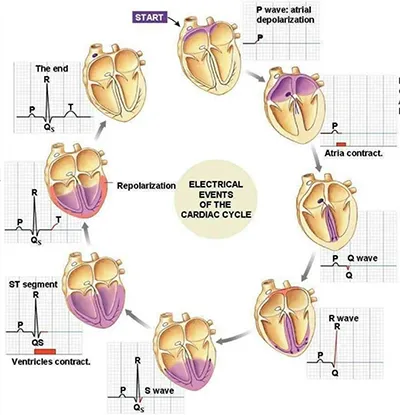
In 1972, Drs’ Hearse and Bainbridge worked non-stop in their animal laboratory in London, England, next to Saint Thomas Hospital, formulating “the ideal cardioplegia”. Their experiments with different cocktails were producing very positive results, the heart tolerating long period of ischemia (lack of blood supply). The formulation was predicated on the goal of deviating as little as possible from the normal extracellular ionic composition of the body and, in particular, to minimize the amount of potassium that was routinely used to ensure rapid and complete arrest.
The discovery of potassium as a “stilling agent” for the heart was a complete accident. The underground water pipes that supplied water for Dr, Hearse’s Laboratory and Saint Thomas Hospital were so foul and polluted, routine boiling was necessary. However, the Labs boiling system broke down one day and, unbeknownst to Dr, Hearse his assistants used the foul city water for their experiments. Suddenly, the animal hearts completely stopped. Upon extensive investigation, it was discovered that heavy amounts of potassium were contained in the putrid city water.
After the introduction of Saint Thomas’ Hospital cardioplegic solution No.1 numerous experimental testings’ continued with a view to improving efficacy.
However, one persistent issue remained within the solution that most institutions attempted to minimize, but really had no work-around. Cardioplegia solution is 1000cc’s of crystalloid solution (water.) Compound the issue that many times a mechanical problem would occur (i.e. Aortic insufficiency, cross clamp not applied completely, open cardioplegia line) causing the heart to not stop. The frustrated surgeon would demand more potassium equaling more water, but the heart would continue to beat. Once the correction was made, the potassium would be way too high and the heart would be so swollen from the water infused. So much so, you could not close the chest. The patient would have to go to Intensive Care Unit with a “wound towel” over his/her open chest. Nothing quite like the visual of a family member in ICU with a tube down their throat watching their wide open chest, their heart beating and lungs inflating/deflating to cause constant nightmares. And this was not uncommon.
Now, you would think we could not make this visual any more frightening for family or patient. Well, we could and we did:
In the very early days (1950’s-1970’s) of “complex surgery” (craniotomies, cardiac surgery etc.) Intensive Care Units were nothing more than a glorified Recovery Room with more equipment. Patients were separated by nothing more than a pull drape. Therefore, when a patient went into cardiac arrest, which was quite often, fifteen to twenty people would show up…someone pumping on the patient’s chest, someone sticking a tube down their throat to breathe…the yelling for drugs or where’s the Lab work? Then here is your father or mother in the next bed visualizing this Horror Show…panicking: “Is THAT going to happen to me??”
Gerald Buckberg knew there were many merits to the Saint Thomas’ Hospital Cardioplegia. He also witnessed the drawbacks. He became aware that by applying some very novel concepts, he would create a solution that could be utilized under all circumstances for three plus hours. He wanted to add blood to his cardioplegia to cut down on all the crystalloid solution. He wanted his solution to be administered not just once but during the entire time the cross clamp was applied. A collective decision was made to initially deliver the solution cold. Then his team discovered the marvelous benefit of warm delivery during induction and reanimation. Cold solution creates immediate vasoconstriction, a primordial response to preserve life when encountering extreme cold. However, obvious logic dictates when you are confronted with a patient with severe coronary artery disease, you do not want to administer an extremely cold solution to still the beating heart. The heart is clamped down already from year’s long coronary artery disease. Attempting to reach the myocyte is virtually impossible with an 8°C solution. Plus, extreme cold has been documented to trigger atelectasis of the lungs if exposed to cold for two hours or more.
All of this effort was basically for one purpose; to prevent the onset of ischemia. Cardiac ischemia is analogous to dropping a pebble in a pond. It begins in one small area and travels out to all areas rather quickly. The onset can be rather quick or slow. No Lab experiment has yet to ascertain exactly when ischemia begins. Some patients at 10 minutes. Some patients at 1 hour. This was precisely why Dr. Buckberg believed reinfusion of cardioplegia should occur every 10 to 20 minutes.
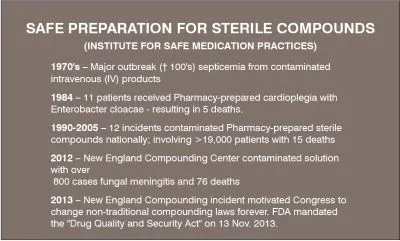
We would joke the concept’s basic premise was to “Fool the Heart”.
In essence; “fooling the heart down to the myocyte” thinking nothing strange is happening. This was a Herculean task. In the dog lab at UCLA in Westwood, California, extensive testing had to be developed to ascertain exactly what triggered ischemia (lack of blood supply due to vasoconstriction). Vasoconstriction is an odd duck. A myriad of issues will trigger it. From extreme cold, drugs, lower blood volume, shock and poor circulation. This is due to the fact it is front line defense to Preservation of Life. A primordial response to those myriad events in the effort for the animal to remain alive. Hypovolemia (lack of blood volume) is very common in the animal kingdom. Early Homo-Sapiens witnessed this first-hand and realized they would have to address this issue or die.
As a result, UCLA produced a “Sea Change” of ideas on how best to protect the human heart from the insult of being stopped for the first time in this individual’s life. Normally this would mean “Enter Priest Stage Right”. UCLA had better ideas. Some would say magical. They threw the conventional wisdom of myocardial protection; primarily a crystalloid cocktail with extreme cold…out the proverbial window.
What they produced was remarkable:
1. Crystalloid no longer plays primary role.
2. Cardioplegia will hence be delivered as a ratio. Starting with 4:1. Four parts patients own blood and one part crystalloid. This would radically reduce hemodilution. Eventually, after extensive empirical utilization, the ratio was changed to 8:1.
3. Cardioplegia would be delivered Cold. The general consensus at the time was: “the colder the better”.
When Dr. Philippe Menasché, MD, PhD, Chief of Cardiovascular Surgery, Hôpital Lariboisière, Paris, France and his students dissected the overall structure of “Buckberg Solution” it became obvious they could create a simpler and equally, if not more, effective means for delivering warm blood cardioplegia. They accomplished this by utilizing pure patients’ blood, diverted from the arterial port of the Heart-Lung machine’s port on the oxygenator and only supplemented with arresting agents (undiluted potassium) and additives (magnesium). Dr. Menasché and his students called this solution “mini-cardioplegia” due to these arresting agents are concentrated in very small volumes continually replenished to the blood cardioplegia circuitry utilizing an electrically driven syringe pump. Initially the flow rate of the syringe pump was determined empirically. Subsequentially, a nomogram was developed that, based on the target potassium concentration (20mmol/L for induction, 10mmol/L for maintenance), the patient’s pre-bypass serum potassium level, and the flow rate of the cardioplegia delivery pump, allowed an accurate determinization of the flow rate for the cardioplegia delivery pump.
The flow rate on the cardioplegia pump was adjusted either up or down based on the heart remaining quiescent. If electromechanical activity resumed the syringe pumps could be easily adjusted.
“The magical power of Aerobic Arrest versus Ischemic Arrest”
Mini-cardioplegia, or as this author has discovered preferential “microplegia” technique provides for the creation of an aerobic environment. This is accomplished by the simple means of increasing oxygen supply. In essence providing more oxygen to the myocardium than the heart is presently demanding. Now, you can “tailor” the exact amount of potassium and supporting drugs to the patient’s particular needs. The years of “one size fits all” cardioplegia are effectively over. Utilizing the syringe pump to administer potassium and additives is preferential for several reasons:
1. All Hospitals have an abundance of syringe pumps
2. Extremely easy to switch out in case of malfunction
3. All syringe pumps have batteries for back-up power
4. May be utilized anywhere on this Planet
5. Extremely cost-effective and easily replaced
6. Very simple to operate and teach usage in 30 minutes.
Utilizing microplegia with the capacity to provide “on the fly” adjustment according to your patients’ needs totally avoids detrimental consequences of;
• Volume overload
• Over hemodilution
• Vasodilation, commonly associated with warm systemic perfusion
• Unintended high potassium’s
• Negate the need for ancillary drugs to mitigate high K+’s (Insulin)
• Overhead costs for disposables are minimal; 50cc syringe and syringe tubing.
Since the introduction of warm blood cardioplegia, despite the misperceptions and ongoing controversy regarding cold versus warm, there has been a slow but steady understanding that warm induction, cold maintenance and warm reanimation of cardioplegic solution holds a key to full restoration of normal sinus rhythm.
It has now become commonplace for many institutions to routinely begin warming the cardioplegia when approaching the last graft. The last dose may include warm cardioplegia or, as many institutions have discovered, just warm patients’ blood infused antegrade to start…then switch to retrograde and, if possible, flow the warm blood down all grafts. This will provide global protection while suffusing the myocardium with an aerobic environment facilitating an accelerated restoration back into normal sinus rhythm.
And the only issue it cost…is pride.
I assure you; Monitor your patients in Intensive Care for one month. Witness how they respond. And then please provide me your thoughts.