
For many individuals, an epilepsy diagnosis marks the beginning of a journey filled with questions. What caused the seizures? Will they happen again? What does the future look like?
The diagnostic process is designed to answer these questions. Advances in electroencephalography (EEG), magnetic resonance imaging (MRI), genetic testing, and laboratory investigations have significantly improved the ability to identify structural, genetic, metabolic, immune, infectious, and other underlying causes of epilepsy. Establishing the etiology can guide treatment decisions, inform prognosis, and, in some cases, provide access to targeted therapies.
Despite comprehensive diagnostic evaluation, the underlying cause of epilepsy cannot always be identified. While the diagnostic work-up focuses on determining the etiology, investigations often conclude with no definitive explanation. This uncertainty reinforces the need to shift attention from searching for answers alone to supporting the person living with epilepsy over the long term.
Epilepsy affects much more than the brain. It influences learning, employment, relationships, confidence, independence, and engagement in everyday life. Successful care should therefore be measured not only by seizure control, but also by how effectively people with epilepsy (PWE) are supported to live meaningful and fulfilling lives.

Beyond Seizure Control: Redefining Successful Epilepsy Care
For decades, optimizing seizure control has been the primary objective of epilepsy treatment, and it remains one of the most important clinical goals. Better seizure control can reduce the risk of injury, improve safety, and increase confidence in everyday life. Yet, for many PWE, successful epilepsy care extends far beyond seizure management.
The impact of epilepsy extends well beyond seizure activity. It can influence memory, sleep, emotional health, education, employment, relationships, confidence, independence, and participation in everyday life. These challenges may persist even when seizures are well controlled, highlighting that clinical outcomes alone do not always reflect how a person is functioning or feeling.
This is particularly relevant because the impact of epilepsy changes throughout life. What matters to a young child differs greatly from the priorities of an adolescent, an adult, or an older person. Care should therefore evolve alongside the individual rather than remain centered solely on the diagnosis.
During early childhood, families often need clear, age-appropriate information that helps explain epilepsy in a way a child can understand. Children benefit from reassurance that they are not alone, that epilepsy is not their fault, and that they can continue to learn, play, and thrive with the right support. Building this understanding early can reduce fear, encourage confidence, and strengthen resilience.
Adolescence brings a different set of priorities. Friendships, school engagement, inclusion in sports and social activities, and developing a positive sense of identity become increasingly important. Feeling accepted by peers and supported by teachers can have a lasting influence on emotional well-being, self-confidence, and resilience.
Adulthood introduces another set of challenges. Employment, driving, financial security, intimate relationships, family planning, and sexual health all contribute to quality of life, yet these topics are not always addressed during routine consultations. Open conversations with healthcare professionals enable individuals to make informed decisions, strengthen self-management, and maintain independence.
Later in life, priorities shift once again. Cognitive changes, additional health conditions, medication interactions, fall prevention, and caregiver support become increasingly important. Regular review of treatment goals helps ensure that care continues to reflect the individual's health, lifestyle, and personal priorities.
Looking beyond seizures does not diminish the importance of seizure control. Instead, it broadens the definition of successful epilepsy care. Alongside clinical outcomes, healthcare professionals should also consider everyday functioning, emotional well-being, independence, and the ability to live a meaningful life. These are the outcomes that matter most to PWE and their families.
Building a Coordinated Model of Care
Epilepsy is a long-term neurological condition that often requires expertise extending beyond a single clinical specialty. While neurologists remain central to diagnosis and medical management, achieving the best possible outcomes depends on coordinated collaboration among healthcare professionals, each contributing their unique knowledge and skills.
Effective long-term care is built on partnership. Rather than working in isolation, healthcare professionals should work together with PWE and their families to develop care plans that reflect medical needs, functional abilities, personal goals, and changing life circumstances. This collaborative approach strengthens continuity of care, promotes shared decision-making, and helps identify challenges before they become barriers to health and barriers to health and daily functioning.
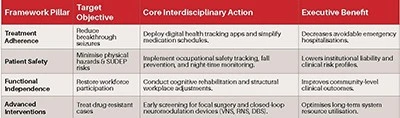
Neurologists lead the diagnostic process, optimize antiseizure therapy, monitor treatment response, and evaluate the need for advanced interventions when appropriate. Epilepsy nurses provide education, reinforce medication adherence, answer practical questions between appointments, and often become an important source of ongoing support for individuals and their families.
Occupational therapists contribute by helping PWE participate safely and confidently in everyday life. Through individualised assessment, they address cognitive, physical, sensory, and environmental factors that influence daily activities, supporting independence at home, in education, at work, and within the community.
Psychologists and neuropsychologists help identify and manage cognitive changes, anxiety, depression, and the emotional consequences of living with epilepsy. Physical therapists support balance, mobility, strength, and fall prevention where needed, while speech and language therapists assist when communication or swallowing difficulties affect daily functioning. Pharmacists, primary care providers, social workers, educators, and rehabilitation professionals each contribute valuable expertise that complements neurological care.
When these professionals work towards shared goals, care becomes proactive rather than reactive. Instead of responding only to seizures, the focus expands to maintaining health, preserving function, and fostering engagement in everyday life throughout every stage of life.
Supporting the Whole Person Across the Lifespan
Effective epilepsy care should recognise that no two journeys are identical. Clinical needs, personal priorities, and life circumstances change over time, requiring care plans to remain flexible and responsive rather than static. A diagnosis made during childhood presents different challenges from one made in adulthood or later life, and support should reflect these differences.
Beyond medical treatment, healthcare professionals should consider how epilepsy affects education, employment, relationships, independence, emotional well-being, and the ability to engage in meaningful activities. These factors influence quality of life as much as seizure control and deserve equal attention during long-term follow-up.
Maintaining this broader perspective also creates opportunities for early intervention. Cognitive changes, mood disorders, social withdrawal, sleep disturbances, or difficulties returning to work or school may develop gradually and remain unnoticed unless they are discussed routinely. Identifying these challenges early allows timely support and may prevent more significant difficulties later.
Care should therefore be guided not only by clinical findings but also by regular conversations about the individual's goals, daily experiences, and changing priorities. These discussions help ensure that treatment continues to support the person rather than focusing solely on the condition.
From Treatment to Long-Term Partnership
Long-term epilepsy management is most effective when PWE are active partners in their own care. Shared decision-making encourages individuals to understand their condition, participate in treatment choices, and develop the confidence needed to manage everyday challenges. Rather than receiving information only during clinic visits, PWE should have ongoing access to education and support that evolves with their needs.
Education extends far beyond explaining medications. Individuals and their families benefit from practical guidance on recognising seizure triggers, understanding treatment options, maintaining medication adherence, managing stress, promoting healthy sleep, and knowing when to seek medical advice. Clear communication strengthens confidence while reducing uncertainty and unnecessary anxiety.
Safety planning should also form part of routine clinical care. Discussions may include seizure first aid, driving regulations, workplace considerations, recreational activities, water safety, and emergency preparedness.
These conversations are not intended to restrict participation but to provide the knowledge that enables individuals to live as safely and independently as possible.
Education about Sudden Unexpected Death in Epilepsy (SUDEP) should be approached with honesty, sensitivity, and individualised risk assessment. Although these discussions may be difficult, providing appropriate information enables individuals and families to make informed decisions and reinforces the importance of treatment adherence and regular clinical follow-up.
Empowering people through knowledge transforms healthcare from a series of appointments into an ongoing partnership built on trust, communication, and shared responsibility.
Maintaining Participation and Independence
Living well with epilepsy means more than managing symptoms. It also means maintaining the ability to participate in everyday life, pursue personal goals, and remain engaged in education, employment, family life, and the community. These outcomes often determine how individuals perceive their health and overall quality of life
Healthcare professionals should routinely consider barriers that may limit participation. Cognitive difficulties, fatigue, medication side effects, anxiety, stigma, transportation challenges, or environmental factors can all affect daily functioning. Identifying these barriers creates opportunities for practical interventions that support continued independence.
Occupational therapists play an important role in this process by helping individuals develop strategies that improve participation in meaningful activities. Whether supporting a child returning to school, assisting an adult in maintaining employment, or helping an older person remain independent at home, the focus remains the same: enabling people to live the lives they value despite the challenges epilepsy may present.
Rehabilitation professionals, psychologists, social workers, educators, and vocational specialists each contribute to this shared objective. By combining their expertise, they help individuals adapt to changing circumstances while preserving confidence, autonomy, and quality of life.
Ultimately, successful long-term management is not defined solely by clinical stability. It is reflected in how well PWE continue to learn, work, build relationships, care for their families, and participate in the communities in which they live.
Future Directions: Advancing Integrated Epilepsy Care
Advances in epilepsy treatment continue to expand the range of therapeutic options available to PWE. Alongside antiseizure medications, selected individuals may benefit from epilepsy surgery, vagus nerve stimulation (VNS), responsive neurostimulation (RNS), deep brain stimulation (DBS), dietary therapies, or emerging precision medicine approaches. These developments have transformed outcomes for many individuals who previously had limited treatment options.
At the same time, innovation should extend beyond technology and therapeutic interventions. The future of epilepsy care depends equally on strengthening collaboration across healthcare services, improving access to rehabilitation, integrating mental health support, and ensuring continuity of care throughout the lifespan.
Advances in treatment achieve their greatest impact when delivered within a coordinated system that addresses both medical and everyday challenges.
Digital health technologies are also reshaping long-term management. Telemedicine, electronic seizure diaries, wearable devices, remote monitoring, and mobile health applications offer new opportunities to improve communication, monitor treatment response, and encourage active participation in care. Used appropriately, these tools can strengthen the partnership between healthcare professionals and PWE while supporting timely clinical decision-making.
Equally important is continued investment in education. Healthcare professionals require ongoing training to recognise the broad impact of epilepsy beyond seizures, while individuals and families benefit from reliable information that supports informed decision-making, self-management, and confidence throughout the course of the condition.
As healthcare systems increasingly adopt person-centered models for chronic disease management, epilepsy provides an opportunity to demonstrate how coordinated care can improve both clinical and functional outcomes. Success depends not only on delivering effective treatments, but also on ensuring that support remains accessible, responsive, and adaptable as needs evolve over time.
Conclusion
Epilepsy is a lifelong neurological condition that requires more than effective seizure management. Although optimizing seizure control remains a fundamental objective, long-term outcomes are equally influenced by cognition, emotional well-being, engagement, independence, education, employment, relationships, and overall quality of life.
Delivering high-quality epilepsy care requires coordinated collaboration among healthcare professionals, individuals with epilepsy, their families, and the wider community. When medical treatment is combined with rehabilitation, psychological support, patient education, and regular review, care becomes proactive rather than reactive, helping individuals adapt to changing circumstances throughout every stage of life.
A long-term approach also recognises that priorities evolve. The support needed by a young child differs from that of an adolescent exploring independence, an adult balancing work and family responsibilities, or an older person managing multiple health conditions. Care should evolve alongside these changing needs, ensuring that treatment remains relevant, personalised, and meaningful.
Ultimately, the success of epilepsy care should be measured not only by reducing seizures, but by enabling people with epilepsy to participate fully in education, employment, family life, relationships, and their communities. Looking beyond seizures and embracing a coordinated model of care allows healthcare professionals to support what matters most: helping people with epilepsy live well throughout their lives.
Read the full article — it's free
Register with AmericanHHM to unlock expert insights, research articles and in-depth industry analysis.