

The modern healthcare landscape is being reshaped by the integration of Artificial Intelligence (AI) and digital health tools, making patient care more interactive, accessible, and effective. The increasing prevalence of smartphones—used by 90-92% of Americans—has made health apps a vital part of daily life. On average, users install 3-4 health apps, highlighting the importance of digital solutions in healthcare.
Empowering Patients through Education
There are a variety of personalised health apps available for download that empower patients through education. Many have interactive modules that educate patients on their specific condition, encouraging adherence to treatment plans and promoting self-care. Improving health literacy empowers patients to make better decisions. This engagement improves treatment adherence and encourages proactive health management.
The average American spends $155 per month on weight loss products and services which is why apps like Noom are popular. This AI-based app is designed for weight management and healthy living. It uses psychological principles and AI to provide personalized advice and create sustainable lifestyle changes:
Noom has introduced AI-powered food logging capabilities, which allow users to log their meals through various methods:
Photo Logging: Users can take a picture of their meal, and the AI will automatically identify and quantify the ingredients.
Text and Voice Logging: Users can describe their meals using voice or text, and the AI will recognize and log the ingredients accordingly. This feature simplifies the tracking process, making it more efficient for users to monitor their nutrition.
Noom has launched Welli, an AI-enabled chatbot designed to provide immediate answers and support on wellness topics. This assistant helps users with complex questions and routine inquiries, allowing human coaches to focus on providing personalized guidance. Welli is built on advanced AI models from OpenAI and Google Vertex AI, enhancing the coaching experience by offering 24/7 assistance.
Body Composition Analysis: Noom has also integrated an AI body scan feature that allows users to analyze their body composition through a short video recording. This feature generates a 3D avatar and tracks metrics such as body fat percentage and lean mass, offering valuable health insights without the need for specialized equipment.
These innovations show how technology can be leverage for sustainable behavior change and improving user connectivity in health management
Digital health tools, like patient portals and mobile apps, are vital. About 77% of healthcare organizations have invested in these platforms to boost patient engagement. These tools let patients use smartphones or computers to access medical records, schedule appointments, and message providers. This transparency and availability of information empower patients to make informed decisions about their health.
Mobile health apps enable remote monitoring. They let providers track patients and intervene as needed. This is crucial for managing chronic diseases and improving access for rural or homebound patients with accessibility issues.
And AI in these digital health tools are able to transform complex medical information into engaging, interactive and consumable formats. Virtual health assistants can explain medical conditions and treatments in simple terms. This improves health literacy; this newfound knowledge allows patients and caregivers to make more informed decisions about their health journey.
Interactive apps can guide patients on post-treatment care, meds, and lifestyle changes that are personalized to their specific needs. This continuous support enhances adherence to treatment plans and promotes better health outcomes.

AI chatbots and virtual assistants in mobile apps are changing how patients engage with their healthcare providers.
Remote Monitoring and Telemedicine
AI is leading efforts to expand healthcare access. It does this through remote monitoring and telemedicine.
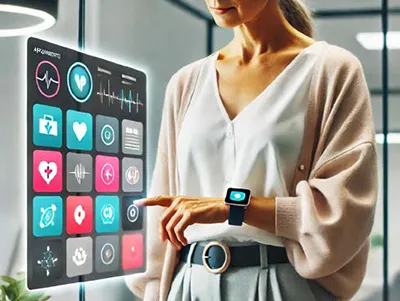
AI-enabled wearable devices can track vital signs and health indicators. They include heart rate and sleep patterns. They transmit data to providers in real-time. Integrated tools and personalized data help patients manage their health. This improves adherence and outcomes. This continuous monitoring is especially beneficial for patients with chronic conditions.
Telemedicine platforms powered by AI facilitate virtual consultations, breaking down geographical barriers. Patients in rural or underserved areas can get specialist care without traveling. AI boosts these virtual interactions; 94% of patients who use telemedicine say they would use it again. It provides decision support tools to clinicians. This ensures high-quality care is maintained.
AI enhances communication between patients and healthcare providers. Advanced digital tools improve interaction. They ensure patients know about their treatments and medications.
With a digital front door, a patient can receive 24/7 support as long as they have WiFI access. For example, Sensely's virtual nurse assistant, named Molly, provides a range of healthcare services to users through an AI-powered interactive app. Here's how Molly assists users:
Symptom Assessment: Molly conducts symptom checks by asking users questions about their health concerns and providing initial assessments.
Patient Monitoring: The virtual nurse can monitor multiple patients simultaneously, collecting data and automatically sending it to EMR/EHR systems.
Chronic Patient Care: Molly offers support for patients with ongoing health conditions, helping them manage their care routines
Health Risk and Wellness Assessments: Users can receive evaluations of their overall health status and potential risks.
Mental Health Services: The app provides support for mental health concerns.
Medication Reminders: Molly uses smart machine learning algorithms to remind patients to take their medications on time.
Appointment Management: Users can book, postpone, or cancel appointments through the virtual nurse assistant.
Health Education: The app offers symptoms guides, procedure protocols, and other educational content to help users better understand their health.
Insurance Services: Molly can assist with insurance-related queries and claims management.
Voice and Text Interaction: Users can communicate with Molly using either voice commands or text, making the app accessible to various user preferences.
Patients can interact with healthcare providers at their convenience, leading to increased satisfaction. Also, these AI tools can triage patient concerns. They ensure urgent issues get immediate attention. Routine inquiries are managed with great efficiency. They improve the patient experience and optimize healthcare resources.
Hospitals with advanced digital maturity have better patient experience outcomes. This is especially true for communicating with nurses and doctors, and about medicines and therapies. AI-driven platforms enable seamless information exchange, fostering trust and understanding.
Bridging Digital, Virtual, and Physical Care
AI connects digital platforms, virtual consultations, and in-person care. This creates a seamless patient experience. This approach ensures care continuity. It fosters a more responsive healthcare system.
A patient can book an appointment on a digital platform. Then, they can have a virtual consultation with a physician. Finally, they can receive follow-up care at a physical clinic.
AI connects each touchpoint and updates information across all platforms. Our healthcare journey’s are not linear so a connected omnichannel approach is key to improving the patient experience.
Improving Communication between Patients and Providers
Effective communication is critical in healthcare. AI enhances this by facilitating better interactions between patients and providers. AI platforms can translate complex medical jargon into plain language. This helps patients understand their conditions, treatments, and medications so they can make informed decisions. With the US being a melting pot of cultures, AI can help break language barriers. It can provide real-time translation during virtual consultations. This ensures that patients from diverse backgrounds get accurate information. It builds trust and adherence to treatment plans.
Hospitals with advanced digital maturity report better patient experiences. This is especially true for communication with nurses and doctors, and about treatments. AI-driven platforms enable seamless information exchange, fostering trust and understanding.
Challenges and Considerations
While the benefits of AI in healthcare are substantial, it is important to acknowledge the challenges. Data privacy and security are paramount concerns. Ensuring that AI systems comply with regulations and protect patient information is critical.
There is also the issue of algorithmic bias. AI systems learn from existing data, which may contain biases. These biases can lead to disparities in care if not addressed. Ongoing evaluation and adjustment of AI algorithms are necessary to ensure fairness and equity in healthcare delivery.
Conclusion
AI is transforming healthcare. As healthcare continues to evolve, organizations that prioritize digital patient experience are likely to see improved outcomes, increased patient satisfaction, and better overall performance in the competitive healthcare landscape. We must embrace these technologies. They are key to a future with more inclusive, patient-centered healthcare.
References:
A Patient’s Digital Journey Illustrated As A Flowchart (jpeg)https://www.hyro.ai/blog/what-is-the-digital-front-door-in-healthcare/
[1] https://www.consumeraffairs.com/cell_phones/how-many-americans-own-a-smartphone.html
[2] https://www.oberlo.com/statistics/how-many-americans-have-smartphones
[3] https://www.investopedia.com/is-having-a-smartphone-a-requirement-in-2021-5190186
[4] https://www.delveinsight.com/blog/top-artificial-intelligence-based-healthcare-mobile-apps
[5] 5 Strategies to Elevate Patient Engagement | Veradigm https://www.aha.org/aha-center-health-innovation-market-scan/2022-02-22-3-principles-seamless-patient-digital
[6] https://productschool.com/blog/digital-transformation/digital-transformation-trends-healthcare
[7] Sensely: Conversational AI to improve health and drive member engagement