Simulation in healthcare platforms stands as a pivotal tool in advancing patient safety and care quality. Recreating real-world scenarios empowers healthcare practitioners to refine their skills and decision-making. Through immersive, lifelike experiences, this innovative approach accelerates skill development and bolsters clinical competence.
Your response provides a clear overview of the critical issue of medical errors and emphasizes the potential underreporting of such incidents, shedding light on the complexity of the situation. Here's a refined version:
Medical errors, ranking as the third leading cause of death in the US and frequently reported in EU data, might be more pervasive than our records indicate. Underreporting is a concern, and the true scope of the issue remains elusive. A contributing factor could be inadequate practical training for both practicing physicians and students, often overshadowed by theoretical lectures and a lack of active learning approaches.
The global surge in simulation training reflects a collective acknowledgment of the need for hands-on, experiential learning in healthcare. Active learning strategies, particularly through simulation, play a pivotal role in fostering competency development among medical professionals.
Our approach involves creating lifelike simulation experiences that closely mimic the complexities of actual clinical environments.
Simulation training offers a controlled environment for physicians and students to immerse themselves in realistic clinical scenarios, mitigating the risk of errors in actual patient care. By addressing the deficiency in practical training, simulation becomes a catalyst for improving the quality of healthcare delivery. It not only equips practitioners with the skills needed to navigate complex medical situations but also contributes to a culture of continuous learning and improvement in healthcare practices globally.
In essence, our vision is to make simulation an integral part of healthcare education and training, ensuring that every practitioner has the opportunity to engage with realistic scenarios, learn from mistakes, and ultimately contribute to a safer, higher-quality healthcare landscape.
Students engage with clinical scenarios mirroring real-world practice, honing their decision-making skills. This exposure fosters the development of action patterns, ensuring that when faced with similar situations in actual clinical settings, they possess a foundation of theoretical and practical knowledge acquired during training.
For physicians, simulation training serves as a means to augment clinical experience and sustain knowledge retention effectively. The realism of clinical situations during simulation directly correlates with the training's efficacy. The closer the simulation mirrors real clinical practice, the greater the benefits for the learner.
Crafting realistic clinical case scenarios is, however, a formidable task demanding substantial effort to ensure the simulation aligns seamlessly with authentic clinical settings. Drawing from personal experience, our approach involves utilizing real patient data obtained ethically and rigorously. Simulation preparation necessitates a comprehensive strategy, involving an in-depth analysis of analogous clinical cases from medical literature, an extensive literature search for nosology data, and a thorough review of clinical recommendations. Only after this meticulous process do we prescribe a practical counseling algorithm tailored to patients with similar nosology. Each project demands an exhaustive effort, but this commitment is pivotal in maintaining the quality of simulation training content at a commendable level.
This dedication to excellence forms the basis of the serious games concept, presenting a promising avenue to mitigate the global prevalence of medical errors. The thoroughness applied to simulation training creation emerges as a robust strategy with far-reaching implications for enhancing patient safety and care quality worldwide.
It's noteworthy that simulation training stands as the fastest-growing sector in medical education, marked by the establishment of numerous universities and hospital simulation centers worldwide. The global impact of the COVID-19 pandemic has underscored the imperative to develop online simulation training methods for educating students and enhancing the skills of healthcare professionals.
However, the widespread implementation of online learning simulation technologies faces certain limitations, primarily the associated development costs. Overcoming this challenge poses a significant hurdle for the development team to ensure that training remains both accessible and of high quality. I aspire to automate various development tasks, leveraging artificial intelligence technologies. This, I believe, will contribute to making simulation training universally accessible and easily scalable for every healthcare professional.
In the realm of assessing the effectiveness of simulation training, the widely recognized Kirkpatrick model plays a prominent role. This model is instrumental in gauging the acquisition of competencies through simulation. The Kirkpatrick model, with its multi-level evaluation approach, provides valuable insights into the tangible outcomes of simulation-based learning.
In addition, we employ a comprehensive set of key performance indicators (KPIs) to gauge the impact of training interventions.
Our evaluation process encompasses both quantitative and qualitative measures. Quantitatively, we analyze performance metrics such as response times, accuracy in diagnosis and treatment, and adherence to established protocols. These quantitative indicators offer tangible insights into the practical application of skills acquired during simulation training.
On the qualitative side, we incorporate feedback from participants, considering their perceived confidence, communication skills, and overall competence. This qualitative assessment provides a nuanced understanding of the training's influence on the practitioners.
Drawing from personal experience, I have been actively exploring ways to enhance the assessment of simulation training results. Currently, I have developed a specialized mathematical model for simulation scenarios, employing a stratification the severity of medical errors. This model not only facilitates the evaluation of training effectiveness but also enables meticulous modeling of events within the simulation.
Our assessment strategy encompasses diverse indicators, including the number of hours and trainings completed in online simulation. We also track the usage of our online resource, completed scenarios, and competencies acquired during simulation training. This wealth of data can be seamlessly integrated into a comprehensive portfolio spanning a healthcare professional's entire career.
Moreover, addressing the challenge of reporting medical errors requires a concerted effort. Implementing region-specific improvements in reporting mechanisms and establishing automated, globally unified data registries are essential steps. These measures aim to provide specialists with actionable insights into the most critical areas that demand focused attention, fostering continuous improvement in patient safety and care quality.
In the realm of simulation-based training, realism is a key factor in enhancing learning and competency development. However, achieving realism raises ethical considerations that must be diligently addressed. Our approaches converge on a commitment to upholding the highest ethical standards.
In our institution, we follow a robust algorithm for constructing simulation scenarios, drawing inspiration from the real clinical cases. This involves a comprehensive package of ethical documents signed with patients and their healthcare providers. All patient data transferred to the simulation platform is anonymized and blinded, ensuring strict adherence to privacy and confidentiality.
Obtaining informed consent is a fundamental step in our ethical framework. Patients are fully informed about the purpose of data utilization, the simulation process, and any potential implications. This approach mirrors the principles of Good Clinical Practice (GCP) observed in clinical trials.
Moreover, we share a commitment to transparency and ethical considerations in the design of simulation scenarios. Our ethics documents mandate that all drugs within clinical case scenarios are referred to as active substances rather than trademarks. This underscores our dedication to demonstrating medical care based on evidence rather than engaging in pharmaceutical marketing.
The ethical principles of the Declaration of Helsinki and GDPR standards are foundational to our simulation training platforms. Patient data protection and privacy are paramount, and we continuously align our practices with evolving ethical norms.
By fostering an environment of transparency, informed consent, and alignment with global ethical guidelines, we ensure that our simulation-based training programs not only enhance learning but do so with the utmost respect for ethical considerations.
Our commitment to ethical standards in simulation training is embedded in our institutional policies. Regular ethics training for simulation facilitators and ongoing dialogue with stakeholders, including patients and healthcare professionals, ensures that our simulation programs align with the highest ethical standards. We view ethical considerations not just as a compliance requirement but as a fundamental aspect of delivering responsible and effective healthcare education.
The collaborative and team-based approach is pivotal in enhancing patient safety and care quality through simulation-based learning experiences. This approach aligns with both of our perspectives.
Simulation scenarios often mirror real-world clinical situations that demand interdisciplinary collaboration. In our training programs, we emphasize team-based scenarios where healthcare professionals from different disciplines work together to manage complex cases. This not only reflects the reality of healthcare delivery but also cultivates effective communication and teamwork.

Interdisciplinary collaboration allows healthcare professionals to understand and appreciate the unique contributions of each team member, fostering a holistic approach to patient care. It helps break down silos, promoting a shared understanding of roles and responsibilities, which is crucial in critical situations.
Moreover, simulation-based team training provides a safe space for professionals to practice not only clinical skills but also teamwork, communication, and decision-making. It offers an opportunity to identify areas for improvement in team dynamics without compromising patient safety.
As a doctor, I am always happy when I see when different societies of doctors write joint recommendations to answer questions that arise in real clinical practice in order to minimize the unsolved clinicacal questions, for example, very often recently the Society of Cardiologists and the Society of Hematologists write joint recommendations, and so on.
Our joint emphasis on interdisciplinary collaboration recognizes that patient care is multifaceted and requires a collective effort. By simulating scenarios that necessitate collaboration among diverse healthcare professionals, we ensure that our training programs contribute to a healthcare workforce that works seamlessly together for the benefit of patient safety and care quality.
Monitoring the implementation of skills in a real clinical setting poses a challenge for us, given that we operate as an online simulation training platform accessible globally. The assessment you're referring to aligns with the highest tier of the Kirkpatrick model, which necessitates ongoing improvements in evaluation methodologies and data collection during health professional assessment in the workplace area.
At present, our platform evaluates the mastery of competencies achieved during simulation training. Each training module encompasses a specific set of competencies at any convenient time. To support continuous engagement, we employ reminder systems and regular email communications with our students.
In a bid to motivate participants, we are actively integrating gamification elements into our platform. This approach fosters a more interactive and engaging learning experience. Additionally, our system maintains a comprehensive record of all acquired competencies, allowing participants to revisit and reinforce their skills as needed.
Crucially, our flexible training structure permits participants to complete each training module multiple times, ensuring a thorough understanding of the content. Collectively, these strategies converge toward a singular goal: influencing real clinical practices and establishing simulation training as an indispensable tool in the professional journey of healthcare practitioners.
As technologies advance rapidly, the active development of simulation training continues. I envision the future of simulation training prominently featuring augmented reality technologies. Additionally, the widespread integration of artificial intelligence will play a crucial role in enhancing the construction and delivery of simulation training programs. These innovations are poised to revolutionize the learning experience for healthcare practitioners, ensuring they are well-equipped to provide high-quality patient care in evolving clinical landscapes.
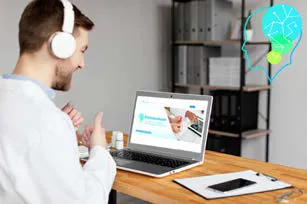
ClinCaseQuest has witnessed impactful success stories that underscore the positive influence of simulation-based training on patient outcomes and overall healthcare quality. One noteworthy example involves an ambulance doctor who engaged in our clinical case simulator during a break between calls. The skills acquired in the simulation proved instrumental when providing assistance to a patient in a real clinical emergency. Subsequently, the doctor advocated for the expansion of clinical scenarios within our platform, emphasizing its direct applicability to his professional duties. This real-world application of simulation training directly translates to improved emergency response and patient care in dynamic healthcare settings.
In our endeavors, we've pioneered a methodology for simulation training that enables us to encompass clinical situations previously untouched by traditional simulation programs. Notably, our recent focus includes the development of simulation training in oncohematology, addressing intricate nosologies and sophisticated decision-making algorithms.
Moreover, our proactive efforts extend to the active development of simulations with a core emphasis on ensuring equitable access to high-quality medical education. This commitment reflects our dedication to making advanced medical training universally accessible.
Effective collaboration among patient care institutions, medical educational bodies, simulation centers, governmental agencies, and grant support programs is imperative to construct a globally robust strategy for the practical training and retraining of doctors. This strategy should be rooted in a comprehensive quality control framework for medical education, ensuring the highest standards in healthcare delivery and patient safety. Such concerted efforts aim not only to elevate the competence of healthcare professionals but also to establish a global benchmark for the quality and safety of patient care.

Nataliia Lopina, ClinCaseQuest's CEO and Founder, is a distinguished Clinical Simulation Training Platform Director and Specialist with a decade of impactful experience. Her expertise in simulation-based training, leadership, and business management has driven innovation in medical education. As a Simulation Center Director, she excels in management and strategic planning, ensuring adherence to industry standards. Nataliia's groundbreaking contributions include a Mathematical model for clinical case scenarios and a novel debriefing model, "A Staged Defragmented Simultaneous Debriefing Model." Committed to patient safety, she addresses drug toxicity in oncohematology. Her academic journey encompasses postgraduate studies, a PhD, cardiology fellowship, and a master's degree, showcasing her dedication to advancing medical education and improving patient outcomes.