

Resilience as a Core in Healthcare Logistics Management
The healthcare sector operates under standards where supply chain disruptions can have devastating consequences for human lives. The COVID-19 pandemic uniquely exposed the vulnerabilities of traditional logistics systems. With an unprecedented global demand for personal protective equipment (PPE), essential medicines, and vaccines, the challenges far exceeded response capacity in many regions.
Impact of the Pandemic on Healthcare Logistics
During the early months of the pandemic, it was reported that the supply of surgical masks needed to quadruple global capacity to meet minimum needs, according to the WHO. Similarly, essential medicines like analgesics faced shortages in key markets due to production interruptions and international transport restrictions. For instance, a report by the European Association of Hospitals revealed that 65% of hospitals faced critical shortages of PPE at some point in 2020.
The logistics of distributing COVID-19 vaccines was another monumental challenge. By March 2021, over 200 million doses had been distributed across more than 50 countries, according to UNICEF and COVAX data, but with significant disparities. While developed countries reached vaccination rates above 70%, developing nations barely surpassed 10%, partly due to a lack of efficient cold chains and limited access to strategic logistics hubs.
UPS Healthcare: A Case of Logistics Resilience
Companies like UPS Healthcare stood out by adopting innovative strategies to address these challenges. One key initiative was the establishment of specialized logistics hubs in Europe and North America. These centers were designed to handle highly sensitive products, such as vaccines and medicines requiring controlled temperatures as low as -70 °C, meeting FDA and WHO standards.
Notable achievements of these facilities include:
• Reducing delivery times by 50%, ensuring vaccines reached critical markets in under 24 hours.
• Managing over 1.2 billion doses of vaccines distributed between 2020 and 2022.
• Implementing real-time tracking technology, ensuring 100% traceability of shipments in the supply chain.
Lessons Learned: Planning and Diversification
The pandemic experience underscores the need for resilient logistics systems, whose strength lies in strategic planning, supplier diversification, and advanced technology use. For example:
• Supplier Diversification: Countries like Japan increased their key suppliers for essential medicines from 30 to 80 between 2020 and 2021.
• Logistics Digitalization: Technologies like blockchain and IoT sensors enabled companies to identify disruptions and adjust distribution routes in real-time, avoiding losses.
• Investment in Local Storage: An estimated 40% of leading pharmaceutical companies increased their local storage capacity by 25% to reduce reliance on global supply chains.
Resilience as a Pillar of the Future
Resilient logistics systems not only ensure operational continuity but also build trust in healthcare systems and the communities they serve. The challenge now is to institutionalize these lessons and design supply chains capable of facing future crises, whether pandemics, natural disasters, or geopolitical conflicts. Resilience must become a strategic cornerstone for global healthcare systems, ensuring logistics is a life-saving tool rather than a barrier.
Digital Transformation:
Driving Efficiency and Traceability
Emerging technologies are profoundly transforming the supply chain in the healthcare sector, where precision, efficiency, and traceability are paramount. Tools such as the Internet of Things (IoT), artificial intelligence (AI), and blockchain are revolutionizing logistics processes by providing real-time visibility, optimizing resources, and ensuring the traceability of critical products, particularly in a field where quality and safety are essential.
An emblematic example of this transformation is Pfizer's use of blockchain to authenticate critical medicines. This technology enables the immutable recording of every stage of the distribution process, significantly reducing the risks of counterfeiting in global markets. This advancement not only protects consumers but also strengthens trust in pharmaceutical brands and the healthcare system as a whole.
AI, on the other hand, has proven to be a strategic ally in institutions like the Mayo Clinic, where it is used to anticipate demand peaks, optimize resource allocation, and identify opportunities to reduce operational costs. These AI systems can analyze large volumes of data in real time, forecasting needs and enabling faster and more efficient responses to emergency situations.
According to a recent Deloitte report (2023), 78% of healthcare companies worldwide are already adopting these technologies, achieving a crucial balance between operational efficiency and sustainability. Moreover, these solutions are reducing the carbon footprint of logistics operations by optimizing transportation routes and minimizing resource waste.
The impact of these innovations goes beyond hospital logistics. For instance, IoT-based systems enable real-time monitoring of transportation conditions for sensitive products, such as vaccines and biological medicines, ensuring their integrity until administration. Additionally, the digitalization of logistics processes is shortening response times in emergencies, improving patient access to treatments, and contributing to a safer and more efficient healthcare experience.
Digital transformation not only promises to redefine standards in healthcare supply chain management but is also shaping a new paradigm where technology, sustainability, and patient well-being converge to build more resilient and effective healthcare systems.
Humanitarian Logistics:
A Solution for Vulnerable Communities
In remote or conflict-affected regions, humanitarian logistics plays a vital role in meeting the basic needs of the most vulnerable communities. The lack of infrastructure, geographic barriers, and social instability are common challenges that hinder access to essential resources such as food, clean water, and medicines. According to UNICEF data, more than 60% of rural communities in Sub-Saharan Africa face severe logistical barriers to obtaining essential medicines, exacerbating preventable health issues and increasing mortality rates.
Innovations in Distribution:
The Impact of Drones
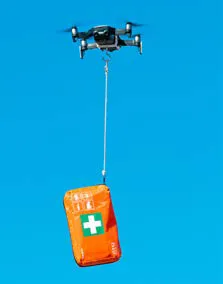
One of the most revolutionary tools in humanitarian logistics is the use of drones to distribute medical supplies. The company Zipline, known for its innovative model, has completed over 500,000 deliveries of critical supplies in countries like Rwanda and Ghana. These drones have not only reduced delivery times by 75% compared to traditional methods but also ensured access to treatments in areas previously reliant on impassable routes or long walks to health centers.
A concrete example is Rwanda, where Zipline's drones have transported blood bags for emergency transfusions to rural hospitals, saving lives in critical situations such as postpartum hemorrhages. In Ghana, the technology has been crucial in vaccine distribution, helping the country meet immunization goals even in remote areas.
International Collaboration:
Key to Equitable Global Health
Global logistical challenges require coordinated efforts and collaborative approaches. Programs like COVAX, led by Gavi, WHO, and UNICEF, exemplify how international cooperation can overcome logistical and infrastructural barriers. Since 2021, COVAX has distributed more than 1.8 million doses of COVID-19 vaccines to developing countries, facing challenges such as lack of infrastructure and changing regulations.
This experience reinforces the importance of strategic partnerships among governments, NGOs, and the private sector. Only through cooperation and joint innovation can logistical barriers be overcome to ensure equitable access to global healthcare.
Toward a Sustainable and Connected Future
Hospital logistics, an essential pillar of the healthcare sector, is undergoing a transformation toward a more resilient, efficient, and sustainable model. This shift addresses the growing challenges in managing medical resources, such as fluctuating demand, global health emergencies, and the need to meet stricter environmental standards. Integrating advanced technologies, sustainable practices, and collaborative approaches is paving the way for a more connected and effective future.
Collaboration and Resilience in the Supply Chain
A collaborative approach is redefining hospital logistics. The connection between hospitals, suppliers, and distributors improves the availability of critical supplies, especially during health emergencies. Additionally, strategic alliances between the public and private sectors are strengthening the resilience of supply chains against global crises.
• Collaborative Inventory Management: Integrated systems allow real-time data sharing, preventing stock surpluses or shortages.
• Decentralized Distribution Models: Micro-warehouses near consumption points reduce delivery times and increase responsiveness.
The Path to a Connected Future
The future of hospital logistics is shaping up to be a dynamic interplay of operational efficiency, advanced technology, and sustainability. This comprehensive model aims not only to meet the growing demands of healthcare but also to create a framework where logistics directly contributes to better patient care and optimized resource management.
In this evolving landscape, innovation will play a pivotal role. Technologies like IoT, AI, and robotics are expected to streamline supply chain processes, enhance inventory management, and improve real-time tracking of critical medical supplies. This ensures that resources are always available where and when they are needed, minimizing delays and enhancing patient safety.
Sustainability, too, is at the core of the future of hospital logistics. The adoption of greener practices, such as reducing waste, optimizing delivery routes to lower carbon footprints, and using eco-friendly packaging, will demonstrate a commitment to environmental responsibility. This aligns with the broader global shift towards more sustainable business operations.
Collaboration among stakeholders—healthcare providers, logistics professionals, and technology innovators—is essential. By working together, they can build resilient and adaptable systems capable of responding to emergencies and unforeseen challenges, such as pandemics or supply chain disruptions.
Ultimately, the new model of hospital logistics is not just about improving healthcare services; it represents a blueprint for how logistics can adapt and thrive in a rapidly changing world. By embracing innovation, fostering collaboration, and prioritizing sustainability, hospitals can build a logistics framework that meets current demands while paving the way for a more connected, efficient, and responsible future.
References
• Deloitte. (2023). Resilience of the healthcare supply chain through technology.
• Gavi, WHO, and UNICEF. (2021). COVAX: Global vaccine distribution program.
• Mayo Clinic. (2023). Case studies on artificial intelligence in healthcare logistics.
• Pfizer. (2023). Blockchain for pharmaceutical traceability.
• UNICEF. (2023). Access to essential medicines in Sub-Saharan Africa.
• UPS Healthcare. (2023). Strategic logistics centers for vaccine distribution.
• Zipline. (2023). Drone-delivered healthcare services: Case studies in Rwanda and Ghana.