
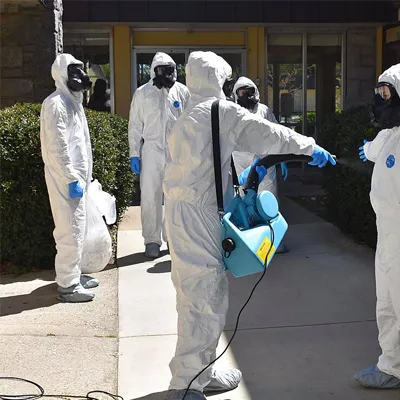
Clinics are very dynamic environments where health practitioners, visitors, and patients have all-time interactions. Among them, high-traffic areas - emergency departments, outpatient clinics, the waiting field, cafeterias, corridors, elevators, and public bathrooms are the hotspots where the potential infection can occur. The problem as seen by facility managers does not only exist in how to keep the environment clean but also in how to design a layered systematic infection control strategy based on these dense and unpredictable areas. By the healthcare-related infections (HAIs) that burden healthcare systems in every corner of the planet, the importance of facility management in their mitigation rises to a new level of strategic importance.
The Burden of Infection in Shared Spaces
Every year hundreds of millions of patients around the globe get impacted by HAIs, as stated by the World Health Organization. The problematic part is that when people talk about hand hygiene and clinical protocols, they tend to talk over other issues such as environmental hygiene and spatial risk management. Convergence areas are microbial transport hubs not only with direct contact among people but also via air traffic, surface contamination and shared services.
Viruses can live on surfaces such as elevator buttons, door handles, seating areas, kiosks and touchscreens of environments where different patients with particular health conditions overlap. The risk can be further aggravated by exposure to HVAC systems, poor sanitation in the restrooms and poor waste removal systems.
Facility Management: The Invisible Line of Defense
Prevention of infection strategies in healthcare necessarily relies on facility managers. They are in the position to normalize physical infrastructure, operations, and hygiene procedures so that the strategy of infection control is inherent in the framework of facility operations and not appended in an ad hoc manner.
The development of facility management over the last few years has become more of a strategic program and process that covers environmental surveillance, technology implementation, and space frugality as well as cross-team coordination with the infection prevention groups.
Risk Assessment: The Starting Point for Control
The first step toward an effective infection control strategy is a good risk assessment. This includes:
Identifying the surfaces and contact points (high contacts).
• Having an insight into human traffic flow in various time of the day.
• Identify areas that have vulnerable populations that can be immune-compromised patients or children.
• Surveillance of the course of waste disposal, water, and HVAC ducts.
Footfall analytics, thermal imaging, and real-time location systems (RTLS) data will allow the facility managers to see their risk zones on a map and prioritize them based on disinfection protocols, the upgrades of material, and spatial redesigning.
Environmental Hygiene and Cleaning Protocols
Basic cleaning cannot be limited to routine cleaning in high traffic places. Facility managers have to organize evidence-based cleaning standards, which have been initiated by microbial surveillance evidence and infection control recommendations.
The interval of cleaning should be adjusted to the degree of use, emergency rooms and lobbies can necessitate cleaning in 30-60 minutes during busy times. Moreover, it is important to notice that the selection of disinfectant counts. The agents should be broad-spectrum, non-toxic agents with the capability of action at high speed and be able to ensure compatibility with the surfaces being used.
Facility managers should also engage in the training of the custodial teams not only on the cleaning methods, but also on dynamics of pathogen transmission. Color-coded equipment, checklists, and UV markers can be used as a form of compliance and accountability factor.
Material Selection and Antimicrobial Surfaces
Material selection is one of the aspects of infection control that is commonly ignored. High-touch surfaces, e.g., door handles, rails, and countertops can be enhanced using antimicrobial materials, e.g., copper alloys or special polymers. Flooring must be non-porous and quiet to wash and upholstery facilities in the waiting zones must be non-porous and microbial-attaching evidence proof.
In addition, self-disinfecting surfaces and smart coatings, which disinfect on the surface with nano-silver, titanium dioxide, or photocatalytic reactions are burgeoning both in short-term installations and in long-term investments in infection resistance.
Initially expensive to purchase, the materials mitigate bio burden in the long-run and lessen the possibilities of intervention based on chemicals.
HVAC and Air Quality Management
The COVID-19 pandemic has altered the perception of air quality in the management of infection on a permanent basis. HVAC systems of high occupancy areas have to not only comply with standards but should be designed in the best way to control pathogens. This includes:
• Heating, ventilating, and air conditioning units that use HEPA filters.
• Putting up ductwork ultraviolet germicidal irradiation (UVGI) systems.
• Observation of the direction of airflow, at least in triage areas and negative-pressure rooms.
• Raising the air exchange rates and making sure that the air recirculated is well treated.
Continuous air purification in the outpatients and lobby areas will reduce the capability of airborne transmission by the asymptomatic carriers, contact with whom has the highest risk of transmission.
Space Design and Flow Optimization
Facility managers need to think beyond sanitization and more about how the physical design of a space can lead to or prevent infection control. The exposed areas are waiting rooms, muzzles, and chokes at entrance points.
Contemporary healthcare architecture has welcomed open plan building, one-directional movement patterns, portable demographic screens, and keyless access technology. Digital check-ins, staggered appointments, and remote queuing could ease the traffic in busy avenues without compromising more operations.
Seating has to follow the distance protocols, particularly in the instances of infectious outbreaks. Clear demarcations and glass walls, movable fixtures and monitor marks on floors can facilitate flow and prevent huddling.
Waste Management and Surface Disposal
Excellent segregation and disposal of biomedical waste should be established in areas with high traffic in healthcare settings. Mishandled sharps containers, cross-contamination through ineffectively disposed PPE, and overfilled receptacles are some of the threats that facility managers should guard against with a lot of caution.
Pedal- operated or sensor-based high-touch waste bins must be used. Rounding should also be carried out by staff in the facility regularly so that the bins are emptied to avoid overfilling. Also, temporary biohazard disposal shelters in a triage site or testing procedure capabilities to contain.
Facility managers need to ascertain that outsourced waste disposal services adhere with the local and international health policies as well as train staff on matters related to emergencies when a spill occurs.
Touchless Technology and Automation
Touchless technology is useful in controlling infections. Physical contact is reduced by motion-sensor doors, voice-controlled elevators, and access systems that are controlled using an app. It is the duty of facility managers to engage IT and procurement departments to implement such technologies in a gradual, cost considerate fashion.
Hygiene lapses can be preempted by the use of smart washroom systems which notify the housekeeping staff when chemicals or paper are in need or when utilization is high. Robotic disinfection is gaining popularity in tertiary hospitals, where there are UV-C-emitting or electrostatic mist-spraying autonomous bots that are used to disinfect entire lobbies, floors, and consultation areas are done when they are off-peak.
Real-Time Monitoring and Analytics
Digital twin technologies and IoT-based facility management systems may provide real-time information concerning air quality, surface cleaning, occupancy, and log-books concerning maintenance. Such systems have the potential of being used to identify the patterns that cause the risk of infection thus preventive measures can be put in place.
To illustrate, when there is always an overcrowding situation during staff shift changeover an increase in ventilation or manipulation of schedules can be made. Should the quality of air at the lobby fall below the standard, alerts will activate automatic purification or maintenance hazards.
The advantages of these data-based strategies include the fact that they provide facility managers with the evidence that they need to promote changes in infrastructure, as well as in policies.
Staff Training and Behavioral Protocols
Even in cases of practicing best practices, there is the lack of infection control once human behavior is not consistent. Facility managers play a great role in the promotion of a culture of safety by organizing training on:
• PPE to use in common areas.
• Adherence to cleaning schedules
• Emergencies: biohazard spill, or HVAC failures.
• Notifying of maintenance or hygienic violation in time.
One of the nudges such as in the case of hand sanitization or wearing masks in crowded places, could be the visuals in the form of signages, computer screens, or even scent.
Regulatory Compliance and Continuous Improvement
Control of infection is not fixed. Guidelines keep changing and new research appears, audit of compliance shows gaps. Facility managers should be in a position to have current records of cleaning logs, HVAC maintenance, waste disposal strategies, and employees training records.
They have to partner with infection prevention committees and periodically update the protocols, depending on the feedback of the patient, staff suggestions, and technological possibilities.
The facility preparedness and environmental health have become some of the features that healthcare accreditation bodies take keen interest in. High infection control standards of the high-populated areas do not only minimize HAIs but also improve the reputation and work efficiency of the facility.
Conclusion
High-traffic areas infection control is a dimensional issue requiring forward planning, interdisciplinary collaboration, and technological advancement. Facility managers are the custodians of the keys to a safer healthcare environment: traipsing through material selection, air management, near-real time analytics, and behavior training.
Usually, the doctors and nurses are on the frontline of care but the silent, consistent, and science-based work in the background of infection control exists within the facility management professionals. This investment in infrastructure is not an optional overhead cost, rather it is a public health and the required base of a quality healthcare delivery in the 21st century.