
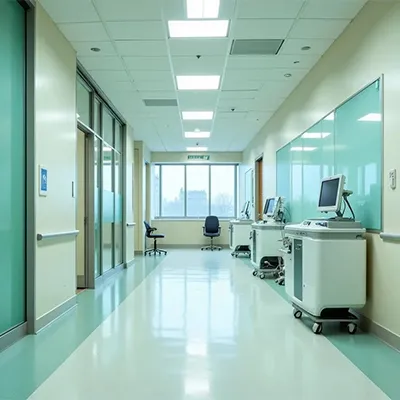
Now-a-days, the healthcare industry is becoming highly competitive in terms of energy efficiency of the hospitals. Although their ultimate goal is to maintain and enhance the wellness of human health, hospitals are themselves long-standing resource intensive structures within any urban setting. Energy in hospitals is enormous through round-the-clock processes and elaborate life-support equipment and machines, ventilation, heating, air conditioning, 24/7 systems among others. Accordingly, it is not surprising that both the design and retrofit-renovation of energy efficient hospitals are not only seen as establishes environmental demands, but strategically driven engineering concerns, with direct impacts on operating expenses and patient care outcomes.
The Case for Energy Efficiency in Hospitals
It is estimated that hospitals use around 2.5 times of energy used by an average sized commercial building. It is propelled by an array of highly determinant forces-indicatively persistent occupancy, rigid climatic control needs, lighting, medical appliance demand, and infection control air exchange rates. In turn, utility expenses are one of the highest manageable costs in healthcare operations.
Energy-efficiency is a complicated task, as an engineer there is a need to minimize energy consumption without compromising on patient care environment. Nevertheless, the improvement of smart building systems, energy modeling, and integrated approach to designing and planning has provided the engineer with a chance to re-design healthcare environments that not only serve effective purposes but also sustainable.
Principles of Energy-Efficient Hospital Design
In the case of a new hospital facility, engineers and architects can build in energy performance when designing a new facility literally on the ground floor. This requires a system wide, whole approach. Instead of onsidering energy-saving technologies as an add-on, it has to be incorporated into all aspects of design, including the layout of the building, the zoning of HVAC and zone.
The initial approach is climate responsive design, where the buildings are arranged and enclosed in both the design and layout to maximize passive solar benefits, daylighting, and natural building ventilation potential. An example is that, due to the orientation of the building that gets maximum exposure towards north and south, significant cooling loads can be avoided especially in tropical climates. Glazed performance and insulation also play a part in eliminating heat loss or gain.
Mechanical and electrical engineers are paramount to the choice of systems that have great energy efficiencies. Variable air volume (VAV) systems, energy recovery ventilators (ERVs) and sophisticated chillers with part-load efficiencies offer the opportunity to control energy use with minute controls by occupancy and demand. Concurrently, one can reduce the lighting loads by up to 50 percent with LED lighting and daylight and occupancy sensing, without a measurable effect on visual comfort or clinical performance.
Intelligent, energy modeling software like EnergyPlus or eQUEST can be used to simulate different design options so engineers can score building performance many years before construction is even started. This is a performance-based basis of designing new types of buildings that builds on specific metrics on energy and other material use and relates to ensuring that sustainability aspirations are not just hypothetical but measurable.
Retrofitting Existing Hospitals: Challenges and Opportunities
On the one hand, building new hospitals with energy efficiency in mind is easy; the difficulty lies in retrofitting old hospitals, some of which were constructed decades ago and under far different building codes and energy standards. However, this is where retrofitting comes in as perhaps the best opportunity that engineers have to make a significant change.
It should start with a whole-building energy audit, what maps out energy used habits recognition of inefficiency, and the saving capability measurement. With the use of benchmarking tools such as Energy Star Portfolio Manager or ASHRAE Level 1-3 audit, engineers can develop a tenacious plan.
The HVAC system is one of the key areas addressed in retrofits: it consumes the greatest part of energy costs in hospitals 40-60 percent. The engineers should assess the efficiency of chillers, boilers, pumps, and fans to find ways of upgrading them.
Retrofits involving variable frequency drive (VFD) systems, chilled beams system or using air cooling system over water cooling systems where performance is acceptable can realize significant savings.
Building automation systems (BAS) is also an effective intervention. BAS provides a clever feed of energy maximization into the world of real-time monitoring, predictive analytics, and automated control of lighting, HVAC, and plug loads. As an example, the non-critical areas can be programmed to have the temperature reduced to a setback condition during off-peak hours of operation, or lights automatically dimmed when worn.
Energy savings can also be attained through even small scale interventions such as replacement of outdated lighting with LED, installation of low flow plumbing stacks, or ducts sealing which have cumulatively positive effects. The engineers should also consider the effects of retrofits on infection control, patient comfort, and adherence to healthcare regulations, which tend to limit air changes per hour and indoor air quality and redundancy of the systems.
Engineering Innovations Driving Efficiency
It is now viable in the hospital sector to have predictive maintenance, energy load and AI based fault detection systems using the practices of modern engineering. Such technologies are transforming the ways of energy efficiency.
As an example, engineered twins (digital twins) are virtual representations of tangible hospital structure to enable engineers to model energy performance and explore design changes in real-time. Digital twins are able to forecast occupancy variation effects on HVAC loads, or estimate a new MRI machine on total electrical demand.
The costs of integrating renewable energy systems, solar photovoltaic panels, geothermal heat pumps, etc., have also gotten lower, as well as better incorporated into the grid. In their turn, despite the necessity to have the constant power supply, hybrid systems with energy storage can now enable the balancing of renewables with the reliability demands that hospitals demand.
Also, thermal energy storage units e.g. used to store ice or chilled water in tanks to enable hospitals to defer cooling loads and off-set peak demand charges.
With these systems engineers can buffer the variability and create a continuous problem-free comfort without necessarily overloading the utility budgets.
Sustainability Standards and Certifications
The prospect of obtaining sustainability certifications such as LEED (Leadership in Energy and Environmental Design), Green Building Rating System at Healthcare or Energy Star subject the hospitals to very high environmental energy levels. Such frameworks encourage a lifecycle strategy - not just the immediate value in terms of savings but sustainability and long-term performance.
Engineering department will work as a key to accomplish such certifications. Extensive commissioning regimes, sustained measurement and verification (M&V), and maintenance provisions based on performance regimes makes certain that energy objectives are well maintained long after the end of the project.
Additionally, the health industry is moving towards Environmental, Social, and Governance (ESG) values, and energy efficiency is one of the measurable indicators that directly impound on statutes of carbon neutrality. Future-proofing Hospitals can enhance their plan and strategies in managing their facilities by incorporating decarbonization roadways in the readiness to meet regulatory changes and the expectations of the stakeholders.
The Human Element in Energy Efficiency
Although important, technology and engineering design is not the only element to consider because human behavior and stakeholder alignment are also key in this case. The work culture in which facility engineers should collaborate with hospital administrators, clinical staffs, and patients should be that of energy awareness.
To illustrate, one of the most energy-intensive areas is the surgical suites where the spaces are always in operation with full ventilation even when no one is using it. By putting effective smart scheduling protocols in place together with real-time occupancy sensors, it will be possible to moderate the air exchange rate without affecting sterility. Similarly, training employees to turn off computers, monitors, and other machinery that are sitting idle at office or take measures not to use space heaters can be concrete changes.
Feedback dashboards and training programs used post-retro fitting assist in ensuring that the operation conducts itself in line with the abilities of the systems. This change management process should be spearheaded by engineers to prevent losses through user override or through careless handling of maintenance.
Economic Impacts and ROI Considerations
Critics claim that the cost of energy-efficient retrofit has high initial investment cost, and this may not agree with the limited budget in health care institutions.
Nevertheless, the reality has been revealed in empirical evidence because retrofit energy saves have generally been a payback of between 3-7 years, depending on scale.
In a low-margin business such as the healthcare sector, a 10 15 percent reduction in the cost of utilities can annually release meaningful funds to be used in clinical services. An example is a 500-bed facility with an annual budget of 2 crores towards energy costs which receive very favorable savings potentially of up to 30 lakhs achieving a year with good retrofits. These will save some money that can be used in upgrading medical equipment, employing more people, and enhancing patient services.
Additionally, the hospitals which resort to energy efficient design gain resilience against the volatile energy prices, high energy prices, and power outages. Solar or battery mass storage backup system enhances readiness in case of damage in any disaster that is a factor in any area that may witness favorable weather to extreme conditions or failure within the power grid.
Summary: Sustainable engineering healthcare in the near future
With climate change increasing at higher rates and energy prices rising higher, hospitals can no longer afford to be inefficient. The shift to energy-efficient retrofitting and design of hospitals is not only an environmental responsibility, but also a strategic compulsion that is based on engineering innovation, financial logic, and patient-centered care.
Engineers are the keys to this change, as they support one another through concept design to commission in detail. They are changing the concept of how healthcare facilities use and handle energy easily incorporating smart technologies, resilient systems, and sustainable activities.
Operationally, financially, and regulatory pressures on those hospitals that do not adjust will grow in the next decade. However, institutions who are willing to adopt energy efficiency to the guidance of thoughtful looking forward engineering will become the demonstration of a sustainable high-performance healthcare. This is not only a technical accomplishment; it is an ethic of healthier individuals and a healthier world.