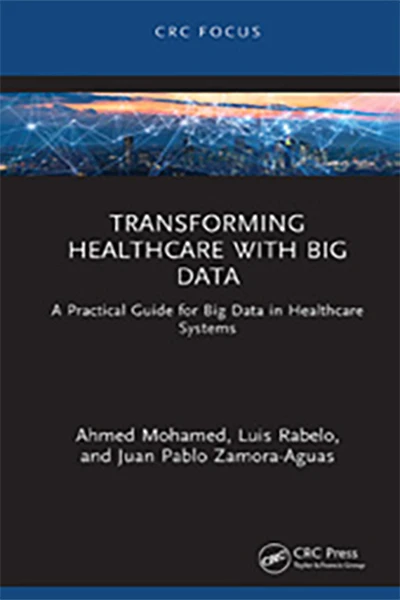
1. Your book introduces a six-layer healthcare framework integrating organisation, people, process, data, technology, and outcomes. What critical gaps in existing healthcare models compelled you to design this layered approach, and how does it change decision-making at the leadership level?
The foundation framework, People, Process, Technology (PPT) was introduced in the early 1960s and was reinstated again in the 1990s. Indeed, the interdependencies among those 3 components are essential but are not enough for the new emerging technology era, especially when utilised in the healthcare industry. Therefore, the organisation, the data, and the outcomes elements were added to address the gap. The interconnection of all six components would lead to automation, standardisation, and innovation for holistic success in decision-making and significant outcomes at the enterprise.
2. Data completeness is a recurring theme in your framework. From your experience, what are the most underestimated barriers to achieving true data completeness in healthcare systems, and how can organisations overcome them without overwhelming clinicians?
I believe data governance is one of the underestimated barriers in healthcare for healthcare organisations because it either does not exist or it is poorly formed due to a lack of experience and skills in this area. Turning medical information into value that serves clinicians and meets their needs is the goal that cannot happen without the maturity of data governance. Clinicians should focus on patient care and not worry about the massive amount of data or the accuracy that the systems generate, as it is the responsibility of the data governance.
3. The framework integrates 41 distinct components. How should healthcare organisations prioritise these components during implementation, especially when operating under budgetary and regulatory constraints?
The recommendation is to start at the organisation level to determine the overall business objectives and create a strategy that allows getting the most out of the available data by leveraging capabilities to drive and deliver the organisation's business goals. Financial analysis is required to ascertain that the financial gains and the Total Cost of Ownership (TCO) are straightforward. Additionally, Healthcare organizations need to conduct a comprehensive inventory of data applications and tools to coordinate efforts and eliminate redundancies.
4. Healthcare data is often fragmented across silos. How does your model address interoperability challenges while ensuring data governance, security, and compliance with global healthcare regulations?
The inconsistency of the applications with exacerbated silos is a result of the lack of coordination between the business/clinician side and the technology side, which leads to purchasing data analytics tools and systems of the same function in an ad-hoc fashion based on departmental needs, with no tangible benefits. The framework proposed a complete IT transformation and organisation restructuring to partner with other departments, allowing standardisation and alignment to support the organisation's data capabilities rather than being a technology service provider.
5. Your book discusses predictive risk assessments as a cornerstone of modern healthcare analytics. How can healthcare providers ensure that predictive models remain clinically relevant, unbiased, and trustworthy over time?
Healthcare providers realised the change of reimbursements from pay-for-service to pay-for-value, aiming to deliver high-quality healthcare at a lower cost. Therefore, they need to leverage their fully available and accurate data, including semi-structured and unstructured data, for better analytics in the clinical and business areas to make data-driven decisions in real-time. They also need to avoid implementing complicated analytic data systems that cause delays in making decisions due to spending time piecing several outputs together, which leads to undesired outcomes.
6. You explore the convergence of big data with artificial intelligence, machine learning, and deep learning. In practical terms, where do you see organisations deriving the most immediate value from this convergence today?
Big data feeds deep learning (DL), machine learning (ML), and Artificial intelligence (AI) for more advanced outcomes and will not be useful without them, Vice versa, AI, DL, and ML are not fully capable without taking advantage of data completeness, including big data. Immediate value can be achieved by “automatically” creating performance measurement reports for government agencies for accreditations and payments linked to performance as part of the Merit-based Incentive Payment System (MIPS) program.
7. Many healthcare systems struggle to translate analytics insights into operational change. How does your framework bridge the gap between data intelligence and actionable clinical or administrative outcomes?
The framework recognises that the flow of the patient’s care journey is the main element that healthcare organisations design their operations around. Each step of this process must be documented and measured for costs, outcomes, quality, time, and patient satisfaction for successful tactical and strategic results. It employs the healthcare organisation’s data ecosystem in an innovative way to leverage emerging technologies by identifying the essential components to integrate technological platforms and advanced data analytics to become a data analytics-driven healthcare organisation.
8. Cost reduction without compromising care quality is a major promise of big data analytics. Can you explain how your approach helps healthcare leaders balance financial sustainability with patient-centric care?
I recommend implementing big data analytics initiatives starting with a lighthouse project as proof of value (PoV) that allows examining concepts of data initiatives on a small scale to determine values that turn into benefits, determining if it is worth the time and money needed for executing the solution on a larger scale. The modularity of the healthcare system and the orchestration among departments cannot be achieved without a robust ecosystem that supplies intuition of real-time activities that are crucial to stay in business.
9. KPI tracking plays a significant role in your implementation guidelines. How should healthcare organisations redefine KPIs to move beyond traditional metrics and truly measure value-based care?
Key Performance Indicators (KPI) are required to validate the success of reaching business goals at the organisation/strategic layer. Traditional KPIs remain needed to control the operation expenditures by preventing overstaffing and accurately estimating workforce requirements based on needs, but with advanced capabilities, obtaining these metrics has become easier, faster, and more precise. New clinical KPIs with complete patient data in real time can help prevent delays in diagnosing illness and provide the right treatments promptly, which can reduce the length of stay as part of value-based care.
10. Technology selection is often driven by vendors rather than strategy. What decision criteria does your book propose to help healthcare leaders choose scalable, future-ready big data technologies?
The benefit of adopting the recommended framework in the book is to help roll out a data analytics tool that does not meet the needs to accomplish the expected outcomes. If a well-defined methodology is used correctly to select the appropriate technologies, it will lead to successful results. Applying the MoSCoW model to deciding the essential functionality of the data analytic tools allows ranking the criteria requirements, such as agility, elasticity, scalability, availability, and security, that are crucial features to accommodate business needs and innovation.
11. Change management is frequently the hidden challenge in digital health transformations. How does your framework address resistance from clinicians, administrators, and IT teams during big data adoption?
Big data cutlery changes healthcare organizations operationally and decision making. It is essential to revamp Processes around the new capability that digital transformation and emerging technologies introduce for better effectiveness and efficiency. Creating an actionable plan that takes into consideration all aspects to inform stakeholders about the changes is a key to the change management process. Therefore, comprehensive training that shows the benefits and the full capability of the product could help the buy-in and avoid resistance from team members.
12. As healthcare systems increasingly rely on automated insights, how do you recommend maintaining transparency and human oversight in AI-driven decision-making processes?
Many healthcare providers have a challenge of reviewing all available charts that may cause a lost opportunity for prospective payment to maximise reimbursement by classifying patients with an inappropriate Diagnosis-Related Group (DRG). Automation plays an important role here by eliminating the manual process of reviewing the clinical documentation. It reviews charts to support case management throughout the patient's stay until the time of discharge, with the Length of Stay (LOS) information.
13. From a global perspective, how adaptable is your framework for low-resource or emerging healthcare systems, where infrastructure and data maturity may be limited?
The framework is intended for large enterprise healthcare organisations that are fully digitized but it can be partially adapted as necessary. The framework is putting all parts of the puzzle collectively to work coherently, and it is flexible to pick and choose what component fits the desired outcomes. For example, people layer can help with forming teams with the technical skills and competence aspects that are required to utilise big data analytics.
14. Looking ahead, how do you envision big data reshaping healthcare delivery over the next decade, and what foundational steps should organisations take today to remain competitive and resilient?
The objective of healthcare organisations is not only to provide the needed care during illness for their patients but also to keep them healthy after treatment. Eventually, the digital front door will be the focus for healthcare organisations on engaging their patients from when they ask for care to when their care journey is completed. Additionally, healthcare organisations will need to add the digital engagement capability to provide patients with transparency on the cost of the needed healthcare services, like other industries.