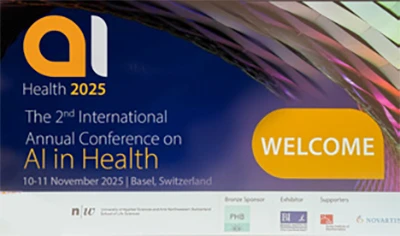
1. What was your overall impression of The 2nd International Annual Conference on Artificial Intelligence in Health (aiHealth2025)?
The AIHealth2025 conference offered a comprehensive and intellectually rich overview of the current state and future direction of artificial intelligence in healthcare. What stood out most was its clear focus on the transition from experimental and conceptual AI research toward real-world clinical implementation. The interdisciplinary structure—bringing together clinicians, data scientists, public health experts, and industry leaders—created meaningful dialogue that went beyond technical performance and addressed clinical relevance, ethical responsibility, and system-level integration. Overall, the conference successfully captured where the field truly stands today: at the critical intersection of innovation and clinical reality.
2. What inspired you to participate in this year’s event as an author and domain expert?
My participation was driven by the growing urgency to connect advanced AI methodologies with everyday clinical cardiology practice. While AI innovation is accelerating rapidly, its translation into patient-centered, clinically validated solutions remains a key challenge. AIHealth2025 provided an ideal environment to engage in this dialogue, particularly around digital twins and predictive modeling. As both a clinician and researcher, I felt it was essential to contribute to discussions that emphasise not only technological potential but also clinical applicability, validation, and long-term impact on patient outcomes.
3. Among the key themes AI for diagnostics, AI for therapeutics, and generative AI for digital twins which area resonated most with you and why?
Generative AI for digital twins resonated most strongly with me. Digital twins represent a fundamental paradigm shift in medicine by enabling the creation of dynamic, patient-specific models that evolve over time. The integration of multimodal data—clinical parameters, imaging, genomics, behavioral and environmental factors—allows us to move beyond static risk scores toward truly individualised disease modeling. In cardiovascular medicine, where disease progression is complex and multifactorial, digital twins have the potential to redefine how we predict risk, tailor therapies, and simulate treatment responses before clinical decisions are made.
4. What were the most significant discussion points that stood out to you during the sessions?
Several key discussion points stood out. First, the interpretability and transparency of AI models emerged as a central theme, particularly from a clinician’s perspective. Second, data governance, trust, and ethical responsibility were repeatedly emphasized as prerequisites for sustainable AI adoption. Finally, the importance of incorporating social, environmental, and lifestyle determinants of health into predictive models was highlighted, especially in sessions addressing cardiometabolic risk and citizen health. These discussions underscored that effective AI in healthcare must reflect the complexity of real human lives—not just clinical datasets.
5. Did any panel discussion or debate provide particularly impactful or thought-provoking insights?
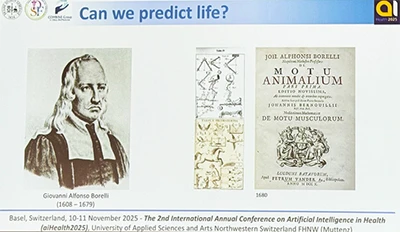
Yes, the panel discussion exploring whether AI should be viewed as a “supertool” or a “deus ex machina” was particularly thought-provoking. It challenged the narrative of AI as a replacement for clinicians and instead emphasised augmentation, collaboration, and human oversight. The discussion reinforced that AI should enhance clinical reasoning rather than override it, and that ethical judgment, contextual understanding, and responsibility must remain firmly human-led. This perspective is crucial for maintaining trust among clinicians and patients alike.
6. What are your top three takeaways from the conference in terms of scientific or technological advancements?
My top three takeaways were:
First, digital twins are rapidly evolving from theoretical concepts into testable and potentially deployable clinical tools.
Second, AI-driven risk prediction models are expanding beyond traditional medical data to include lifestyle, environmental, and population-level inputs.
Third, successful real-world deployment depends not only on algorithmic performance but also on transparency, regulatory alignment, and early clinician engagement throughout the development process.
7. How do you see these takeaways influencing global healthcare strategies, especially in cardiology and digital medicine?
These advancements support a global shift from reactive, episodic care toward proactive and preventive healthcare strategies. In cardiology, this translates into earlier identification of cardiometabolic risk, more precise monitoring of chronic conditions such as heart failure, and personalised therapeutic pathways. At a system level, AI-enabled stratification tools can help allocate resources more efficiently and reduce long-term disease burden, particularly in aging populations.
8. Did any presentation or interaction shift or reinforce your views on the future of AI in healthcare?
The conference strongly reinforced my belief that the future of AI in healthcare lies in hybrid intelligence, where human clinical expertise and algorithmic precision evolve together. The emphasis on validation, real-world evidence, and clinician-in-the-loop models was particularly reassuring. Rather than accelerating blindly, the field appears to be maturing toward responsible, evidence-based implementation.
9. Which innovation or emerging technology showcased at the event impressed you the most?
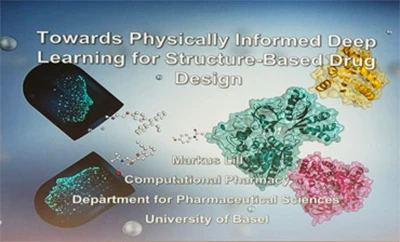
The most impressive innovation was the application of digital twin models to simulate molecular and pathway-level disease mechanisms. These approaches, particularly those integrating genetic and signaling pathway data, offer new opportunities for precision cardiology. They allow us to better understand disease heterogeneity and potentially identify therapeutic targets that would not be apparent through traditional clinical assessment alone.
10. Were there any breakthroughs presented that you believe can significantly transform clinical workflows or patient care in the near future?
Yes, AI-based population risk stratification tools that integrate environmental, behavioral, and clinical data stood out as highly impactful. These tools have the potential to transform preventive cardiology workflows by enabling earlier intervention, more targeted screening, and better prioritisation of high-risk individuals—changes that could be implemented within the next few years.
11. How did the event’s interactive on-screen demonstrations influence your understanding of AI’s practical applications?
The interactive demonstrations were particularly valuable because they showed how AI outputs can be seamlessly embedded into clinical dashboards. Seeing these tools in action highlighted how decision support can be enhanced without increasing cognitive burden or disrupting workflow. This is a critical factor for clinician acceptance and long-term adoption.
12. In your opinion, how will the advancements discussed at aiHealth2025 shape the future of individualised diagnostics and therapeutics?
These advancements will drive a shift toward adaptive and continuously updated diagnostic and therapeutic strategies. Rather than relying on static guidelines or one-time risk assessments, clinicians will increasingly use dynamic models that evolve with the patient’s condition, behavior, and environment. This represents a major step toward truly personalised medicine.
13. What potential do you see for digital twins in population health and cardiology based on the insights gained during the conference?
Digital twins hold enormous potential at both individual and population levels. In cardiology, they can be used to simulate disease trajectories, test preventive strategies, and optimise treatment pathways. At a population level, they may support scenario modeling for public health planning, helping policymakers evaluate the long-term impact of interventions before implementation.
14. How do you foresee the convergence of traditional medicine and digital medicine evolving after the discussions at this event?
I foresee a gradual but definitive convergence, where digital medicine becomes fully embedded within traditional clinical pathways rather than existing as a separate discipline. AI will increasingly function as a trusted clinical companion, enhancing precision, efficiency, and equity in healthcare delivery, while clinicians remain at the center of decision-making.