1. Could you share your journey and motivation for specializing in cardiology, and what led you to incorporate Point of Care Ultrasound (POCUS) into your practice?
Back during my internship, guess which specialty I absolutely didn't want to go into? Cardiology. Cardiology was nowhere on my radar!
For many, cardiology is prestigious, but for me, it wasn't about that. I chose it for the challenge, to push my limits and manage really sick patients. Plus, I met this amazing cardiologist who inspired me. So, during my internship, I made up my mind: cardiology it is. And you know what? I've never looked back.
During my internship, cardiology was the last specialty on my mind. It wasn't about prestige; I was drawn to the challenge and managing critically ill patients. Meeting an inspiring cardiologist sealed my decision. My journey has been filled with highs and lows, but it's where I found my purpose. In 2019, I discovered ultrasound, which fascinated me. Despite struggles and moments of doubt, a life-saving diagnosis in 2020 reaffirmed why I became a doctor. My mother's words, 'Make a positive difference,' guide me. That's why I incorporate POCUS into my practice – to make a difference and help others learn this invaluable skill.
2. What were the key challenges you faced in integrating POCUS into your clinical workflow, and how did you overcome them?
Integrating POCUS into my clinical workflow was a journey filled with challenges. I remember feeling isolated, with limited resources and guidance available. Understanding ultrasound basics was daunting, and I felt lost in deciphering which transducer to use and when. It seemed like a mystery.
I tried various resources but made little progress. Then, a pivotal moment came when I diagnosed massive pericardial effusion, which changed everything.
After a heartfelt talk with my mom, I made a promise to persist. I sought learning opportunities, traveled to learn from experts, and even conducted late-night teaching sessions. I refused to give up.
Overcoming these challenges required discipline and resilience. Every challenge I faced in life helped me grow stronger. Once I grasped POCUS, it became transformative. Despite challenges, POCUS is the future of medicine, empowering us to change lives.
3. What specific advantages have you observed in patient outcomes when using POCUS compared to traditional diagnostic methods?
POCUS has revolutionized patient care by complementing clinical assessment and offering a more comprehensive picture. One of my earliest experiences with POCUS, about 7.5 years ago, stands out. Traditional methods failed to detect massive pericardial effusion in a patient, but POCUS did, ultimately saving her life.
In the emergency ward, POCUS drastically reduces waiting times. For instance, when suspecting deep venous thrombosis, I can perform the ultrasound myself. Detecting a clot means immediate treatment, saving crucial time and improving patient satisfaction.
Using POCUS for cardiac exams guides further diagnostic tests like coronary angiograms. It helps assess heart function, identify conditions like pulmonary embolism or acute cholecystitis, accelerating diagnosis—crucial in fast-paced emergency settings where conditions deteriorate rapidly.
Being proficient in POCUS enables faster, more accurate decisions, ultimately improving patient outcomes. Sometimes, it's the difference between life and death.
4. How does POCUS help reduce the frustration and insecurity doctors often feel while waiting for diagnostic results from traditional imaging methods?
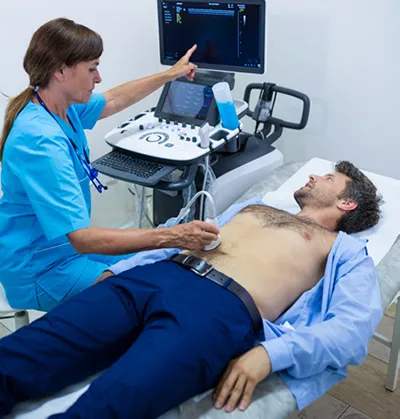
POCUS is a game-changer for us doctors. Waiting for traditional imaging results can be nerve-wracking and feel like an eternity, leading to doubts about patient management. With POCUS, we get immediate answers right at the bedside.
In critical situations, instead of waiting for hours or days, POCUS provides real-time information, boosting our confidence to act promptly. I recall a case where POCUS helped diagnose cardiac tamponade swiftly, allowing for immediate intervention.
POCUS gives us more control and reduces reliance on other departments, minimizing delays and stress. Getting crucial answers on the spot allows us to make informed decisions quickly, leading to better patient care. It's incredibly satisfying and makes our job more efficient.
5. What are the most significant barriers to the widespread adoption of POCUS in various medical specialties, and how can they be addressed?
Widespread adoption of POCUS faces several challenges. Firstly, not every doctor is trained to use it effectively. Improved training programs tailored to various specialties are essential to address this gap.
Cost remains a significant hurdle despite decreasing device prices. Initiatives such as grants or bulk buying deals could make POCUS more accessible to medical facilities.
Resistance to change is another barrier. Some doctors are skeptical about incorporating POCUS into practice. We need to demonstrate its benefits through success stories and research findings, highlighting faster diagnostics and improved outcomes.
Integrating POCUS into workflow seamlessly is crucial. Clear protocols and guidelines are needed to ensure its effective use without disrupting routine clinical practice.
By investing in better training, providing financial support, fostering mindset shifts, and ensuring smooth integration into workflow, we can make POCUS a standard tool across all medical specialties.
6. What are the key components of your NorVue training program that make it effective for both new and experienced practitioners in mastering POCUS?
Learning ultrasound can be a daunting journey, especially when you're unsure where to begin. I made every mistake imaginable when I first delved into POCUS. Months passed with little progress, feeling lost and frustrated.
I know many others face similar struggles. Some expect a single workshop to teach them everything, only to forget most of it without practice. I remember the overwhelm, the hours spent trying to learn, and I don't want anyone else to experience that.
That's why I created NorVue – to simplify learning. My courses cover the basics in an easy-to-follow format. What sets them apart? They save you time. Knowledge leads to better decisions. Investing in my courses saves you from endless searching through free resources. Time is precious, and I want to help you make the most of it.
I want you to thrive and enjoy the journey. Keep going, even when it's tough. POCUS is the future of medicine – it can change lives, including yours.
7. How do you envision the role of POCUS evolving in the next decade within the field of cardiology and beyond?
I believe POCUS will revolutionize cardiology and beyond in the next decade. In cardiology, POCUS will become indispensable for quick bedside heart assessments, enabling immediate evaluations of cardiac function and abnormalities, leading to more efficient and effective patient care.
Beyond cardiology, POCUS will become a standard tool in many specialties. In emergency medicine, it will expedite trauma assessments and guide procedures. In primary care, it will aid in routine check-ups, early issue identification, and reducing specialist referrals.
I envision POCUS becoming more user-friendly and integrating with advanced technologies like AI. Portable devices with improved image quality and AI-assisted features will aid interpretation. Many ultrasound companies are already developing AI tools, which I’m optimistic about.
However, it's crucial for users to be proficient in performing scans and evaluating images themselves to support AI findings. AI can assist beginners, guiding them to obtain optimal views and understand anatomical structures. Given the lack of supervision in learning POCUS, AI can be immensely helpful here.
Increased use of POCUS in medical training will be significant. As more students and residents become proficient, it will become a standard practice. This new generation of doctors will be more comfortable and innovative with POCUS, ultimately improving patient care.
8. What has been the most rewarding aspect of incorporating POCUS into your practice, and what advice would you give to healthcare providers considering its adoption?
The most rewarding aspect of incorporating POCUS into my practice has been the immediate impact it brings to patient care. Being able to diagnose on the spot and start treatment right away is incredibly satisfying. It boosts my confidence as a physician and strengthens my connection with patients.
If you're considering adopting POCUS, my advice is to jump right in! Start with the basics, don't be afraid to ask for help, and integrate it into your daily practice. The more you use it, the more proficient you'll become. Remember, it's not just about diagnoses; it's about making patient care smoother and more fulfilling. Embrace it, and you'll see how much of a difference it can make!
9. What message would you like to convey to the medical community about the importance and potential of POCUS in transforming patient care and empowering healthcare professionals?
POCUS isn't just another gadget; it's like having superpowers in the medical world. Imagine having the ultrasound right at the patient's bedside, like having x-ray vision! With POCUS, we can diagnose things faster than ever, and in emergencies, those quick seconds can save lives. It's like having a secret weapon against time.
But it's not just about speed; it's about accuracy too. POCUS helps us pinpoint problems precisely for the best treatment, and it's not just for one type of doctor. From ERs to ICUs, orthopedics to cardiology, POCUS is everywhere, making a big difference.
And the best part? It's not just for experienced doctors. Nurses, paramedics – everyone can use it. Imagine being able to see inside a patient right away – it's empowering and makes our jobs even cooler. Plus, it's an amazing learning tool, like having a tiny ultrasound lab wherever you are.
I truly believe POCUS is the future of medicine. It's making healthcare more patient-centered too. Patients can see what we see, understand better, and be part of decisions about their care.
10. What steps can the medical community take to accelerate the adoption of POCUS, and how can interested practitioners learn more about your work and the training programs offered by NorVue?
To establish POCUS as a standard in patient care, early education is crucial. Imagine if students had hands-on POCUS experience from day one of med school! We also need continuous support: workshops, online courses, and mentoring for all levels. Hospitals must invest in accessible equipment.
At NorVue, we're dedicated to this cause. Our courses at www.norvueas.com are practical for beginners and pros alike. We provide video tutorials, interactive modules, and mentorship, focusing not only on technical skills but also on mindset and resilience.
Exciting news: We're launching a YouTube podcast sharing real-life doctor experiences. Follow me on Instagram and LinkedIn for updates!