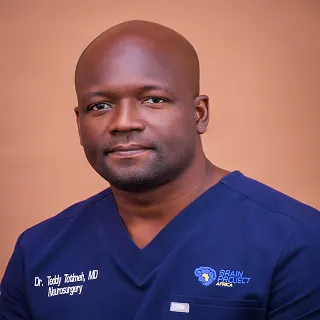
1. With only 29 neurosurgeons serving a population of 36 million, Ghana faces a critical shortfall in specialised care. How does this imbalance influence emergency neurosurgical outcomes, particularly in high-burden cases like traumatic brain injuries and hypertensive intracerebral hemorrhages?
The clinical burden on the few neurosurgeons is a key limitation of their impact on the national response to these challenges. The high-level involvement that Neurosurgeons should have in policy direction and scaled national emergency guidelines is limited, because they are too busy in their clinics to evaluate the system problems and solve them sustainably. A lot of clinical work is taking place in silos, limiting effective coordination of medical responses to these challenges.
2. The worsening brain drain exacerbates an already fragile system. What, in your view, are the underlying reasons why young neurosurgeons continue to leave, and how can structural incentives - or the lack thereof - be addressed?
Most doctors who stay in the country long enough to finish neurosurgery training will stay. Young doctors leave before residency training starts because the government's capacity to fund residency training is limited by its emphasis on primary healthcare. A lacuna in human resource development persists in the post-internship years, when there are no training posts in government hospitals. Young doctors are leaving because they would rather spend this time in a country with training positions than wait.
3. In an ecosystem where private investment often gravitates towards low-risk, high-return services, what compelling case can be made for the private sector to actively participate in the development of high-expenditure specialties like neurosurgery?
I started a neurosurgery practice right after leaving the government hospital; all I had was some equipment. Over the last 3 years, I have demonstrated that a single neurosurgeon can run a private practice and be profitable in Ghana. The health tourism market is sustained by specialised surgery. The non-availability of expertise in the country accounts for significant capital flight. Only a private sector strategy can channel these income streams profitably enough to be sustainable
4. Do you believe the private sector truly understands the scale and complexity of neurosurgical needs in Ghana? What knowledge gaps or misconceptions are most commonly observed among healthcare investors?
The private sector has been blinded to the scale and complexity of neurosurgical needs because the back office for maintaining the neurosurgical care ecosystem is historically government-controlled. There has been no motivation to invest because the fruits of primary health care targeted investment are low-hanging and rewarding. The financial bonanza of specialised surgical care is therefore a big private sector blindspot. This knowledge gap grows in the face of outward capital flight as corporate clients finance specialised treatment abroad
5. What infrastructural or policy-level changes would enable private hospitals to sustainably incorporate neurosurgical services into their offerings without compromising financial viability?
The capital-heavy investment components for specialised healthcare are concentrated in infrastructural setup and management, along with sustenance of logistic supply pathways, in resource-challenged environments. The nonavailability of expertise for manufacturing and also for maintenance/repair makes in-country procedures more expensive than treatment around in the short run. Policy must be targeted to keeping the economy stable enough to minimise the cost of credit and reward long-term planning. No short-term strategies will work in this environment.
6. How can private sector hospitals collaborate with public institutions in a way that enhances surgical capacity, rather than fragmenting care or competing for limited human resources?
Private sector hospitals must perfect standard operating procedures that ensure cost-efficient running of specialised surgical care. This will enable the creation of independent service niches that shunt patients from the private sector initially, just because of better outcomes. Subsequently, conversations should be initiated that enable structured public-private partnerships with terms that favour both entities and encourage patient traffic. Mutual profitability of such ventures will increase the fiscal level of collaboration, and the eventual winner is the patient.
7. Is there scope for cross-border or intra-African partnerships among private neurosurgical centers to share expertise, infrastructure, or even rotate skilled professionals?
This is always a possibility, but significant barriers exist. Disparate health systems with decades of siloing and non-disclosure of health metrics typify the systemic inhibition of cross-border collaboration. Even travelling can be a barrier, because of the significant expense. Such barrier dissolution can only be done at the governmental level, but private cross-border ‘hacks’ exist, especially through using nongovernmental, philanthropic platforms to administer specialised healthcare. Such outreaches have short-term relevance, but must be strategised into long-term interventions.
8. In the absence of large philanthropic or government grants, what creative financing models - such as social impact investing or outcome-based funding - could help de-risk private investment in neurosurgical infrastructure?
Venture capital options and angel investors with the long view for Greenfield, uncharted waters, would be able to capitalise on the first mover gains in this market. The wheel does not need to be invented, and the strategies that have enabled specialised health care to be profitable in North America and Southeast Asia can also be applied here. In this environment, equity is king, and the entrepreneurial skills that must be attained to garner equity-yielding relationships must be nurtured.
9. How important is it for private healthcare providers to be involved in the full neurosurgical ecosystem - not just surgery, but also post-op rehabilitation, neurology follow-up, and long-term care?
It is important for full optimisation of upstream and downstream market profits to increase footprint in the entire ecosystem. These other sectors are not as resource and logistics-heavy, and thus are financially viable mainly because of the longer duration of paid care, with a dedicated client traffic. These sectors also improve the dissemination of employment opportunities, enabling young people who can be quickly brought up to speed on high-yield, low-skilled care jobs.
10. If you were to design a blueprint for private sector involvement in neurosurgical development over the next 5–10 years, what would be its core pillars - from funding mechanisms to human resource pipelines and regulatory support?
Govt-sponsored policy frameworks which promote long-term planning, allowing increased access to affordable funding with tolerance for initial poor returns.
- Health entrepreneurs forming lean, efficient teams built around surgical practitioners committed to SOPs that distil pathways for improved outcomes, shunting patients away from poor services in the govt sector.
- Initiatives that enable mutually beneficial public sector outsourcing of high-end surgical care to efficient, private sector operators, leveraging lower overheads from private-public partnerships to reduce cost.