
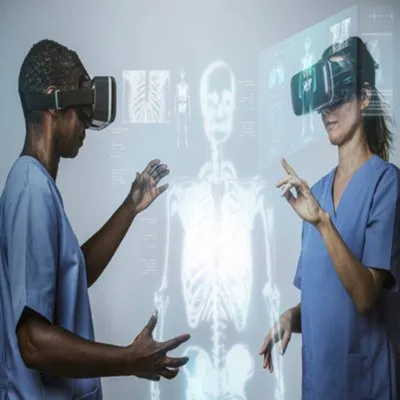
Artificial Intelligence (AI) has emerged as a transformative force across industries, with healthcare particularly medical imaging being a key area of innovation. AI-powered imaging utilizes machine learning and deep learning algorithms to enhance image acquisition, interpretation, and diagnosis, offering clinicians faster, more accurate insights. In a world of rising chronic diseases and growing demand for personalized medicine, this technology represents a powerful ally in diagnostics, disease monitoring, and treatment planning. Medical imaging is foundational to many branches of medicine, from routine screenings to complex oncologic assessments. As image datasets become larger and more complex, conventional human analysis is challenged by time constraints and fatigue. AI offers a solution by automating tasks, minimizing variability, and uncovering insights beyond human perception. As a result, AI is not just enhancing imaging but revolutionizing the entire diagnostic pipeline.
The Evolution of Imaging Technologies
From X-rays and ultrasounds to MRIs and CT scans, imaging technologies have evolved rapidly over the past century. However, interpreting these complex images has long relied on the experience and judgment of radiologists and clinicians. With the rise of data-driven medicine and high-performance computing, AI now adds a new layer of intelligence to these systems—analyzing patterns invisible to the human eye and enabling scalable, precise diagnostics. Historically, even the most skilled radiologists could miss subtle anomalies due to time pressure or cognitive biases. Today’s AI systems not only standardize interpretation but also introduce continuous learning—improving over time as more data becomes available. This means diagnostic tools can evolve dynamically alongside medical knowledge and epidemiological trends.
How AI Works in Medical Imaging
AI in medical imaging primarily employs deep learning models such as convolutional neural networks (CNNs), which mimic the human visual cortex. These models are trained on massive datasets to recognize abnormalities in medical images. For instance, an AI algorithm can be trained to detect lung nodules, classify breast lesions, or identify ischemic strokes on brain CTs with remarkable accuracy.
AI systems can also:
• Preprocess images: Enhance contrast, eliminate noise, and align anatomical regions.
• Segment anatomical structures: Outline tumors, organs, or lesions with pixel-level precision.
• Detect and classify pathology: Highlight suspicious areas and suggest differential diagnoses.
• Predict outcomes: Estimate disease progression or likelihood of therapeutic response.
In addition, Natural Language Processing (NLP) techniques are being integrated to generate automated imaging reports from structured data, improving documentation quality and reducing administrative workload.
Key Areas of Application
1. Radiology
AI tools like Aidoc, Zebra Medical Vision, and Lunit are already assisting radiologists by flagging critical findings such as intracranial hemorrhage or pulmonary embolism in CT scans. These systems serve as a “second reader,” ensuring no critical abnormalities are overlooked. Moreover, AI supports triaging—prioritizing urgent cases to the top of the worklist. For instance, AI can automatically push suspected stroke scans for immediate review, potentially reducing time-to-treatment and improving outcomes in hyperacute care settings.
2. Cardiology Imaging
AI enhances echocardiography, cardiac MRI, and CT angiography by automating measurements such as ejection fraction or chamber size. Algorithms can also detect myocardial scar tissue, wall motion abnormalities, and perfusion deficits with great precision. Emerging models are capable of predicting future cardiac events based on image-derived biomarkers such as fibrosis patterns or coronary plaque burden, offering novel tools for preventive cardiology.
3. Oncology Imaging
AI improves early cancer detection, tumor segmentation, and radiogenomic analysis. Systems trained on mammography, PET, and CT data can help identify malignancies at earlier stages and correlate imaging features with genetic profiles. Furthermore, AI supports adaptive radiotherapy by tracking tumor changes across treatment sessions, allowing dynamic adjustment of radiation plans to maximize efficacy while minimizing toxicity.
4. Pathology and Digital Microscopy
AI supports digital pathology by analyzing biopsy slides to detect malignancies, grade tumors, and quantify biomarkers such as Ki-67 or HER2 expression. Whole-slide imaging combined with AI enables remote consultation and augments pathology services in under-resourced regions. By reducing interobserver variability and standardizing classifications, AI contributes to reproducibility in clinical trials and histopathologic research.
5. Ophthalmology
AI platforms like IDx-DR are FDA-approved for autonomous detection of diabetic retinopathy. These tools can be deployed in primary care settings, enabling early identification of sight-threatening complications without requiring specialist interpretation. Other systems target glaucoma detection, macular degeneration screening, and even pediatric retinopathy of prematurity, demonstrating AI’s reach across age groups and disease spectrums.
6. Neurology
In stroke imaging, AI systems such as Viz.ai rapidly detect large vessel occlusions, generate perfusion maps, and alert neurologists in real-time. Such platforms significantly reduce door-to-needle times and are being increasingly adopted in stroke centers worldwide. AI is also being explored for dementia diagnostics, including Alzheimer’s disease, by analyzing structural and functional MRI to identify early signs of neurodegeneration.
Benefits of AI in Imaging
Speed and Efficiency: AI can analyze thousands of images within seconds, reducing reporting time and patient waiting.
Improved Accuracy: Algorithms can outperform radiologists in specific tasks, such as detecting breast microcalcifications or lung nodules.
Workflow Optimization: AI helps prioritize urgent cases, flag incidental findings, and automate repetitive measurements.
Early Detection: Subtle pathologies, often invisible to the human eye, can be detected early through pattern recognition.
Cost-effectiveness: AI reduces repeat imaging, prevents missed diagnoses, and improves resource allocation across departments.
In addition, AI promotes democratization of care by enabling accurate diagnostics in remote or underserved areas where experienced radiologists may not be readily available.
Challenges and Ethical Considerations
Despite its advantages, AI-powered imaging is not without limitations:
• Data Quality and Bias: AI systems trained on limited or biased datasets may not generalize well across populations.
• Interpretability: Many deep learning models operate as “black boxes,” making it hard to understand how decisions are made.
• Regulatory Hurdles: Approval processes require extensive validation, often delaying implementation.
• Liability and Responsibility: It remains unclear who bears responsibility in the event of AI-related diagnostic errors clinicians, developers, or institutions?
• Patient Privacy: Data sharing and AI training must comply with regulations like HIPAA, GDPR, and national laws to avoid breaches.
Ethical AI also demands inclusivity, ensuring that underrepresented groups are adequately reflected in training datasets to prevent systemic bias in healthcare delivery.
Future Directions
1. Multimodal AI Integration
Combining imaging data with electronic health records, genomics, and wearable data will enable more holistic, personalized diagnostics.
2. Edge AI and Mobile Imaging
Embedding AI in portable ultrasound or smartphone-based dermatoscopes allows deployment in ambulances, rural clinics, and disaster zones.
3. Federated Learning
Enables AI model training across multiple hospitals without sharing sensitive patient data, improving privacy and data diversity.
4. Explainable AI (XAI)
Developing models that provide transparent, interpretable outputs will increase clinician trust and regulatory acceptance.
5. Real-time Decision Support in the OR
Intraoperative AI systems will guide surgeons by identifying critical structures or resection margins in real-time, improving surgical safety and outcomes.
Conclusion
AI-powered imaging is redefining the future of diagnostics, enhancing precision, efficiency, and patient outcomes. While challenges remain in terms of validation, ethics, and implementation, the benefits are undeniable. As AI matures and integrates deeper into clinical workflows, it will not replace radiologists but will become an indispensable partner augmenting their capabilities, reducing burnout, and improving healthcare delivery globally. Healthcare institutions must invest in AI literacy, robust validation pipelines, and interdisciplinary collaboration to fully realize the transformative potential of AI in medical imaging.
References
• Esteva A, et al. A guide to deep learning in healthcare. Nat Med. 2019.
• McKinney SM, et al. International evaluation of an AI system for breast cancer screening. Nature. 2020.
• Topol E. Deep Medicine: How Artificial Intelligence Can Make Healthcare Human Again.
• Erickson BJ, et al. Machine Learning for Medical Imaging. Radiographics. 2017.
• Lakhani P, Sundaram B. Deep Learning at Chest Radiography. Radiology. 2017.
• U.S. FDA. Artificial Intelligence and Machine Learning in Software as a Medical Device.