Healthcare financing architecture that leverages Web 3.0 technologies to address structural inefficiencies inherent in both supply- and demand-subsidized systems. By integrating blockchain infrastructure, smart contracts, health-specific tokens, and decentralized autonomous organizations (DAOs), the model enables direct allocation of healthcare funds to individuals while automating payment and governance at the point of care. The framework aims to improve cost control, transparency, equity, and stakeholder alignment across public and private healthcare ecosystems.
While much has been written about the use of blockchain and smart-contract technology in healthcare, their practical application has been limited. Blockchain technology presents an opportunity for a major transformation in healthcare financing, reducing inequities, curbing profit-driven inefficiencies, and empowering patients and healthcare practitioners alike.
When it comes to healthcare, most countries use some form of subsidy to make it affordable or available, hopefully both.
Subsidies come in only two flavors, since we can only subsidise the supply or the demand of a product (healthcare in our case). Every time a government decides to build a hospital, hire human resources, vaccinate or buy and freely distribute medications using public resources, it is subsidising the supply of healthcare. Most Low-and Middle-Income Countries and those with High-Income and progressive policies usually choose this form of subsidy.
Meanwhile, the United States has one of the closest forms of subsidised demand systems in an industrialised nation. Our subsidy takes the form of private health insurance, where the employer, using part of the employee's income, buys bulk coverage at a discount. Additionally, those in need of care are also subsidised in their necessities by the contributions of the healthy ones in their group. Even when considering Medicaid or Medicare, those are also subsidised demand systems dressed up in progressive government clothes.
Either format has challenging inadequacies. Subsidised supply systems are prone to budgetary restrictions and politically based decisions with the resulting opportunity for corruption, while subsidised demand systems, depending exclusively on work status, result in inequities while exhibiting high administrative costs and frequent denials for services or medications due to the implicit need for profit.
Based on the economic principle by which markets are regulated by price or quantity, we frequently observe that a subsidised supply system tends to pivot towards some form of rationing of care, while a heavily subsidised demand system may easily slide into uncontrolled price escalation.
In an ideal world, the advantages of both systems should be combined and their disadvantages erased. Healthcare without rationing, available to everyone, priced fairly, with low administrative costs and no denial of necessary services.
Enter Web 3.0 and its derivatives, Blockchain, Decentralised Autonomous Organisations (DAOs), Smart-contracts and Tokens. While Web 2.0 (the internet system we all use) made the exchange of information possible, Web 3.0 allows for the secure transfer of value without the need of third-party verification. This significant technological improvement may have just opened the doors to the innovation we needed in healthcare financing.
Blockchain provides an accurate and decentralised form of record keeping, allowing for electronic payments based on cryptographic proof to be saved on a worldwide network of computers and encrypted on immutable time-stamped blocks of transactions chained to each other, hence the name blockchain.1
The virtue of blockchain technology is the facilitation of peer-to-peer direct monetary transactions of any size without the need for trusted third parties such as banks, government bureaucracies, healthcare insurance companies or any other form of commission charging entities.2
Some blockchains allow for the generation of smart-contracts, defined as “computer code that automatically executes all or parts of an agreement between parties storing the transaction on a blockchain-based platform”.3 These smart-contracts can be used to automatically carry out several transactions once the pre-defined requirements have been satisfied by the parts.
Another blockchain advantage is the potential ability to set-up a Decentralised Autonomous Organisation (DAO). These DAOs constitute an emerging form of (software-based) legal structure with no central governing body and whose members share a common goal of acting in the best interest of the entity by making decisions in a bottom-up management fashion. 4
Now, those same limited resources governments currently use in subsidising healthcare supply, or employers and individuals apply to subsidise their healthcare demand, could be allocated directly to individuals or family groups, empowering everyone to choose the healthcare they need.
In our ideal scenario, DAOs would take over the role a private insurance company currently has, providing coverage for every citizen who, in turn, pays their monthly dues with issued health-tokens (a form of stablecoin pegged to fiat currency deposited in a central Health Fund).
Participants of the DAOs (the public, physicians, health centers) come together to negotiate the rules and the prices (e.g., services included in the coverage and a fair pricing system). Smart-contracts would play a role at the point of care, when an intervention that has taken place is acknowledged by the patient, and the transfer of funds can automatically be settled from the patient’s DAO to the health practitioner or health center.
Fiat currency (coming from governments, employers, individuals) would be kept at a Central Health Fund Exchange, governed by representatives from the government, the public, healthcare providers and hospitals.
The “Exchange” would generate a Layer-2 security token (Health-Tokens) on top of a low fee blockchain for the value equivalent to the funds available and distribute them among the population via a soft wallet residing in smartphones
These Health-Tokens would be designated by law as property (inheritable and not-taxable), and would become the exclusive property of individuals (mother or head of household in case of minors) and would be designed (a token is just software) to only be accepted for healthcare related payments, effectively removing the risk of moral hazard (funds used for other purposes or lend/sold to third parties).
Tokens would be transferable and inheritable among family members, incentivising their use or accumulation within family units. As tokens go through the system and get cashed-out by health providers or hospitals, the funds in the exchange would get depleted only to be replenished in the next cycle of individual or governmental contributions.
Because of the nature of this project, the use of tokens is implemented to avoid dispensing cash to the public, which in turn would inexorably be tempted to use it for something other than buying healthcare coverage.
Tokens would not be exchangeable for fiat currency by individuals. Healthcare facilities or practitioners, in turn, may choose to use HT to pay for their medical supplies or proceed to exchange them back for fiat currency at the Exchange. Furthermore, the tight relationship between tokens and smart contracts presents itself as a great opportunity to collect health metrics at the point of service.
This system would essentially function as a closed market regarding contributions, (in the sense that it will not be open to competition by other blockchains or platforms). On the payor end it would function as a free market one. The true competition would be between healthcare DAOs, competing for the customers (patients) by negotiating lower prices with hospitals and providers.
Smart-contracts are the backbone of this project. We foresee costs of portability generating significant friction. The need for smart contracts to have the ability to be used in different DAOs, This will require a solid portability feature that will warrant privacy and facilitate identification while being user-friendly. There is a risk for fraud and abuse unless the portability issues are properly programmed and executed in the software.
The identity of the patient must be secured even before the patient reaches the point of service. A second secure identification would be required when the patient arrives at the point of care, leading to the smart-contract to be executed with the consequent transfer of funds between the DAO and the provider.
This is an area where moral hazard can play a significant role. Without proper Identification, there is a potential for all sorts of bad actors to take advantage of the system. Token design, Digital ID and a significant educational component in the use of tokens will be needed to ameliorate moral hazard.
The opportunity for collusion between providers and holders of the tokens rises at every point of interaction. It will require a deep sense of property by the token holder, to understand that tokens are his/her personal property and colluding with a provider (e.g.” executing a smart-contract for payment when no service has been rendered) is not something that affects a government or an insurance company, but rather it is the token holder her/him self who is being cheated.
Trust is a necessary condition for any monetary system, fiat or otherwise. In the world of stablecoins (and our proposed health-token is a form of pegged stablecoin), the important function of maintaining trust, by maintaining the stablecoin’s peg and securing backing of the currency or token, is given to the so-called “oracles” in the crypto world.
In our proposal, the board in charge of the Exchange, keeping the fiat deposits safe and issuing the corresponding health-tokens would act as our oracles de-facto, preventing volatility and loss of trust.
In any DAO, governance transition from the developers (centralised) to the users (decentralised) is rather cumbersome and may lend itself to gray areas where a given DAO is neither fully Centralized nor fully Decentralized. This would potentially create a point of friction.
Another important friction points to consider is how Governance will function during a time of crisis. Developers may be inclined to act, when safeguards are not in place, during these critical times with the intention to preserve the DAO’s universe intact. This actions, while performed with the best intentions, may not necessarily be in the best interests of DAO users or beneficiaries of the provide services.
The way we envision the transfer of governance once the system architects hand it off to the payors, providers and beneficiaries would be stepwise. This would be a tripartite shared governance. First players at the governance table would be the government representatives, followed by organised providers (physicians, clinics, etc.) and lastly by onboarding of the public (as they receive the health tokens), which may choose to exercise direct participation or participation by representation (elected representatives)
Participation incentives, while they may be difficult to implement in other types of DAOs, would be a top-down mandate in this case, since it would be needed for healthcare coverage for the entire population. In this case, because the governance is shared, two of the players, the government and providers, have a legal duty (the government) or an economic incentive (the healthcare providers). For the third governance component (the public) the mandatory provision secures their participation.
The very nature of a decentralised blockchain-based security token will produce a financial product with trans-border properties, allowing, at least theoretically, for anyone to freely demand healthcare in another state or country with a similar healthcare financing structure.
While our proposal particularly focuses on areas of the world lacking some of the most basic primary care services, in reality, after proper legal adaptation, a Web 3.0 based solution to the healthcare financing problem is applicable to any healthcare systems in the world, including ours.
While much has been written about the use of blockchain and smart-contract technology in healthcare, their actual use has been limited so far to portable private medical records; collection of information for clinical trials; telehealth; sharing medical images and the prevention of pharmaceutical counterfeiting and prescription fraud.
We truly believe Web 3.0 (and its constituents) gift the world a potential solution to an otherwise seemingly unsolvable financial problem. While perhaps grandiose in scope, if properly designed and managed, this solution could sign a true evolution in our healthcare financing abilities.
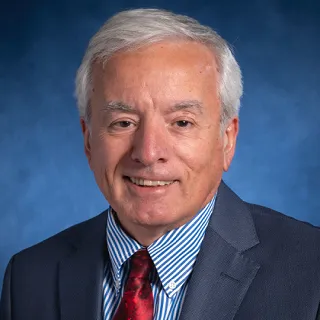
Marcelo Cardarelli, MD, MPH, is a pediatric cardiac surgeon at Johns Hopkins Hospital and a joint professor in the Department of International Health at the Bloomberg School of Public Health, Johns Hopkins University, where he earned his master’s degree. He is the co-founder of Global Cardiac Alliance, an organisation dedicated to improving access to pediatric cardiac care worldwide. Dr. Cardarelli has also completed the course Blockchain and Crypto Applications: From Decentralised Finance to Web 3 at MIT Sloan School of Management, reflecting his interest in innovative technologies in healthcare and global health solutions.