It’s called the smart pill: a multi-function diagnostics, drug delivery and real-time monitoring system housed in a small capsule. These smart pills are based on nanotechnology and better sensors which provide treatments for chronic diseases, brain boosters and sophisticated diagnosis of the gastrointestinal system. However, the increasing smart pills market proves that such oversize contributions are promising even if the price is relatively high. As new developments in smart pill technology continues to take place in the future of personalized medicine, patients will enjoy improved accuracy and full compliance when it comes to adhering to their prescription regimes. Thus, the potential of such systems like accessibility or privacy can be reached only if key issues are solved. This breakthrough is a major advancement in today’s medicine to provide the patient with a new perspective on care.
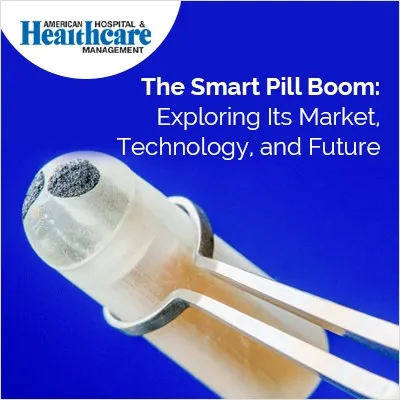
This is one of the smartest inventions in healthcare department since it brings in a transition between basic medicine and new innovations.
This article explores in detail digital pills, areas of use, smart pills’ market trends, and the future. In this paper, it is our pleasure to definitively demystify the concept of smart pill technology and detail the subject’s earthshaking implications both for the science of medicine and the practice of caregiving.
Smart pill is a small electrical-naive capsule that has been developed to boost medical diagnoses and treatments. The smart pills available as digital ones can not only detect the internal physical activity but also control drug release to the intestines, and even share the information with doctors in real time. But, how does a smart pill operate? It is amazing – the electronic pill can be ingested, and after that it interacts with other devices indicating the patient’s condition, including compliance with the prescribed therapy.
Applications include:
At the centre of smart pill technology is nanotechnology and micro-electronics. These devices contain sensors, cameras, a drug chamber, and a wireless module for operation. Advances in smart pills nanotechnology enable them to:
For example, there are digital compliance pills that serves to remind patient to take their right dosage at right time. These pills alert the caregivers or doctors where a dose is missed thus minimizing the problems associated with non-adherence. In addition, making use of artificial intelligence as well as machine learning algorithms in smart pill technology advances the features of the smart pills.
These innovations entitle the pills to evaluate the gathered data and give information about possible health issues, which introduces the possibilities of the preventive health care.
Also Read: Smart Pill Technology: Advancements, Applications, and Future Prospects
How big is the smart pill market? From available data it is observed that, global smart pills market is growing at an exponential rate and offers a wide range of applications in diagnostics, and drug delivery. Some professionals predict that smart pill market will grow up to several billions in the next ten years due to progress in intelligent drug systems and new medical uses.
Factors driving this growth include:
But is the smart pill still available? Yes, and it is being offered in more developed as well as emergent markets thus(colon) available to the larger pool of patients. Recently these entities such as Proteus Digital Health and Medtronic are coming up with newer models and applications of the digital pills.
A common question arises: What is the smart pill cost? Although these devices are relatively costly compared to conventional therapies, the outcomes of the aides are worth the cost. This paper identifies the following cost drivers that affect the cost of the electronic pill: the level of sophistication of the electronic pill, the underlying technology, and the purpose or use of the electronic pill. Nonetheless, with increasing scale and improvements in technology price should become more reasonable.
Some of the insurance companies have started to realize that more than investing in smart pills, they may be beneficial for the companies in terms of cutting down costs in the long run, and many insurance providers around the globe are now thinking whether to go for partial or complete reimbursement of such modern devices. Such advancement could significantly improve the accessibility to this innovation, meaning more patients could be able to use this great advancement.
The advantages of digital smart pills are transformative:
While the benefits are immense, smart pills also have their drawbacks:
Advantages:
Disadvantages:
Although smart pills are generally safe, some patients might experience side effects, such as:
Users must seek help from their healthcare practitioners to be able to understand risks and benefits that are unique to their status. There is always research and development going on in minimizing all these side effects so that the patients do not have to feel the inconvenience.
What does the future of smart pill look like? The field is bullish, more so given the development of the smart pills nanotechnology which is likely to see even better and enhanced devices in the future.
Thus, new questions like “How large is the smart pill market?” or “Is smart pill still around?” may become common to the market eventually. It is anticipated that there will be huge investments by the governments and the private sectors in this area and flow of innovation and expansion of gates.
It remains clear that the era of the smart pill is still young. This article also shares that the digital pills are useful in diagnostics, in delivering drugs and are a part of contemporary medical advancement. Only when one understands how a smart pill operates, what sort of pros and cons come with it and how this piece of equipment is set to transform the sphere of healthcare, can one admire the potential it has. It will be indeed the next decade for the smart pills market due to advancement in smart pill technology and growing need for proper medical solutions without surgeries. Watch this space – the future is here and it is electronic, intelligent and hugely optimistic.

Harry Callum, a key member of the editorial team at American Hospital & Healthcare Management, consistently produces engaging and informative content. His ability to break down complex healthcare topics into easily understandable terms allows the team to effectively share timely and relevant information with healthcare professionals around the world.