This issue needs to be a priority for physicians, other clinicians, patients themselves, and, of course, healthcare system management.
- Symptoms of the problem include widespread loss of trust, burnout, moral injury, and suicide.
- Benefits to be gained: Studies consistently show a halving of patient mortality rates!

The purposeful weakening of the patient-physician relationship is the healthcare threat and challenge of our time. The clear intent is to prioritize profit-driven decision-making over patient welfare-driven considerations. Lest that sound overly alarmist, please consider the following business of healthcare comments and sources:
Other instances of dollar-driven decision-making abound, but let’s limit these comments to just highlighting the recent Steward Health Care example in my own New England region, where private equity (5) and a self-enriching hospital administrator (6) decimated a multi-hospital healthcare organization.
"No margin, no mission"(7). This phrase is usually attributed to Irene Kraus, the nun who led the Daughters of Charity National Health System, and she used it to explain that her hospitals couldn’t rely on charitable donations alone. Dr. Sachin H. Jain writes in a Forbes article, "When Margin Becomes The Mission: Healthcare’s (Sometimes) Unholy Pursuit of Profit", "Put simply, margin should be a means to achieve an organization’s mission—not the mission itself."
Throughout the mid to late 1900s in the U.S., Sister Irene Kraus, a nurse and one-time schoolteacher, ran a series of hospitals as the founding chief executive of the $3 billion Daughters of Charity National Health System, the nation's largest nonprofit hospital chain (8). She also served as chairman of the American Hospital Association (the only woman to hold that position). At the time, the Daughters were comparable in size to, just behind, such for-profit giants as the Hospital Corporation of America and Humana.
Unfortunately, her pithy insight has been turned on its head. Today, the U.S. is nearing the complete commoditization of healthcare. There is little time left to resuscitate the patient-physician relationship before business interests succeed in declaring it dead and burying it in their rush to replace it with the more remunerative, but also more expensive and less effective consumer-provider model. This is far from a harmless transformation.
One need not have a lifelong commitment to a religious order to recognize that when suffering from illnesses, diseases, or injuries, patients often have needs far more complex than a simple consumer model can encompass. Humans are a complex biopsychosocial species (see Dr. George L. Engel’s biopsychosocial model, 1977)(9), and are not easily or usefully reducible to simple biomedical “customers.”
Americans, however, have been encouraged to adopt a passive role in their over-reliance on healthcare, craving the reassurance it provides without realizing the inherent hazard of possibly receiving too much healthcare (10). The key takeaway here is that “the number of primary care physicians (PCPs) is inversely related to overuse in a health system” (fewer PCPs result in less direct personal knowledge of patients, leading to more system use). That is precisely why the hospital CEO favors weakening the patient-physician relationship, so they can sell services directly to us as anxious and incompletely informed consumers. Meanwhile, the "chief experience officer" wants us to consider our medical encounters as comparable to a visit to Disneyland or the Ritz.
Our current U.S. healthcare environment is one where even non-profit hospital CEOs are being paid millions of dollars annually (11). Meanwhile, patients are being offered and encouraged to order their own blood tests from a menu of over 2,100 choices (12) and/or to schedule a total-body MRI scan (13)—neither of which requires a physician’s order, oversight, or guidance! No surprise then, that at an annual cost approaching $5 trillion (14), we have the most expensive healthcare system in the world, but also the lowest life expectancy of comparable high-income countries (15). Access to medical services is far from equitably distributed (1% of the population accounts for 22% of healthcare spending) (16), leaving us distrustful of our healthcare system (17). A 2011 Commonwealth report found that the United States had the highest percentage of respondents saying their healthcare system needed fundamental change or complete rebuilding (>70%) (18).
Similarly, disheartening statistics dominate when we look closely at the healthcare workforce. Progressively increasing rates of physician-reported "burnout"(19) have now closely approached or exceeded 50% in all the medical specialties delivering the bulk of the nation’s all-important primary care encounters (20, 21). "Studies conclude that effective primary care reduces hospitalizations, improves patient health, and extends life expectancy more than other specialties. And yet, the U.S. allocates just 5 cents of every healthcare dollar to primary care," writes Dr. Robert Pearl (22) in “How Primary Care Can Cure Healthcare's Cost Crisis”.
Excessive time demands from required administrative/“bureaucratic” tasks, along with insufficient “support staff to help deliver quality care,” are two of the highlighted concerns of those practicing primary care medicine. In feeling pressured to compromise the quality of care they know their patients need and deserve, physicians are subjected to the more extreme stress of “moral injury,” (23) as eloquently articulated by Drs. Simon G. Talbot and Wendy Dean in “Physicians Aren’t ‘Burning Out.’ They’re Suffering from Moral Injury.” They use the phrase “death by a thousand cuts” as a metaphor for the cumulative effects of these repeated forced compromises. However, the fact that physicians have the highest suicide rate of any profession—nearly twice that of the general population—reveals the beyond-metaphorical nature of those stressors (24).
Yet more disquieting are the heartbreaking events of young physicians in their training, and even medical students (three times more likely than their peers to kill themselves), committing suicide. In becoming aware of the above inherent risks of their long-sought careers, a quarter of medical students report considering quitting their studies, and 61% hope for future roles that do not involve direct patient care (similar numbers are evident among nursing students) (25). Not surprisingly, this has been accompanied by a growing number of physicians and nurses unionizing and resorting to workplace strikes (26, 27).
On the encouraging side, studies consistently show that forming more meaningful relationships with a personal physician has been repeatedly proven to assist us, as patients, in becoming more knowledgeable about, more engaged in the planning of, and subsequently more adherent (28) to our mutually agreed-upon treatment plans. Multiple medical studies highlight that this continuity of care(29), in turn, results in a reduction of mortality rates, by as much as a full halving! (30)
That there are low-tech, low-cost ways to reduce patients' mortality risk reinforce Engel’s emphasis on the psychosocial factors inherent in illnesses and their management. When patients become more knowledgeable about and engaged in the planning of their healthcare, they are subsequently more adherent. Such studies reveal (in this case, a randomized placebo-controlled trial of beta-blockers in the post-heart attack setting) that “poor adherers to treatment were 2.6 times more likely than good adherers to die within a year of follow-up.” (31) Subverting the simple conclusion, “That’s just how good treatment works,” is that the same findings were present whether taking propranolol or placebo. In other words, there was an additional finding: "Poor adherers to placebo were 2.5 times more likely than good adherers to placebo to die within a year of follow-up." Adhering to a treatment plan reduces mortality
A similarly surprising result is seen in “connectedness” studies. “Individuals with adequate social relationships have a 50% greater likelihood of survival compared to those with poor or insufficient social relationships….The most isolated group of men had a mortality rate 2.3 times higher than the men with the most social connections, while for women, the mortality rate was 2.8 times higher.” (32) But that’s just friends checking in on you when you’re ill or injured, isn’t it? However, the same study showed essentially no difference between objective and subjective measures of social isolation when predicting mortality. Simply feeling less lonely and isolated reduces mortality!
Finally, volunteering studies reveal that "the 44 percent reduction in mortality associated with high volunteerism in this study… was only slightly smaller than the 49 percent reduction associated with not smoking. Taken together, these findings strongly suggest that giving support, rather than receiving support, accounts for the benefits of social contact.” (33) But that’s just people in good health more likely to volunteer, isn’t it? However, a similar study showed, “The health advantage of volunteering among those in worse health is twice as large as the health advantage among the healthiest Europeans.” (34) We need to get outside of ourselves. We are a biopsychosocial species (as Engel articulated), not just biomedical. That’s what the science is telling us.
None of this is meant to minimize the very real practical challenges for healthcare organizations to keep the lights on and meet payroll needs while fulfilling their missions to provide safe and effective interventions to relieve the suffering of patients. More than a few are not finding success in that endeavor, leading to partial or complete hospital closures (35). Nor is this meant to promote the socialization of U.S. medicine.
However, it is inarguable that healthcare must be humanized and individualized by healthcare organizations that, in these unsettled times, aspire not only to succeed but also to lead.
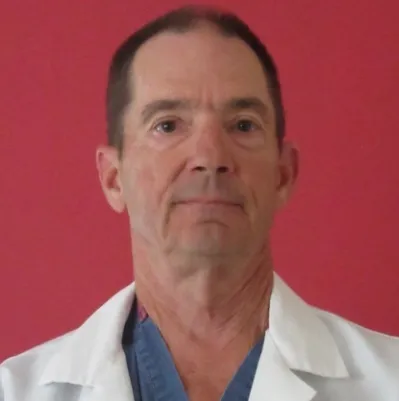
Drew Remignanti writes from the dual perspective of a 40-year career emergency physician and a 50+ year 'career' chronic autoimmune disease patient. He considers himself well-educated by Dartmouth College, Rutgers Medical School, the Medical College of Wisconsin, as well as 15 hospitalizations, seven abdominal surgeries, and a major disabling stroke in 1982 at age 38. He wrote his book for the benefit of those of us who are involuntarily enduring medical suffering, as well as those who are voluntarily attempting to alleviate medical suffering in its myriad manifestations. This essay is adapted from Drew's book The Healing connection: A Partnership for Your Health.