Healthcare policies are very important in the protection of patient’s safety and delivery of quality health services. The supports they provide include: standardizing procedures, encouraging evidence based practice, and increasing accountability resulting in decreased error rates and overall better results. When strengthening patient advocacy and equity, policy priorities’ problems include limited resources and enforcement. This change of policies reassures better safety, innovation and global healthcare quality.

It can be restated that the patient safety and quality of care are the main principles of functioning of the healthcare system. These aspects assure that patient gets the best needed treatment with as little danger and harm as possible. These elements have policies at their core because policies are put in place to define structured approaches to use in healthcare practices among the providers, institutions, and systems. They apply and explain healthcare policies by dissecting theories into patient safety and quality of care into fundamental concepts in this article.
Patient safety is a process of reducing the likelihood of adverse events or least the risk of harm that may be done to a patient in the course of receiving any health care. Promising guarantors of safety include using an error-free medication administration system, reducing the risk of infection, and guaranteed surgical procedures.
In contrast, the quality of care means that healthcare services are competent, responsive, coordinated, and resource appropriate. It encapsulates healing diseases as well as improving the general fitness of the patients as outlined by their desires and wants.
Policies are the very structural foundation of the healthcare systems. They are formal policy standards, laws or procedures aimed at facilitating quality and dependable healthcare. Such policies are developed with the participation of governments, health care institutions and regulating agencies. This is their objective of setting conditions that protect their patients, improve the quality of their care, and offer accountability.
If there are no clear policies on delivery of healthcare, the healthcare delivery system could degenerate into a chaotic syndrome that will manifest with inefficiency, ineffectiveness and complications that are detrimental to the well-being of its clients. From the aspect of process, policy can help make clear requirements for certain actions and processes as well as enforce necessary levels of compliance and promote progressive change on a continuous basis.
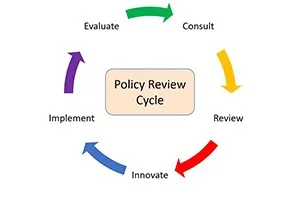
1. Standardizing Procedures
Policies in the field of healthcare have one important aspect – they tend to reduce variability in the actions performed. For example, health care polices on hand hygiene guarantee that all caregivers wash their hands in the same manner to avoid spreading pathogens. It eliminates the likelihood of different patients being administered different doses, amount or frequency of a given medication.
2. Encouraging Reporting and Learning from Errors
Protections against adverse action for employees who implement error reporting procedures compel healthcare workers to report when they have made an error. Open culture is learning, as institutions can study mistakes, understand their source, and take appropriate action to rectify them. For example, reporting systems such as the National Reporting and Learning System (NRLS) in UK has greatly decreased adverse incidents.
3. Ensuring Safe Staffing Levels
Staffing policies’ continue to guarantee adequate qualified medical staff for hospitals and clinics to attend to the patients. Their work is usually characterized by high work load or inadequate staff which predisposes the system to flaw and therefore instability of safety. Those policies which relate to staffing such as nurse-to-patient ratios and work-hour restrictions relating to doctors are likely to affect patients.
4. Implementing Technology Safely
Rules exist controlling how technology is applied in a medical setting and the safe integration of technology into healthcare. Policies on the use of electronic health records (EHRs) help to guarantee the safety of data and the least incidence of mistakes within the record keeping process. As with the use of medical equipment, policies in medical devices offer requirements for its safe utilization and management.
1. Promoting Evidence-Based Practices
Treatments are based on different policies to support only those interventions that have proved effective.
Evidence-based care delivers efficient services by achieving positive patient results in the use of available resources. For example, the rules concerning chronic diseases such as diabetes mellitus, hypertension or others are critical to achieve a certain quality of treatment and results.
2. Focusing on Patient-Centered Care
Policies praising patient empowering aim at exercising patient participation in decisions regarding their medical conditions. As patients, their preferences, needs, and values should be listened to in order for providers to afford to provide an improved and satisfactory form of care. This makes people trust you and always be open to talk to you and in many cases it facilitates compliance with recommended treatments.
3. Monitoring and Accountability
Policies create ways of overseeing healthcare quality with regards to scheduled financial and performance audits, regular statistics, and patient feedback. The frameworks guarantee that providers as well as the institutions take responsibility of ensuring that they maintain acceptable standards. For instance accreditation programs such as the Joint Commission that give out ratings for hospitals require constant improvement by their conformity with set policies.
4. Reducing Health Disparities
Efforts to enhance distribution of health services focusing on the poor advocates for healthcare rights without differentiation of status, color, or region. For instance, the Obama administration’s Affordable Care Act paved way for an institution that guarantees low-income families adequate health care to support a healthier nation.

1. World Health Organization (WHO) Patient Safety Initiatives
The World Health Organization (WHO) has developed policies like the Surgical Safety Checklist currently implemented all over the world to address issues of increased associated surgical complications. Its simplicity strikes a great deal of effectiveness in human practice and has been instrumental in saving lives through enhancing compliance to all relevant measures necessary during surgeries.
2. Affordable Care Act (ACA) in the US
The ACA brought new payment models that are based on the quality of performance instead of service volume that oriented the hospitals at. Such a change has led to the need to increase patient satisfaction and safety in hospitals.
3. National Health Service (NHS) in the UK
The NHs has those in place including the Five Year Forward View for integrated care, using technology, and patient engagement. These policies are meant to optimize the operation of the system and reduce time that a patient needs to spend.
Despite their importance, implementing healthcare policies is not without challenges:
1. Resistance to Change
Concerning organizational policies, there remains the question of compliance that may be a problem when the new policies call for a change of the systems in place in place by the healthcare providers. For example, the change from the manual to electronic records for example the electronic health record brought a lot of resistance from many regions.
2. Resource Constraints
Others may not afford to make changes in the policies or may not have the personnel required to ensure policy compliance. For instance, some objectives may be hard to achieve due to conditions such as maintaining the best nurse to patient ratio in a rural or a non-well-funded hospital.
3. Inconsistent Enforcement
As much as one can plan and design marvelous policies, these will not work if they are not implemented well. It is a fact that differences in progress of monitoring or oversight mean that there are variations in care quality and safety.
Healthcare policies also need to be updated in order to focus on new tasks. Some areas of focus include:
1. Adopting Advanced Technology
There are new rules of organizing and delivering care that have to be set and implemented to take the advantage of IT, AI, telemedicine etc.
2. Prioritizing Mental Health
More and more international policies are including mental health as a part of the general human health.
3. Strengthening Global Collaboration
International exchange of ideas, guidelines, and polices can therefore help catalyze and extend recent enhancements of patient safety and care quality globally.
Policies are the cornerstones of a stable healthcare system, because they teach practitioners and organizations how to carry out their work safely and effectively. These policies therefore act as guidelines, promote responsibility and innovation in all heath related decisions hence making sure that safety and quality of patients is never compromised. But factors such as resistance to change, lack of resource to implement them and cases where the law does not fully enforce protections and rights all must be effectively managed to optimize their effectiveness. Unfortunately, policies will remain stakeholders in defining a system of health care that would maximize the patient outcomes, but it is imperative to make them flexible and in constant evolution.

Debi Jones, part of the Editorial Team at American Hospital & Healthcare Management, draws on her deep experience in healthcare communication to produce clear and impactful content. Her dedication to simplifying intricate healthcare topics helps the team fulfill its goal of offering relevant and influential information to the international healthcare sector.