As for the current practice in orthopedic surgery, it starts in the robotic technology, three dimensional printing, stem cells, artificial intelligence, or imaging. These bring about accuracy during the procedures, shortened healing period and tailor made treatment, thus making procedures safer and efficient. Prospective advancement in technology provides orthopedic surgery with enhanced results and patients’ well-being.
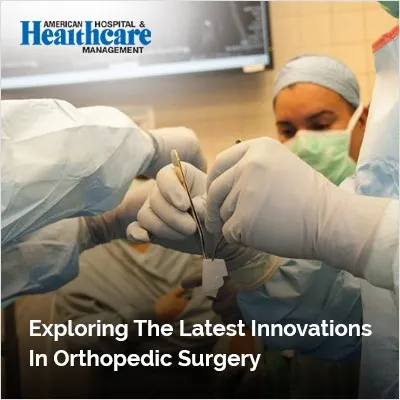
Orthopedic surgery that involves treatment of disorders of bone, joints, ligaments, muscles and tendons has been clearly defined and has experienced significant progress in the past few years. Such changes have brought the desire in enhancing patients’ experience, decrease time for healing, and enhance the minimally invasive procedures. Orthopedic surgery has embraced the aim of enhancing the quality of the lives of patients and expands its capacity to correct more musculoskeletal problems, as a result enhancing the specialty of orthopedic surgery to embrace vast improvements.
A brief of some of the characteristics of this topic include; Robotics; 3D printing; Medicine and tissue engineering; Endoscopic surgery; Imaging techniques.
Among the latest technological equipment’s used and appreciated in orthopedic surgeries, robots would be among them. The use of the robotic system in knee and hip replacements has become more accurate and patient specific. Robot-assisted surgery means that before the surgery the surgeon can program his surgical instruments and get a kind of a map of the particular patient’s body. This mapping process aims at using a detailed imaging to guide the surgeon to match with what is planned for surgery in regard to the structure of the individual.
The benefits of having robots help are enormous. For instance, robotic systems allow the surgeon to scribe the implant position and execute an incision and implant placement that is difficult to achieve using hands only. The accuracy provided could reduce errors of implant positioning in relation to the other joints; this may enhance the implant’s durability.
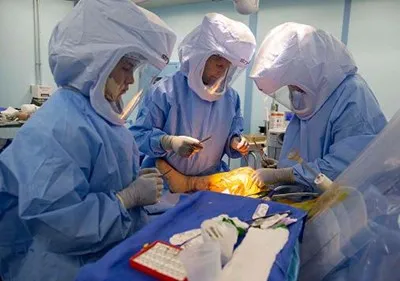
Robot systems also are non-traumatic to the surrounding tissue and thus the patient retains short healing time and minimal pain after surgery. Given the use of the robotics and other high tech tools in the surgery, which has been on the increase as technology develops the use of robots in orthopedic surgery is not likely to be limited to the procedures described here but spread to the rest.
Technology such as 3D printing technology has affected many medical fields, and orthopedics is not an exception. This technology enables surgeons to fashion unique implant and prosthetics fixtures, and in some cases, operate instruments to specifically fit the patient. In orthopedic applications, with the help of 3D printing, the surgeons can make a model of bones, joint or an implant before a complicated operation. That way, not only is better planning of surgery possible, but it also guarantees that each implant will be a perfect match for the patient.
For example, implants made of titanium and by 3D printing may be developed for patients in whom standard implants are not suitable. This form of treatment has been helpful especially when dealing with patients with complicated fracture or require a second surgery. There are many other applications of 3D printing such as fabrication of guides for the Surgeons to effectively make appropriate incisions and implantation. As seen in the application field of the orthopedic surgery, with the gradual increase of the size of 3D printing application area and the decrease of prices, it can be judged that 3D printing will occupy an increasingly important position in orthopedic surgery.
Stem cell therapy is in the opinion of being selected as one of the possible sub specialties of orthopedic surgery within the relatively novel and rapidly expanding field of regenerative medicine. Regenerative medicine on the other hand seeks to do fixes at the tissue level, this set it apart from conventional medicine which often seeks to solve the problem by performing an operation. In orthopedic applications stem cells can be employed in treating diseased cartilage, fractured bones and in instances of osteoarthritis.
For example, in conditions such as osteoarthritis where the cartilage erodes, thereby causing the bones in the joint to rub against each other resulting in a painful condition; stem cell injections promote the growth of new cartilage, thus may eliminate the need for a joint replacement surgery. It is particularly suitable for youthful patients or those for whom the surgery might be too dangerous. The stem cell therapy research is still under way while early indicators suggest the technique could be highly effective. That is why when scientists bring more clarity to stem cells and their utilization, these stem cell based therapeutics may very well replace invasive orthopedic surgery for many diseases.
Earlier surgeries done in orthopedics required a big incision leading to massive muscle trauma, longer hospitalization, and lengthy rehabilitation. That is why with the advent of the minimally invasive approach to the operation almost all the listed options have become less significant. Less invasive surgery makes use of tiny, narrower ports, advanced images, and instruments to carry out an operation that is less invasive.
For instance, hip and knee replacements that are less invasive are now standard The era of invasive procedures has been significantly done away with. These surgeries do not require wide invasions, and thus patients are able to heal quickly, suffer little pain, and get back to their everyday activities. Other unknown minimal invasive methods include joint arthroscopy where a small camera and instrument is inserted through a small hole and used to diagnose or treat problems in joints. A number of these techniques not only shorten the time taken to recover but also minimizes odds of infections and complications and thus makes orthopedic surgeries safer and more feasible.
Another important area is an improvement in the diagnostic imaging, which is involved in orthopedic surgery crucially. MRI and CT scans enable the surgeon to get clearer images of the bones and the soft tissue and therefore to diagnose conditions and plan operations much better. For example, 3D imaging and functional MRI imaging add even more detail to the assessment.
Perhaps, the most revolutionary method is called “EOS imaging” which produces a full standing body image and has less radiation effect than regular X-ray. Due to these features, this technology is most helpful in diagnosing the spinal deformities and other difficult conditions. Advanced imaging has brought down the risk factor in orthopedic surgeries as well as the number of exploratory surgeries needed as compared to previous to operations done after a detailed planning.
Presently, orthopedic surgery entails an application of artificial intelligence, or AI, to some considerable degree. For example, AI algorithms can sift through thousands of records and using data mining approaches find out that something was overlooked. For example, AI can help in diagnosing the fractures by analyzing the X-rays done to minimize on errors experienced with taking time to diagnose a particular fracture. Further, intelligent technologies are designed to create anticipatory models for patient situation prognosis as a function of several parameters, including age, activity level, and health history.
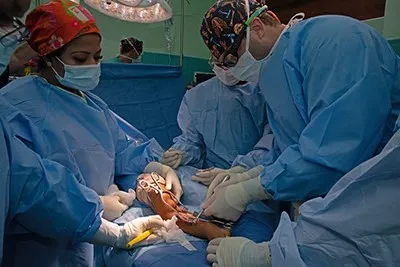
One of the uses of application of AI is in developing individualized care plans. Artificial intelligence means that one can also have recommendation for the best way to treat a patient based on past experiences with similar cases and the current standard procedures. Personalized medicine enables orthopedic surgeons give individualized procedures, hence giving accurate diagnosis as well as the appropriate treatment.
One of the details of surgery of orthopedics performed in the recent years is bioprint; this fact has some connection with the use of so called 3D-Printing to print a structure made from a biological tissue. In bioprinting, scientists are actively using the body cells to create bones and cartilage through a process of printing. This technique may promise the elimination of the need for bone grafts or synthetic implants in the future. With the help of patient’s cells, which are used in bioprinting, such issues as rejection are excluded, and tissue heal naturally.
The idea of bioprinting is still at a stage where most of the experiments are still yielding almost promising results. For instance, there have been successful attempts of printing small parts of the bone tissue that can easily be grafted into the patient’s body. In the future bioprinting could be extended to the actual rebuilding or reconstructing of cartilage, bones or may be even joints using bio-compatible materials close to the patient’s own tissue.
When speaking of prospect avenues in realm of orthopedic surgery one more promising idea may be mentioned – personalized medicine. Genetic profiling also enables orthopedic physicians to get insight of their patient’s propensity to develop a number of orthopedic disorders including osteoporosis or osteoarthritis. This information helps to how different therapies should be delivered depending on the content of genetics of the patient.
With genetic factors, orthopedic surgeons can advise the patient on ways to avoid any of the aforementioned disorders and programs better treatment strategies.
For instance, early lifestyle changes, drugs, or certain kinds of operations of patients with genetic predisposition to less density of bones could be useful to minimize fracture probability. Also, genetic analysis can determine suitable materials with which to make implants thus avoiding cases where the body may reject the implant.
However, a number of strides currently under development has the prospect of bright future for using in the orthopedic surgeries. With such advancement in technology, patients should prepare to receive better results, spending less time in the hospital and with less complications. It is a fact that certain solutions in orthopedic surgery have dramatically shifted after the incorporation of certain brilliant technologies such as robotics solutions, 3D printing, regenerative medicine as well as intelligent system solutions.
Targets can be reached within the next few years of that rich field that can give a start to Gene therapy, new biomaterials and intelligent implants with capabilities of (self-) reporting the routes of the patient’s healing process and interacting within the new actively created environment. With these developments, it can be said that orthopedic surgery is on the trajectory to being safer, less invasive and even more patient centered and is envisioning a better future for millions of joint suffering souls around the world.

Sarah Richards, a member of the Editorial Team at American Hospital & Healthcare Management, uses her extensive background in healthcare communication to create clear and engaging content. With a strong commitment to making complex healthcare topics accessible, Sarah helps the team achieve its goal of delivering timely and impactful information to the global healthcare community.