
In medical imaging and particularly when there is a shift in the strategy of diagnosing and managing diseases, diagnostic radiopharmaceuticals enable the incorporation and deposition of the new trends in imaging because imaging is done based on functions of the organs and tissues. Some of these compounds assist in the early and specific disease identification in such areas as oncology, cardiology, or neurology. Targeted radiopharmaceuticals and theranostics will be taken to the next level to deliver better targeted treatment in combination with Artificial intelligence for better diagnosis and prognosis of patients’ conditions.
In the area of medical imaging, diagnostic radiopharmaceuticals are innovative weapons, which act as a turning point in diseases diagnosis and management. Such compounds include radioactive isotopes offered in combination with various pharmaceutical products that enables early and accurate diagnosis through detailed understanding of the operation of the organs and tissues in the human body. From this article, one can get some information about diagnostic radiopharmaceutical, the existing fields of its usage and the perspectives of its further development to radically change the approach to healthcare.
Diagnostic radiopharmaceuticals can be described as special chemical substances within nuclear medicine to perform the actions within this sector include identifying, or estimating the velocity of a specific metabolic process within a human being.
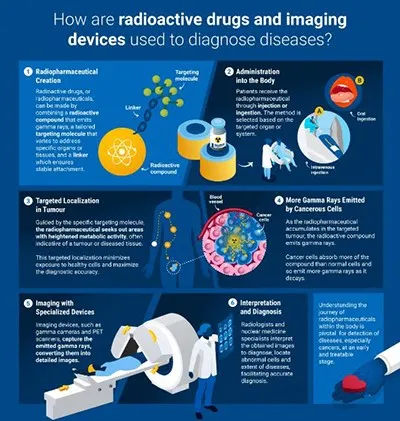
Patient gets them in small, safe amounts because the radiotracer emits gamma rays, or positrons that can be observed via PET (Positron Emission Tomography) or SPECT (Single Photon Emission Computed Tomography). This outlining method helps the physicians to assess the functionality of given organs and out rightly indicate the organs that are not working appropriately.
Diagnostic radiopharmaceuticals are employed extensively in oncology; one of its major application is in diagnostic imaging. Some of the currently used radiopharmaceuticals include; fluoro-deoxy glucose (FDG) used in positron emission tomography (PET) scans in cancerous tissue detection.
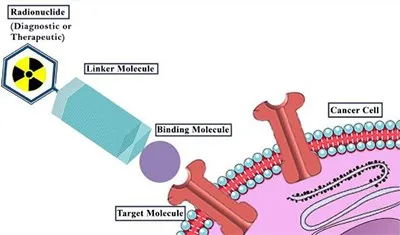
Cancer cells in this regards are, for various reasons, metabolically much more active than normal cells; hence they take up more of the radiopharmaceutical and are thereby visible on the PET scan. It is also especially useful in the detection of the disease and also in evaluation of the treatment offered to the patient.
It is necessary to state that in the sphere of science concerning cardiology, such compounds are applied more frequently for the purpose of diagnosis of different heart disorders.
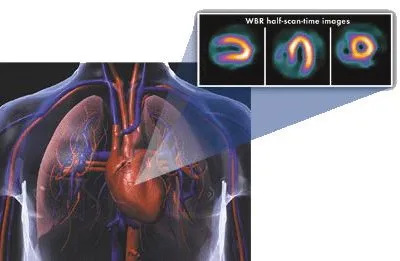
Technetium-99m compound is used in myocardial perfusion to assess delivery of blood to muscles of the heart. It also helps in the identification of areas which may not have been utilized very much; which may be the case in issues that relate to coronary arteries or a heart attack.
Diagnostic radiopharmaceuticals are also used in the studies concerning the brain illnesses. For example, DaTscan (Ioflupane I-123) is a radiopharmaceutical that is used to image the dopamine transporter area of the brain; specifically, in assessing Parkinson’s disease.
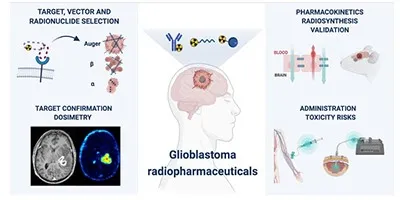
Similarly, use of radiopharmaceuticals can also help in identifying Amyloid Plaques in the affected brain tissue of Alzheimer’s patients to enable early diagnosis and come up with a solution to this disability.
Radiopharmaceuticals therefore take advantage of functioning as promoters of the normal biological activities in the body. They go to a few anatomic locations after being administrated; based on their ionization properties. For example, FDG, a glucose analog, accumulates in the areas of higher glucose metabolism such as cancerous tissues. Then the radioactive part decays and its emission of the radiation is searched by the imaging equipment. This process provides the detailed picture and the functional description of the area of interest.
New agents that has been created and synthesized are ready for use as they are selective on the particular cell receptors or antigens. This enhances the effectiveness of imaging which in turn enhance diagnostic capabilities of different health complications and planning for the treatment. For example, the usage of radiopharmaceuticals targeting on the PROSTASPECTM (prostate specific membrane antigen) to diagnose the cancer of prostate gland is highly sensitive.
Theranostics can be described as the new interdisciplinary branch that is connected with both therapy and diagnostics. In some of the theranostics, drugs are radioactive substances that are sometimes used for diagnosis and therapy of diseases.
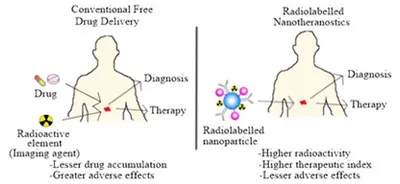
For example, Lutetium-177-PSMA used to destroy the prostate cancer cells while at the same time, it used in imaging the body to determine the efficiency of the treatment process.
Current studies are invested in developments of new isotopes or compounds that can provide enhanced image quality, minimize radiation dose, and increase patient safety. For instance, international research has been conducted on Gallium-68 as a potential candidate for PET imaging because of certain characteristics such as short half-life but high resolution.
Diagnostic radiopharmaceuticals are expected to contribute much regarding the implementation of the theory of personalized medicine. Having gotten specific characteristics concerning the pathogenesis of diseases in individual cases, these compounds will be very useful in orienting the treatments towards attaining the most desirable results. For example, in cancer therapy, the radiopharmaceuticals differentiate between mutations or markers which mean that only specific treatments are desirable and have lesser general side effects.
Diagnostic radiopharmaceuticals are another growing field that will see the introduction of AI as another promising concept.

AI algorithms can identify patterns and other unusual activities which are otherwise difficult to identify by the human eye. Such improvement can increase the efficiency of diagnosis, forecast the disease progression, and set the right therapeutic course.
The future of radiopharmaceuticals also has the employment of non-invasive diagnostic techniques. New developments of molecular imaging and newer radiopharmaceuticals try to minimize the numbering of invasive procedures such as biopsies. It can speed up the diagnosis process, decrease the patient’s suffering and thus the costs of treatment.
The area of diagnostic radiopharmaceuticals is not without challenges. The generation and distribution of radioactive isotopes prove to be challenging because they have to undergo particular procedures, and certain licenses are necessary, making the stocks rather scarce. Also, the radiopharmaceuticals and imaging procedures may be expensive and may reduce the possibility of its general use.
Diagnostic radiopharmaceuticals occupy a specific niche of medical imaging, as they provide an extraordinary view of the functioning of human body. Their use in the early diagnosis of diseases, progress of management, and proper selection of management protocols is promising in enhancing the patient’s survival. With the further development of science and technology, diagnostic radiopharmaceuticals will increasingly become one of the key areas of development in the healthcare industry, thus significantly changing the sphere of diagnostics and treatment.
.webp)
Kate, Editorial Team at American Hospital & Healthcare Management, leverages her extensive background in Healthcare communication to craft insightful and accessible content. With a passion for translating complex Healthcare concepts, Kate contributes to the team's mission of delivering up-to-date and impactful information to the global Healthcare community.