
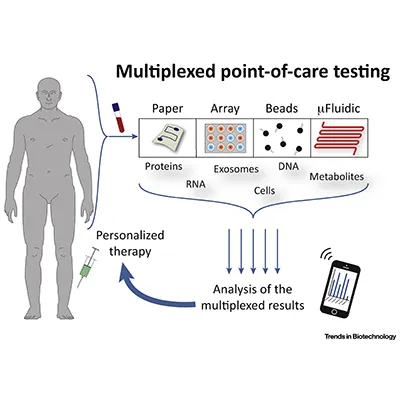
Point-of-care (POC) diagnostics is one of the most revolutionary areas in healthcare as it locates the testing at the bedside of the patient, in his/her clinic or even at his/her home. The fast-growing trend of connected and handheld diagnostic systems, including glucose meters, molecular assays, among others, has been a paradigm shift in how diseases are diagnosed, tracked and treated. POC testing has the potential to increase the rapidity of decision-making and, thereby, shorten treatment cycles, decrease medical expenditures, and enhance patient outcomes.
Nevertheless, such advantageous potential of POC diagnostics can only be as effective as the regulatory systems that help to develop and validate them, as well as implement them in practice. Regulation in its turn can be viewed as the gate opener and by the same token a speed booster of innovation in many aspects. Though rigorous monitoring leads to safety, accuracy, and reliability, it may cause bottlenecks, which slow down the entry in the market or usage of innovative technologies.
The terrain is multi-layered: manufacturers will need to make their way through varying jurisdiction based requirements, complying with rapidly changing technical or medical standards, and adjust to regulatory expectations in rapidly developing fields such as AI-enabled diagnostics, or at-home genetic testing kits. This dynamic world is a business opportunity as well as a challenge that must be mitigated intelligently by the industry leaders.
The Regulatory Environment for POC Diagnostics
On a worldwide scale, POC diagnostics is classified under medical diagnostics instruments and in vitro diagnostics (IVDs) whose policies are aimed at safeguarding the health of the populace by monitoring the precision, safety and clinical relevance of devices.
In the US, the POC devices are regulated by the Food and Drug Administration (FDA) of the United States in its Center of Devices and Radiological Health (CDRH). Depending on how risky devices are, they may be subjected to 510(k) clearance, De Novo classification or Premarket approval (PMA). Also, a sample that is supposed to be used in any setting beyond formal laboratories is supposed to qualify Clinical Laboratory Improvement Amendments (CLIA) waiver which examines whether a specific device is reasonably safe to be used by a worker that cannot be considered a laboratory staff.
POC-based diagnostics In Europe, POC diagnostics come under the regulation of the In Vitro Diagnostic Medical Devices Regulation (IVDR) adopted in the European Union in 2022. The IVDR has substantially raised the demands on clinical evidence, post-market monitoring, and third-party conformity testing and have implications on schedule and cost to manufacturers. The frameworks in other markets are evolving, such as China, Japan and India, forming a patchwork of compliance requirements around the world to a global supplier.
These frameworks are not unchanging, instead they change with needs of the people during the time of crisis in regard to public health, technological changes, and policy priorities. The COVID-19 pandemic highlighted the importance of expedited, flexible regulatory pathways in the form of emergency use authorizations (EUAs) of point-of-care (POC) tests and the costs of inadequate oversight thereof.
Key Regulatory Challenges
Although the potential of POC diagnostics is enormous, there are a couple of regulatory barriers that manufacturers and healthcare professionals have to face regularly.
1. Harmonizing Global Standards
Harmonization of global regulations is one of the major obstacles. FDA cleared device can have substantial entry obstacles until it gets into the EU, Asia-pacific, or Middle Eastern market. Variations in performance measures, validation needs, and quality system reporting may translate to duplication of efforts, greater expenses and slower availability to the market. Organizations such as the International Medical Device Regulators Forum (IMDRF) are trying to work towards harmonization of definitions and frameworks, however without success.
2. Balancing Speed and Rigor
The COVID-19 crisis demonstrated that regulatory agencies can accelerate review processes without compromising safety - but such speed is rarely sustained in non-emergency contexts. The problem, in this case, is how to strike a balance between the need to take POC devices to the market or to put forward sufficient evidence to warrant approvals and requirements. Essentially at stake are: false or improperly validated POC tests; false positive, false negative, or no diagnosis; inappropriate treatment; the loss of public confidence.
3. CLIA Waiver Complexities
The COVID-19 crisis showed, however, that regulatory agencies can speed up review in ways that do not jeopardize safety, albeit such rate is hardly maintained in non-crisis scenarios. In POC device development to respond to an urgent but non-pandemic need, the issue is balancing the need to enter the market quickly and the need to wait until more comprehensive evidence is produced. What is at stake: false positive or weakly validated POC tests may result into misdiagnosis, inadequate treatments, and a loss of public confidence.
4. Integration of Digital Health Components
Current POC devices are progressively using digital components, e.g. cloud-based reporting, AI-based interpretation or electronic health records (EHRs) integration. Such properties, because they add value, also increase the layers of regulation. Developers need to work with not only medical device regulations, but also data privacy, cybersecurity, and software validation standards requirements- regulations that vary widely over jurisdictions.
5. Post-Market Surveillance Demands
Both FDA and IVDR systems have changed post-market surveillance into an active, no longer passive, process. It is believed that manufacturers should actively generate, investigate, and act on the algorithms of performance across the lifespan of the products. This may be logistically and financially obstructive in POC that have been implemented in decentralized locations, especially in low resource settings.
Opportunities within the Regulatory Framework
Although this sounds challenging, an insightful examination will expose the fact that regulatory environments too create fertile grounds of innovation, differentiation and market leadership in the long run.
1. Building Trust through Compliance
Strict adherence to regulation gives out a message of credibility to clinicians, patients, and payers. In competition POC market - like quick diagnosis of infectious disease - presenting high-quality clinical validation may distinguish a product among inferior products.
Healthcare systems and other insurers are likely to adopt products produced by companies that establish more than the bare minimum regulatory standards, as well.
2. Leveraging Accelerated Pathways
The regulatory authorities are venturing into quicker review programs on breakthrough technologies. In the US, the Breakthrough Devices Program managed by the FDA, provides accelerated review and interactive omnichannel lines of communication, which greatly reduces the time required to receive approval of an appropriate innovation. Likewise, certain geographies offer expedited approvals with respect to diagnostics that fill unmet needs in areas of critical need where swift manufacturers may access the market earlier.
3. Shaping Policy through Early Engagement
The companies that look ahead in time will interact with regulators during the product development stage so as to explain what is expected of them, minimize risk of redesign, and shape the new guidelines. Being part of the public consultations, standards committees, or pilot programs enables the industry leaders to contribute to policy making in the manner that will support the technological advancements but also ensure the preservation of patient safety.
4. Expanding Access through Decentralization
Regulations are growing to acknowledge the contribution of POC diagnostics toward the extension of care services especially in resource-limited or rural areas. Manufacturers of such devices that fit the performance needs of accumulating challenges in the field can access public health funds, non-governmental organization (NGO) purchase schedules, and multi-nation health organizations.
5. Opportunities in Companion Diagnostics
The regulators are encouraging the commensal development of POC tests alongside targetable therapies as personalized medicine continues to gather steam. The trend presents new market opportunities to companies able to provide fast, on-site testing of biomarkers used to inform treatment options - especially in cancer, infectious disease and managing chronic conditions.
The COVID-19 Effect: Lessons for the Future
Regulatory systems around the world were live stress tested by the pandemic. EUAs have allowed the unprecedented large-scale use of POC tests but have shown the weaknesses as well as the strengths of the current frameworks. On the one hand, the regulators showed themselves flexible; on the other, some rushed tests passed, but could not work as necessary, and recalls covered the damage to the image.
One of the lessons is that it might be possible to create tiered regulatory models in which high-urgency devices could be assessed faster but post-market performance strictly monitored. The former models may enable a trade-off between speed and accuracy, which may be required especially when considering technologies dealing with emerging infectious or urgent screening technology demands.
Navigating the Path Forward: Industry Best Practices
The market in the POC diagnostics field would require both technological savvy in addition to regulatory savvy to succeed. Top producers are implementing the strategy of integration of approaches, matching R&D, quality management and market access strategies at the initial stages of development.
Investing in regulatory intelligence on an ongoing basis - watching regulatory trends, predicting new obligations, and changing the composition of cross-function capture teams, reduces the risk of failure to meet regulations and expensive delays. Additionally, the cooperation between industry, academia and regulators can help to make evidence creation more efficient and fasten the process of validation in the real world conditions.
It is possible to achieve compliance using new tools provided by digital transformation. Post-market surveillance may become simpler, as automated data collection, artificial intelligence-based quality control and remote monitor systems may create real-time evidence to report to regulators. Firms which adopt these capabilities are able to turn compliance into a competitive asset.
Conclusion
Regulation should not be considered a roadblock to be walked through it is an inseparable aspect that determines the plausibility, actually received adoption in point-of-care diagnostic sector, and the influence made by the innovation. The fragmented global standards, the complicated CLIA waiver processes, and the changing digital health regulations are challenges; at the same time, they allow differentiating and leadership.
Manufacturers who see regulatory interaction as a strategic role--and not merely a compliance task on a checklist - are more likely to flourish. Innovation should be successfully balanced with strong, active regulatory approaches so that instead of just painting the POC diagnostics to the highest ranks of performance in terms of accuracy and safety, the industry can make good on the promise of revolutionizing healthcare delivery across the globe.
The most successful participants in the years to come will be those who readily realize that the regulatory environment is an asset as well as a limitation - and who will apply this recognition to lead the effort in introducing diagnostics that are not only market-ready but are also patient-centered, regardless of where they are implemented.